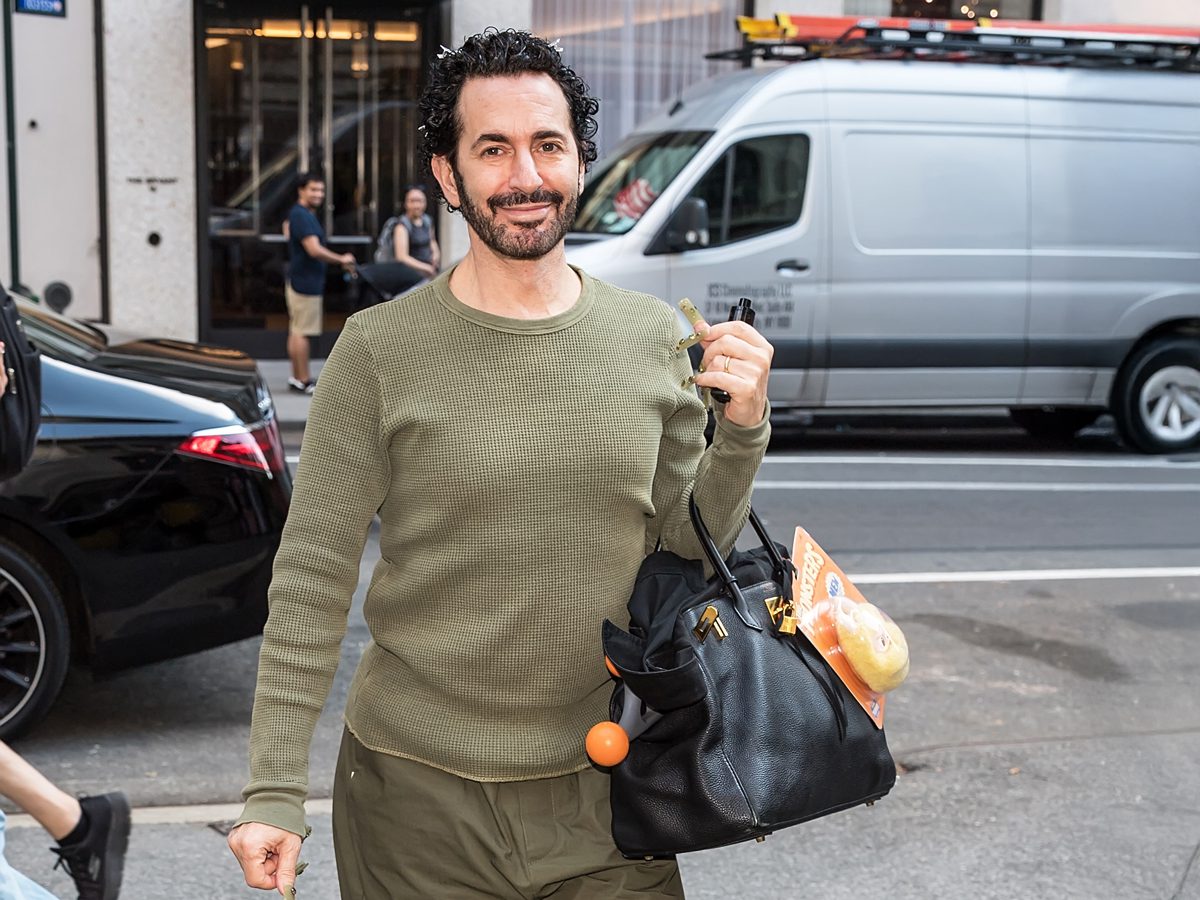

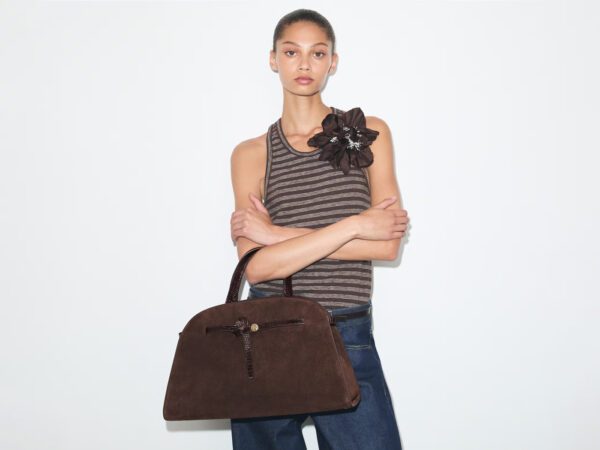
A viral reel by content creator Sebastian Hedberg circulated online last September. In it, we see a fairly nondescript gentleman, outfitted in a faded blue crewneck sweater, straight-leg stonewash denim, and Salomons. On his left shoulder is a JW Anderson Loafer bag in chocolate-brown suede, bobbing up and down as he flails his arms animatedly while on a business call just outside the Gare du Nord in Paris.
Nothing seemingly out of the ordinary.
Only, the gentleman in question is actually the creator of the carryall he is seen carrying, the singular Jonathan Anderson, creative director (for the first time in fashion history!) of both womenswear and menswear at the storied maison of Christian Dior, and now winner of the Designer of the Year award at the British Fashion Council’s Fashion Awards three years in a row!
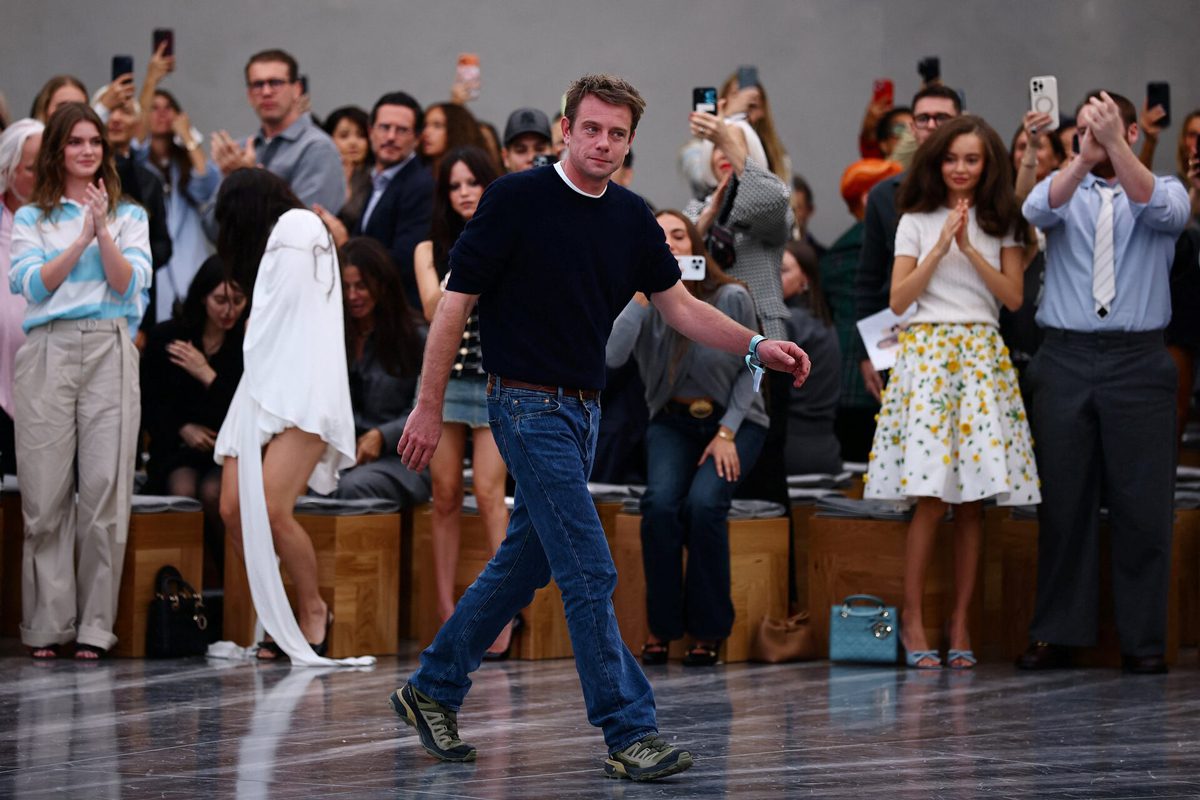
You’d expect for a man of his stature, there’d be far more fanfare – if not an all-out security protocol. Yet here he is, weaving in and out of the Parisian avenues, entirely incognito. Hedberg concludes by saying, “I guess that’s the beauty of being a fashion designer, you get all the glory, but not the fame.”
You see, dear reader, we live in unprecedented times.
“Everything looks the same,” declared Vogue, “was the most-uttered line at New York Fashion Week.” These days, we’re inspired less by what designers design and more by what they wear themselves.
Designed to be Worn, Worn as Designed
In 2004, Pharrell Williams attended his first Louis Vuitton show, clad in an embellished t-shirt and blazing red LV glasses. Seated beside him, posing happily, was his seatmate, Catherine Deneuve. Cathy Horyn dubbed the show “one of the splashiest seen [in Paris] in a while” in the New York Times.
Fast-forward about eighteen years or so, Pharrell took the bow upon the runway presentation of his first menswear collection for Vuitton, following the footsteps of predecessor Virgil Abloh, dressed to the tee not in his classic crystal-studded tee, but in a custom reinterpretation of the Damoflage suit, the same one seen on model Louis Joseph in Look 28 of the lineup, and on Kim Kardashian and daughter North West in attendance.
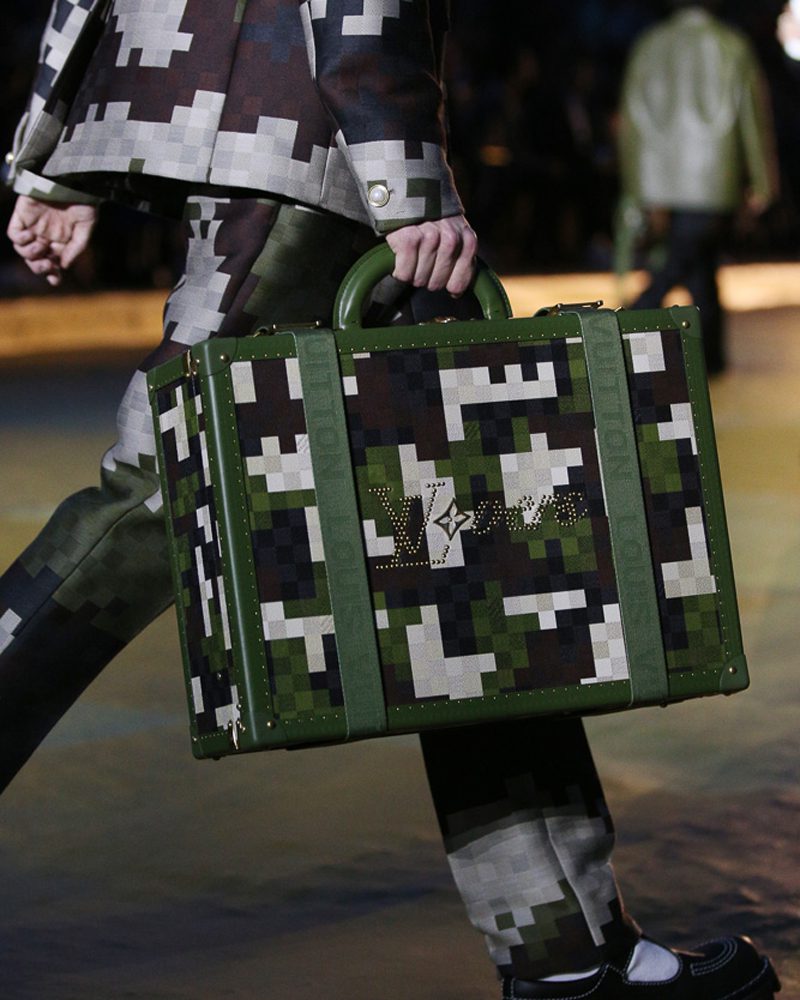
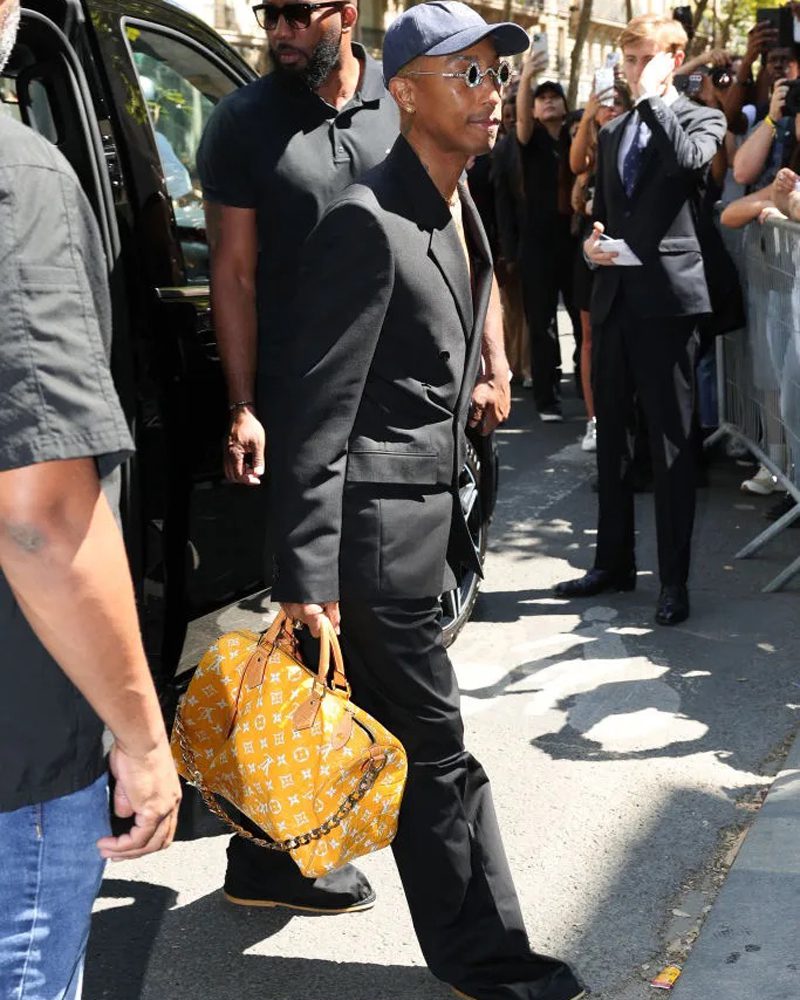
Pharrell himself has since been seen toting the exotic, diamond and gold-inlaid rendition of the classic Vuitton carry, the Millionaire Speedy.
And while the singer-songwriter is undoubtedly among the flashiest of folks, Pharrell’s example is, by no means, the only one.
Succeeding Karl Lagerfeld at a Parisian house at only 25 (*while I quietly sob in the corner at 25 myself*) was Stella McCartney, who beat her nepo baby allegations by establishing a new aesthetic norm at Chloé with airbrushed souvenir T-shirts, bodacious silk slipdresses and low-slung jeans, elements that now comprise that anachronistically Y2K look (and later, carried forward by Phoebe Philo with the coveted Paddington and Silverado bags).
McCartney herself takes the bow in a brutally tailored blazer atop an undone white blouse while President Bill Clinton’s Monicagate sermon plays in the background.
Liana Satenstein writes, “It’s undone and lived-in, not just tight and bright.”
Could there be a grander stamp of approval than when designers themselves choose to wear their collections? We think not.
The Evolution of Designer Dressing
Speaking of Phoebe Philo, we now associate the designer with her austere, minimalist style. Vogue Runway director Nicole Phelps dubs Philo’s acolytes (now shoppers at The Row and Jil Sander) the “fashion nuns”, a subset of quasi-puritanical women disinterested in high-octane sex appeal.
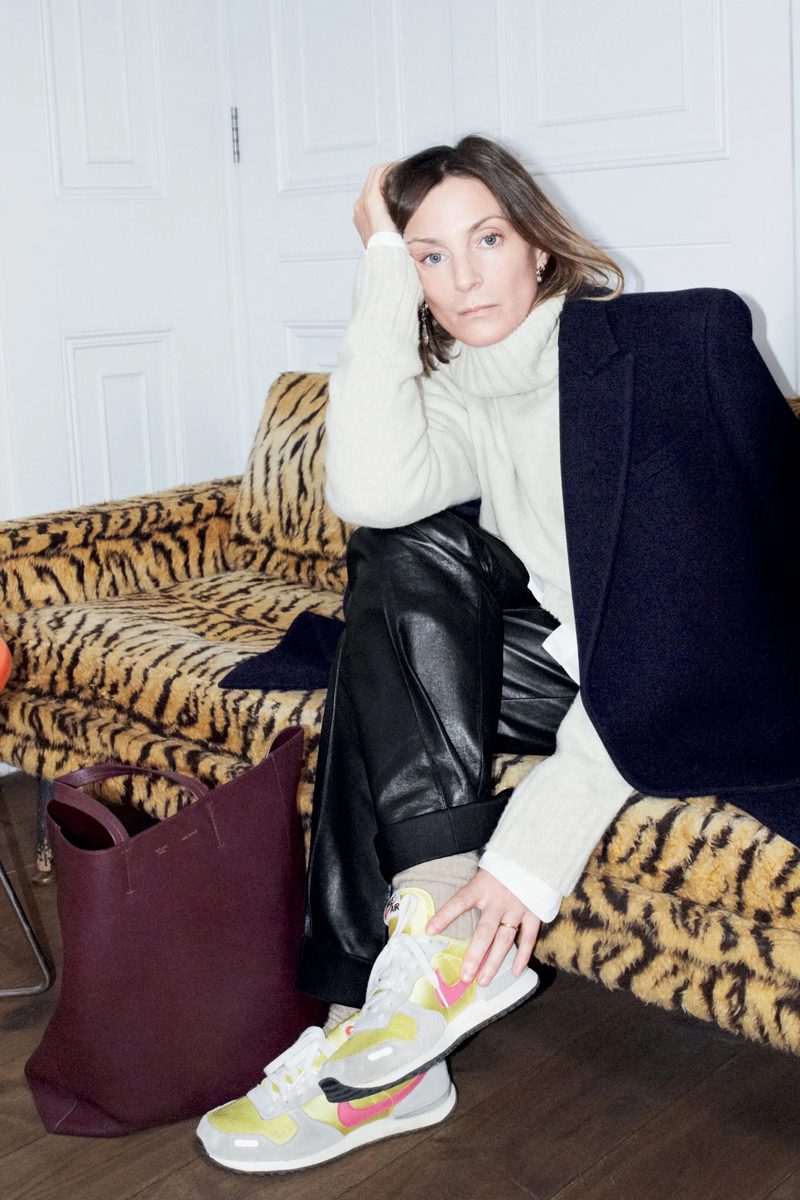
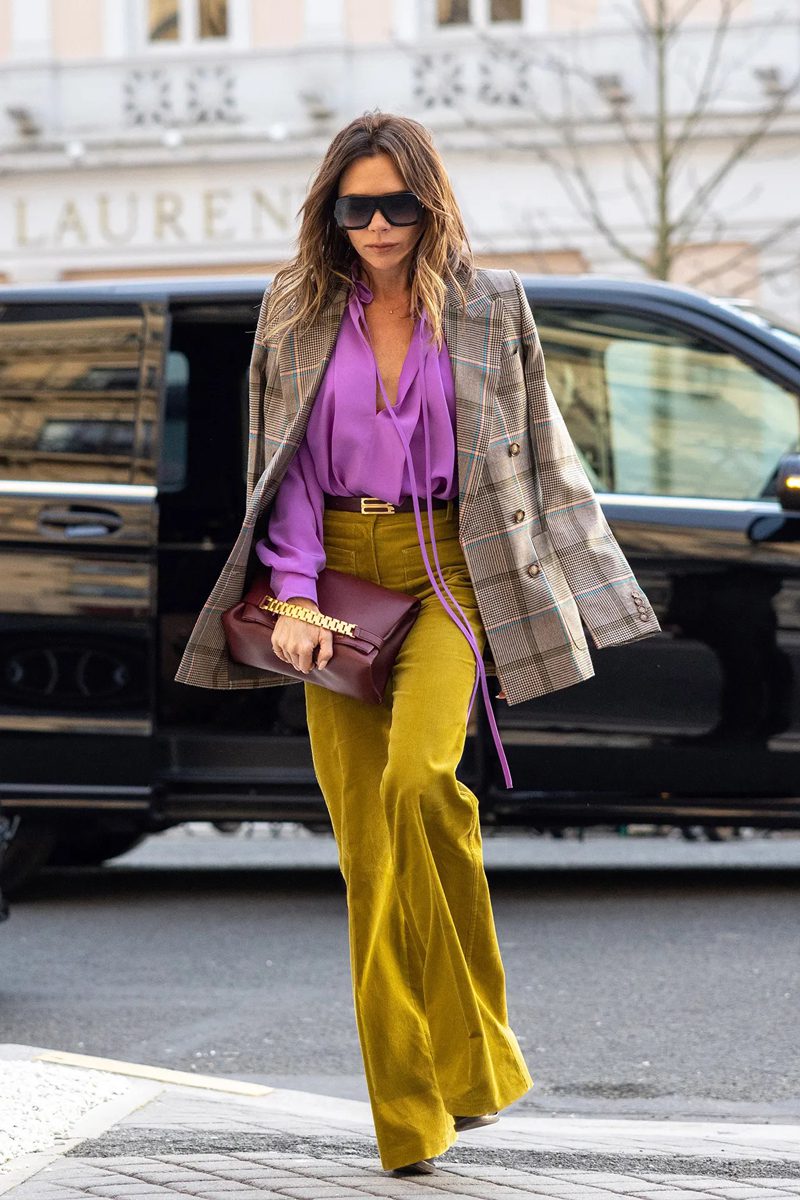
Yet, Phoebe Philo herself, back in her early-Chloé days, was no stranger to experimentation, appearing at the end of her runway presentations in midriff-baring corsets, embellished mesh-tops and ultra-low-rise denim, infamously starring (alongside fellow creatives McCartney, Luella Bartley and Katie Hiller) on a 2000 cover of Pop Magazine. “My 20s were just hectic,” Philo confided to Vogue in 2005, before a three-year hiatus.
And once she was back, in 2009, now at the creative helm of Céline, she truly was back, this time with a more considered, some might even say conservative, uniform, mainly comprising black and white. “I don’t feel that there’s a huge amount of storytelling that needs to be done,” she told Vanessa Friedman. “Someone telling me a story isn’t going to make me like it more. It is a coat. It’s a pair of trousers. I do appreciate a level of straightforwardness.”
And as she went from mid-Noughties It-girl to the tastefully tailored visual palette cleanser that is the Céline woman, devoid of any visual excess, yet no less empowered (she famously declared, “the chicest thing is not to show up on Google”), fashion folks were quick to follow.
After all, here was a designer who chose to wear their own creations, not on a single occasion, but season after season, such that it became indistinguishable whether they were wearing their designs or if their designs were a direct reflection of what they wore. Is it really a surprise that Philo’s following is so cult-like?
The New Designer Uniform
Now, while Philo may be the most notable example, she, too, isn’t the only designer in fashion to conform to a uniform.
Take, for instance, Hedi Slimane, who succeeded Philo, not only axing his predecessor’s famous l’accent aigu, but overhauling the entire monastic aesthetic of (Old) Céline to instill a new, rock-‘n’-roll-meets-indie-sleaze look, leaving in his wake gorgeously-grungy moto jackets, skinny jeans, and the Hedi-boys. Unsurprisingly, this is a uniform Slimane himself swears by.
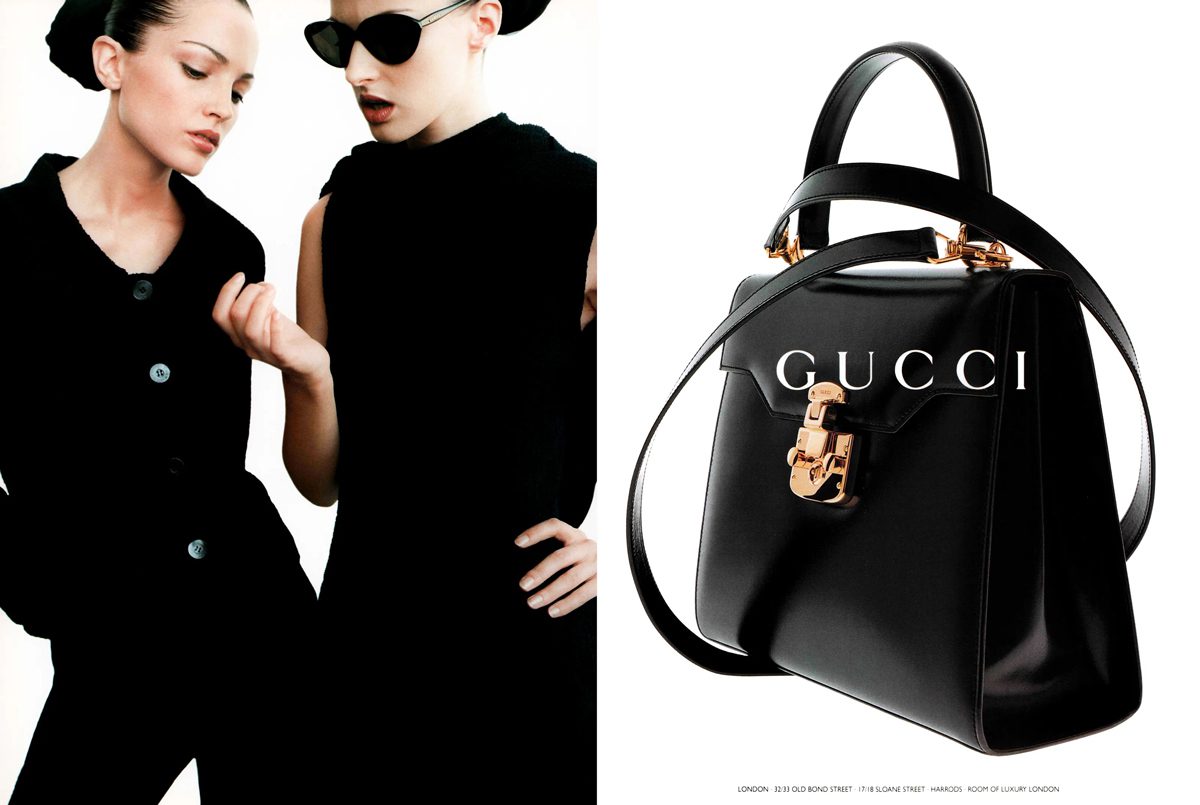
Then there’s Jil Sander’s Simone Bellotti, perpetually spotted in his dusty grey Detroit Tigers cap. Matthieu Blazy, currently of Chanel, lives in his lived-in jeans and Nike dad trainers. Handbag designer Paloma Lanna is not seen without her eponymous Paloma Wool purses. Chemena Kamali embodies the modern Chloé woman in her high-low blend of scuffed sneakers and flared jeans, accessorized by a voluminous Chloé coat and Camera bag.
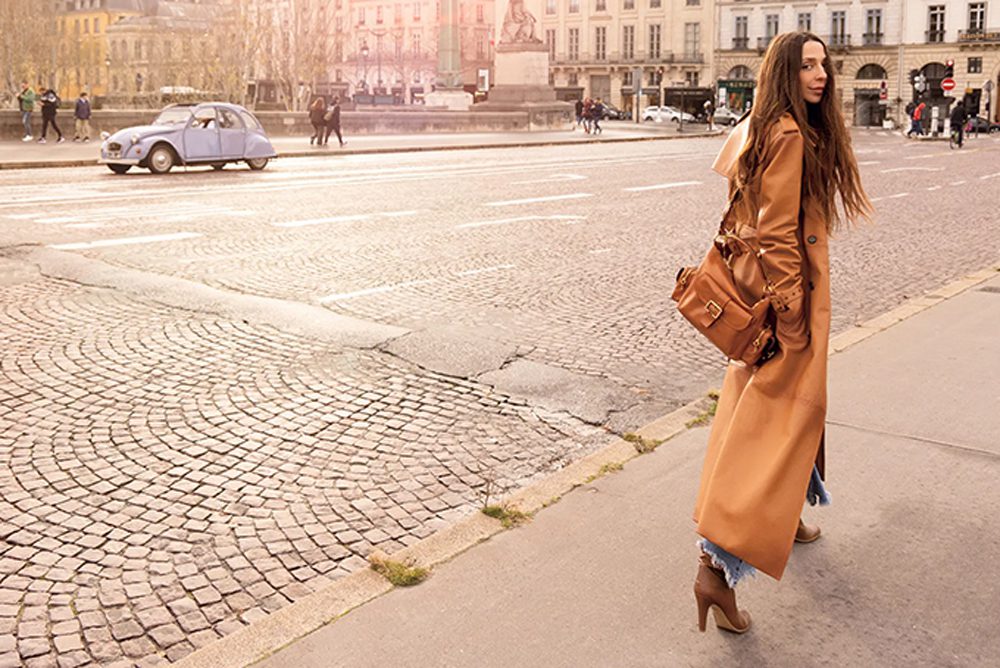
And as we’ve already seen, Jonathan Anderson’s own personal uniform harks back to Ralph Lauren’s giant, distressed denim from the mid-aughts, often styled with a Western-style belt – once derided, now so iconic they’re directly referenced on the Ralph Lauren website.
Even the rationale behind Karl Lagerfeld and Tom Ford’s suits isn’t dissimilar – the latter’s ill-fated stint at Saint Laurent, as decried by Monsieur Yves himself (“Finally, Ford is leaving. I have suffered for what he did with my name. Thankfully, the damage is not irreversible”) now replaced by tailored suiting all throughout the recent runway presentations.
Dries Van Noten said it best: “Being a fashion designer, it’s decisions from the early morning until late in the evening. I have a uniform to save my energy for more important things than getting dressed.” Perhaps watching a creative director show up day in, day out – from Hedi Slimane to Rick Owens to Miuccia Prada and Betsey Johnson – in the same skirt, blazer, tee, or pants feels like a promise – a sense of trust that they stand by their creation.
The uniform is at once an armor, a statement, and a functional tool that facilitates our lives. And that, dear reader, is fashion at its finest.

I have a more simple view which is – fashion is about status and therefore power. The designer has power over the models, merchandisers, and masses. At some point if you’re obsessed with fashion, you no longer want to dress like models, influencers, or high net worth customers to be better than the masses. You want to be above it all, and that includes being above or in control of the fashion system. Dressing like the designer makes you feel as if you are above the hoi polloi fashion game and what “basic” people want. In the end it’s the same psychology, just one level “up”.
I’m weirdly fascinated with how royals dress, as well as designers. And I think it’s because they answer the question: if you afford anything and have access to everything – what do you choose?
Another amazing article!
Happy New Year Sajid!
Anderson is LITERALLY dressed exactly like my 75 year old dad dresses. I love it!
The guy in a green looks like Zelensky …