
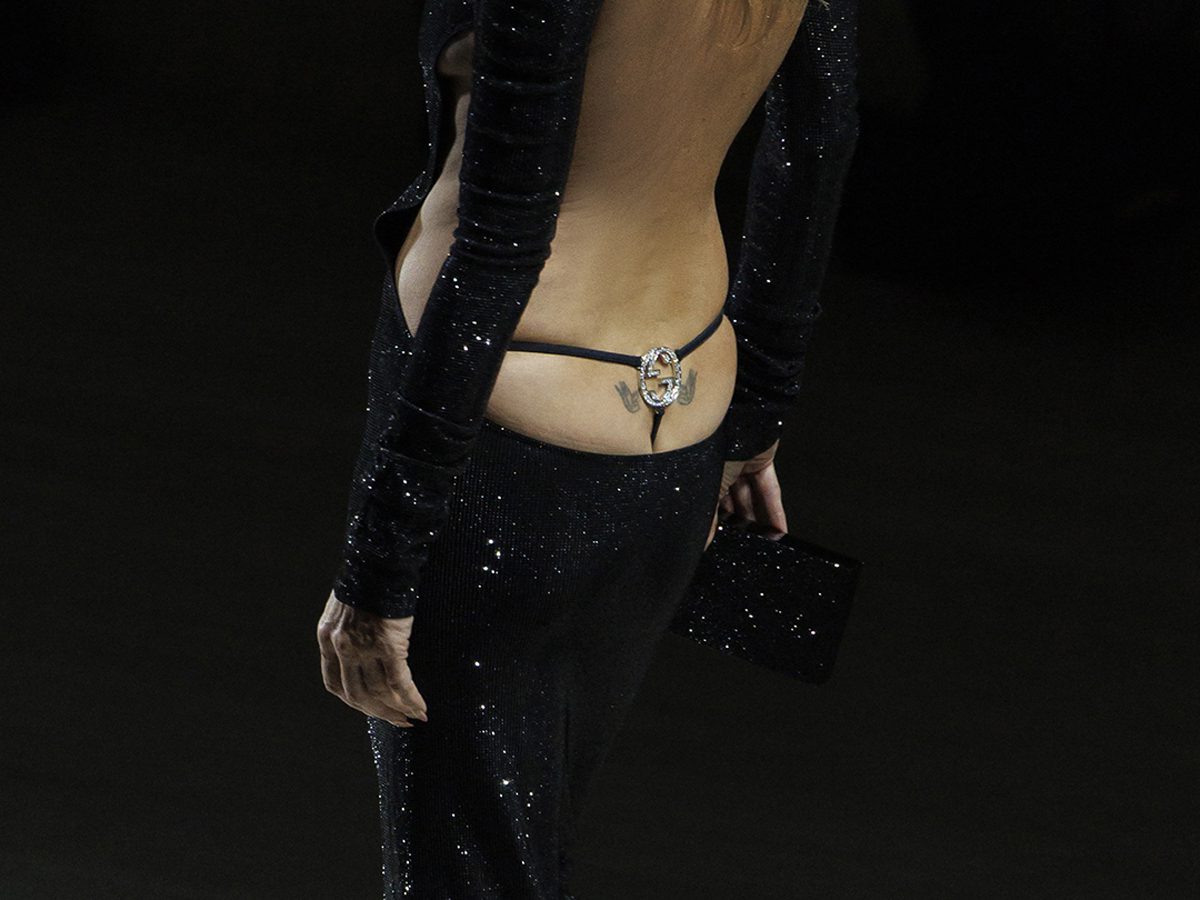

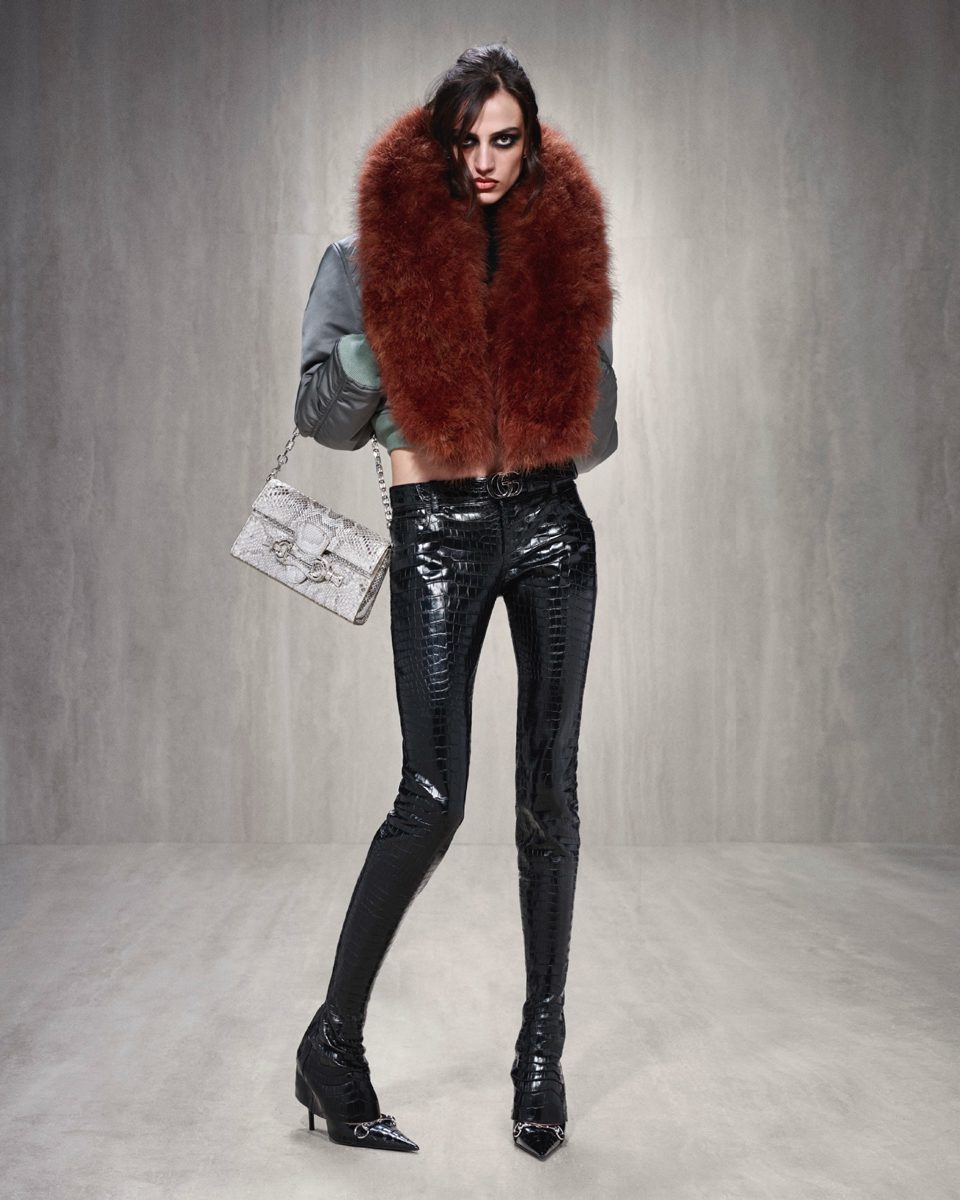
“I hope I made you feel Gucci today,” said designer Demna following the finale of his debut Fall 2026 runway show for the Florentine fashion house last month, titled after the Botticelli artwork, Gucci Primavera.
But if you thought the backdrop was a Botticellian affair – replete with outsize 3D replicas of ancient Greco-Roman statues from the Uffizi of Florence (where the original Primavera presides), and the Museo Archeologico Nazionale di Napoli – all shining abs and glistening pecs, just wait until you see the models.
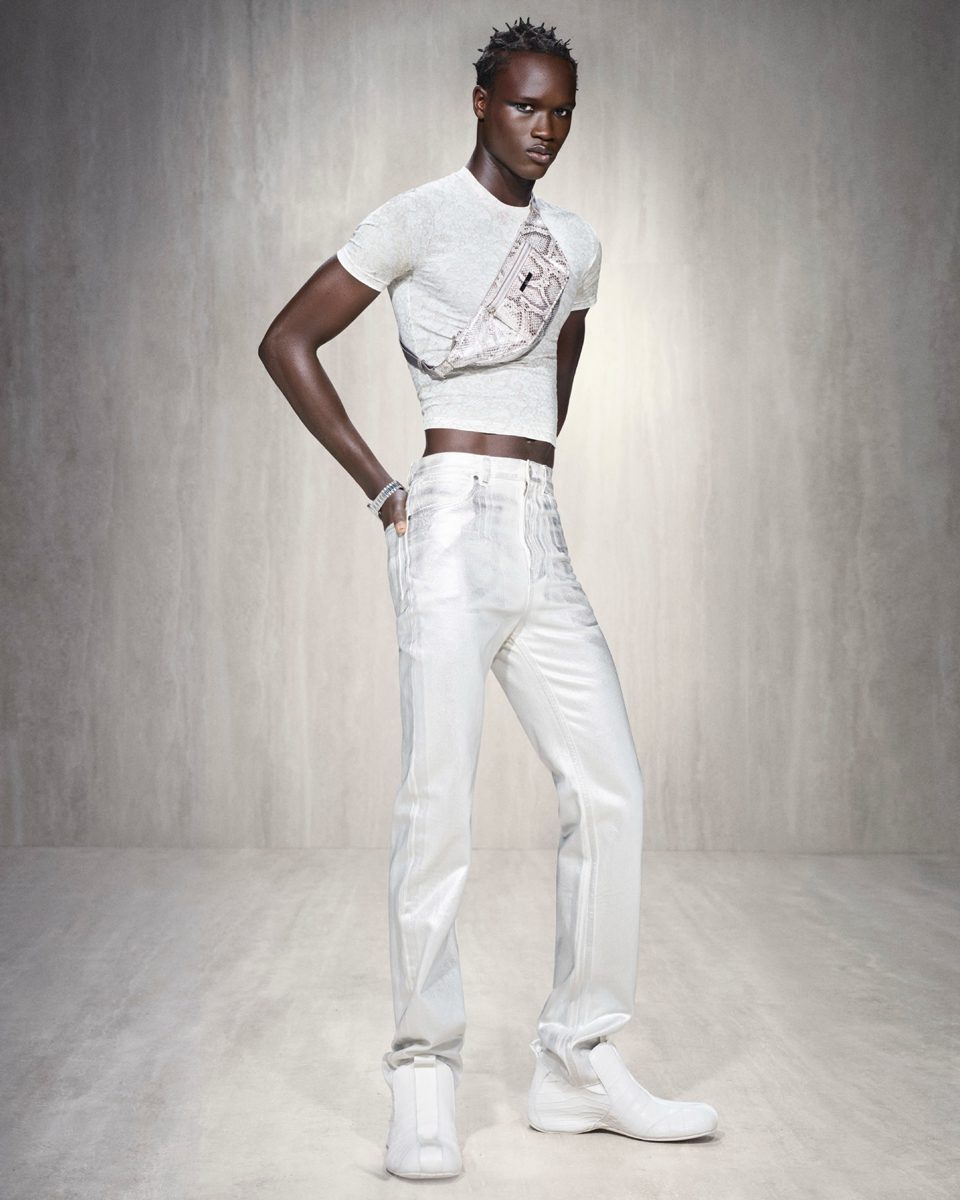
With biceps bulging out of skin-tight compression tees, low-slung skinny jeans, furry slippers, and wielding slick, slouchy Jackie bags, models waltzed down Gucci Primavera like it’s 2001. Rapper Fakemink stopped mid-strut to pull his phone out of a monogrammed Gucci bumbag for a few seconds of doomscrolling. Kate Moss closed the show in a glittering Gucci thong.
Demna chimed: “The energy, the passion, the fun, the sexy” are back at Gucci. GQ called it “Guccimaxxing.” User Marc10 on the fashion forum AOL opined, “Kinda felt like one of those parody fashion shows from movies, where fashion people are satirized as flamboyant campy weirdos.”
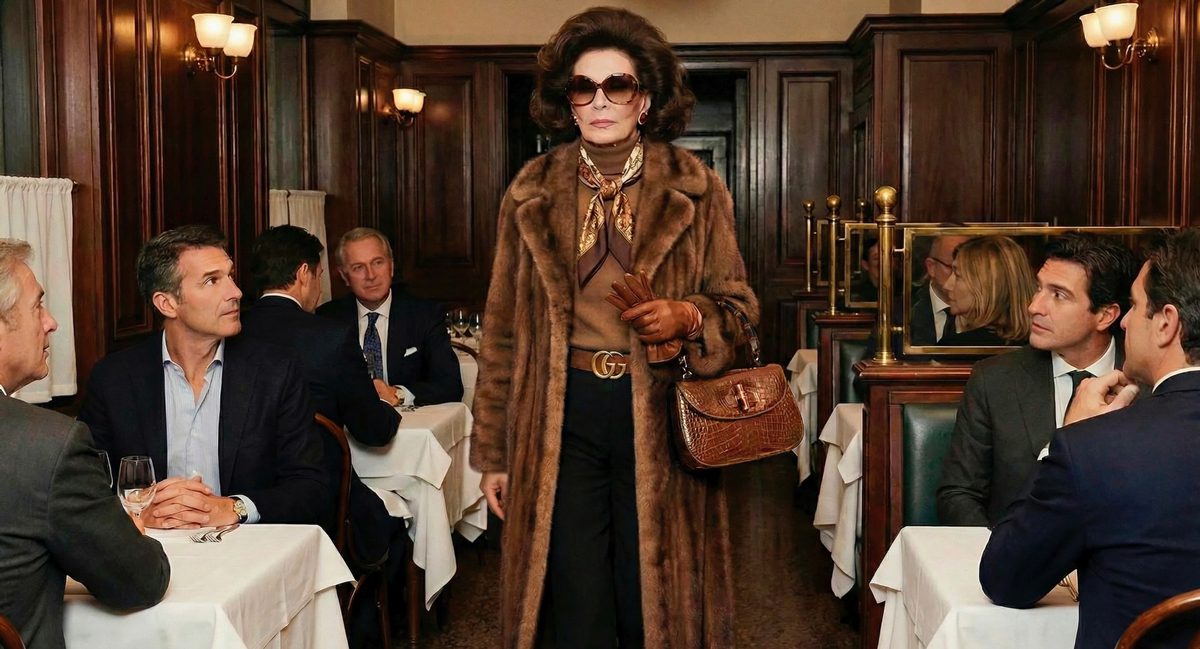
Yet others have gone on to dub the collection derivative, sleazy, uninspiring, or downright AI slop, given the series of seemingly unrelated AI-generated images of a satellite in space, a horse on a beach, a GTA-adjacent sports car, and a woman in a fur coat that inundated the Gucci grid in the days leading up to the show. And now, with little connective tissue between said posts and the beefcake-forward show, the internet is only too delighted to be collectively outraged by it all. But really, isn’t that the point?
After all, what is fashion now if not rage-bait?
It’s All the Rage!
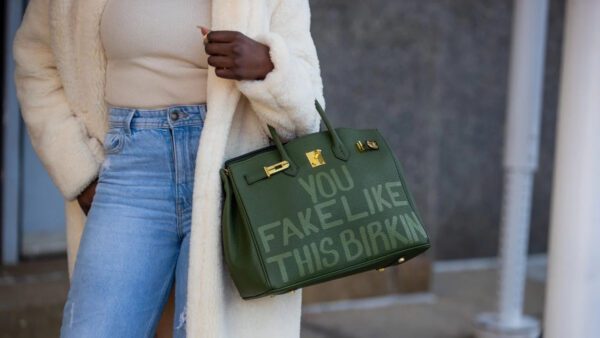
Now, Demna is no stranger to outrage. In fact, with his $2,000 potato chip purses, leather IKEA totes, and brand new sneakers that look like they’ve been through nuclear warfare, Demna’s designs have long served as internet rage-bait, way before Oxford University Press deemed it 2025’s Word of the Year (despite it being, well, two words. Now I too am mildly enraged.)
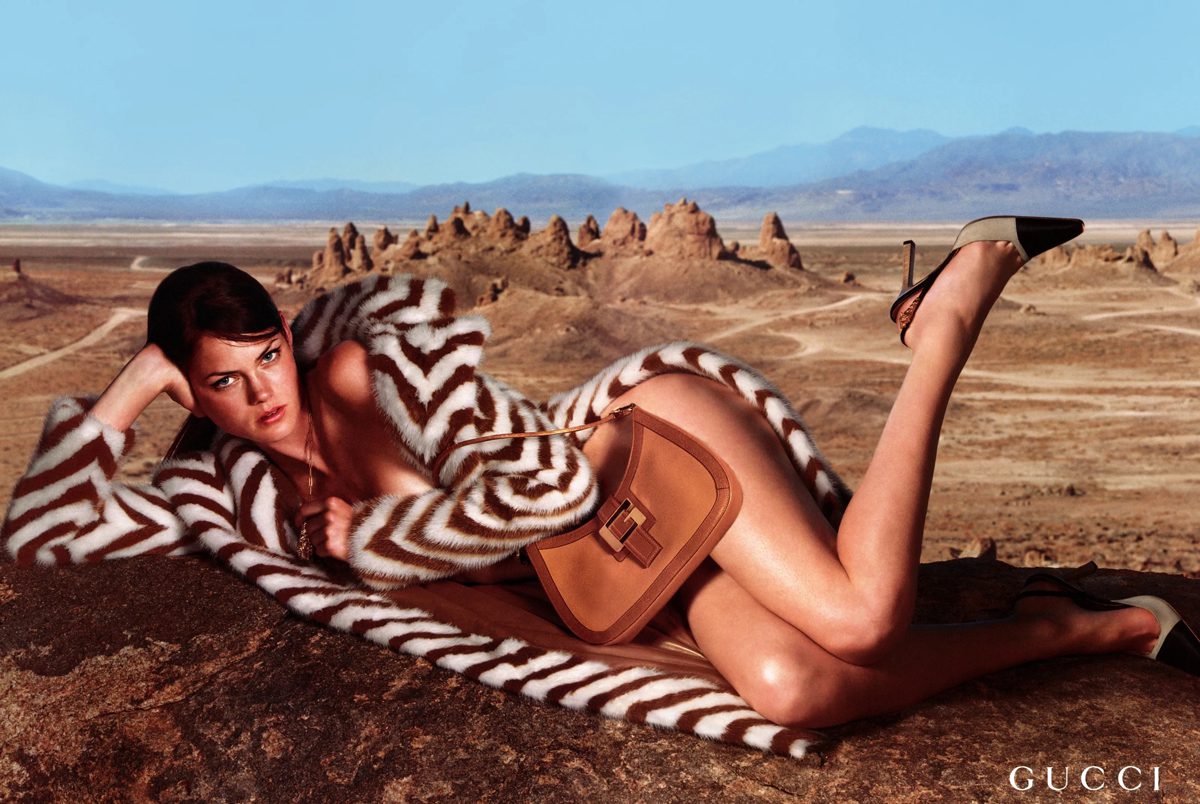
Culturally, however, rage-bait didn’t quite begin on the runway; it was perfected online. Because at its core, rage-bait is content deliberately engineered to provoke anger, disbelief, or moral wrath – angry clicks are still clicks, after all – and clicks are the currency of the algorithm.
And if something irritates you enough to comment, tweet, or send to a friend with a furious “look at this nonsense,” that’s algorithm gold!
But while rage-bait content is easy enough to identify nearly the second it appears on your screen – employing a litany of oversimplified arguments, deliberately extreme opinions, false information, or missing context that invite viewers to ‘correct’ the creator in the comments (or, well, fight it out with other commenters) – it’s much harder to simply scroll past.
Because you see, rage-bait thrives on emotional impulse, not accuracy. It’s bait because the urge to react immediately overpowers our rational faculties. And more often than not, like a dog that loves a chew toy, we take the bait.
So, it was perhaps fitting when the man orchestrating much of this discourse confessed, “For 10 years I tried to impress myself that I’m a smart designer,” Demna said backstage. “And at Gucci, I realized that I can actually create from an emotional standpoint rather than an intellectual standpoint.”
And as far as emotions go, rage is certainly one of the most intense!
The Raging Origins of Rage-Bait Fashion
Interestingly, the very vocabulary now populating pop culture – from fashion TikTok to the pages of Vogue – terms like looksmaxxing, mogging, rage-bait, and the many “-pilled” ideologies built around male optimization, didn’t originate in glossy beauty tutorials or runway commentary at all. In fact, much of it emerged from the darker, hyper-online corners of alt-right incel forums before migrating into the mainstream. Eventually, what began as a niche internet dialect morphed into algorithm-friendly shorthand for provocation.
And this season, that same exaggerated brand of masculinity spilled onto the runway, from biceps bursting forth from sleeveless tailoring by Calvin Klein and the aforementioned muscle mania at Gucci, to hyperoptimized male techbros like Mark Zuckerberg attending the Prada show in Milan in a move menswear podcast Throwing Fits dubbed “the revenge of the nerds.”
Yet, rage is hardly a new strategy in fashion.
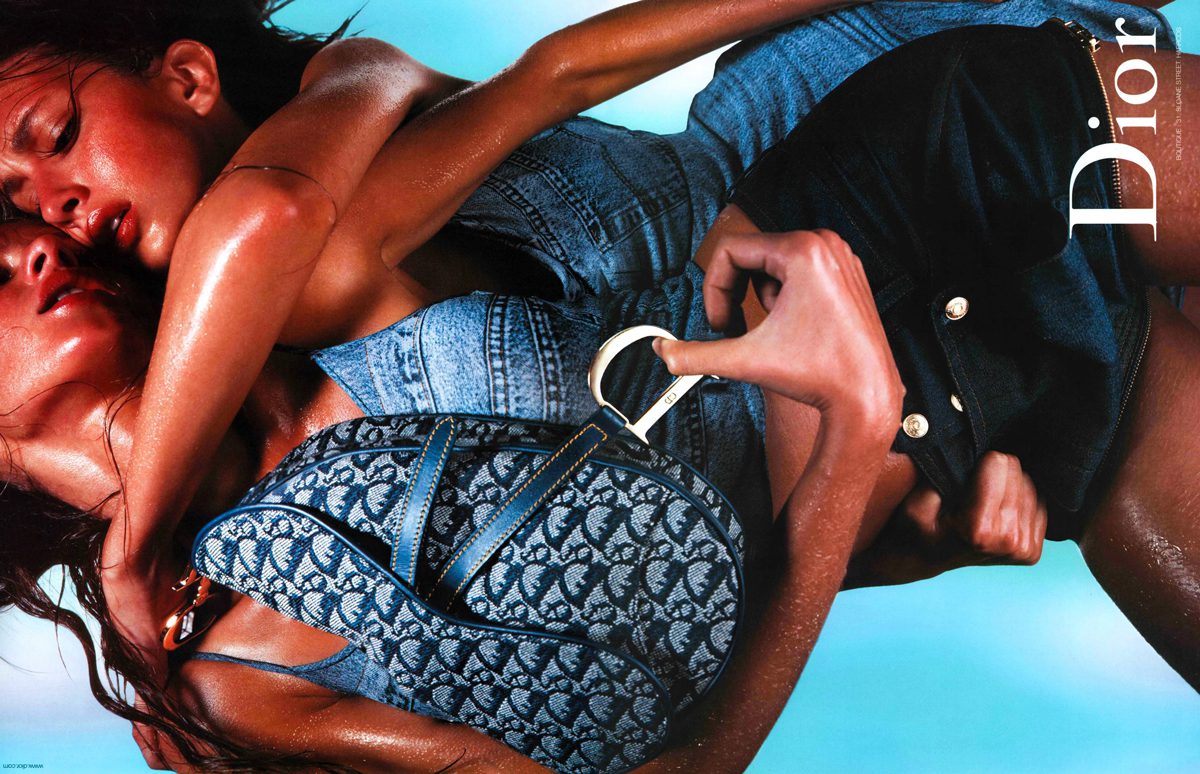
Long before the internet coined “rage-bait,” designers understood that scandal travels faster than admiration. In the ’70s, Vivienne Westwood’s London shop shocked the establishment with fetish gear and deliberately offensive graphics.
In July 1999, John Galliano presented his haute couture collection for Christian Dior, where models romped down the runway looking as though they had crawled out of some decadent apocalypse. Cathy Horyn wrote, “At the end of the show, there was no applause from a lot of clients, just stony looks. Some sat on their hands. I’d never seen people look so offended by sexuality.”
The only difference these days? Speed.
Online, anger travels faster than intrigue, and the algorithm rewards whatever sparks the loudest reaction. And “In the clamour to be first,” writes fashion critic Laura Antonia Jordan, “we can lose the capability to think, to reflect.” Rage-bait isn’t merely an accident of reception anymore – it’s the design brief.
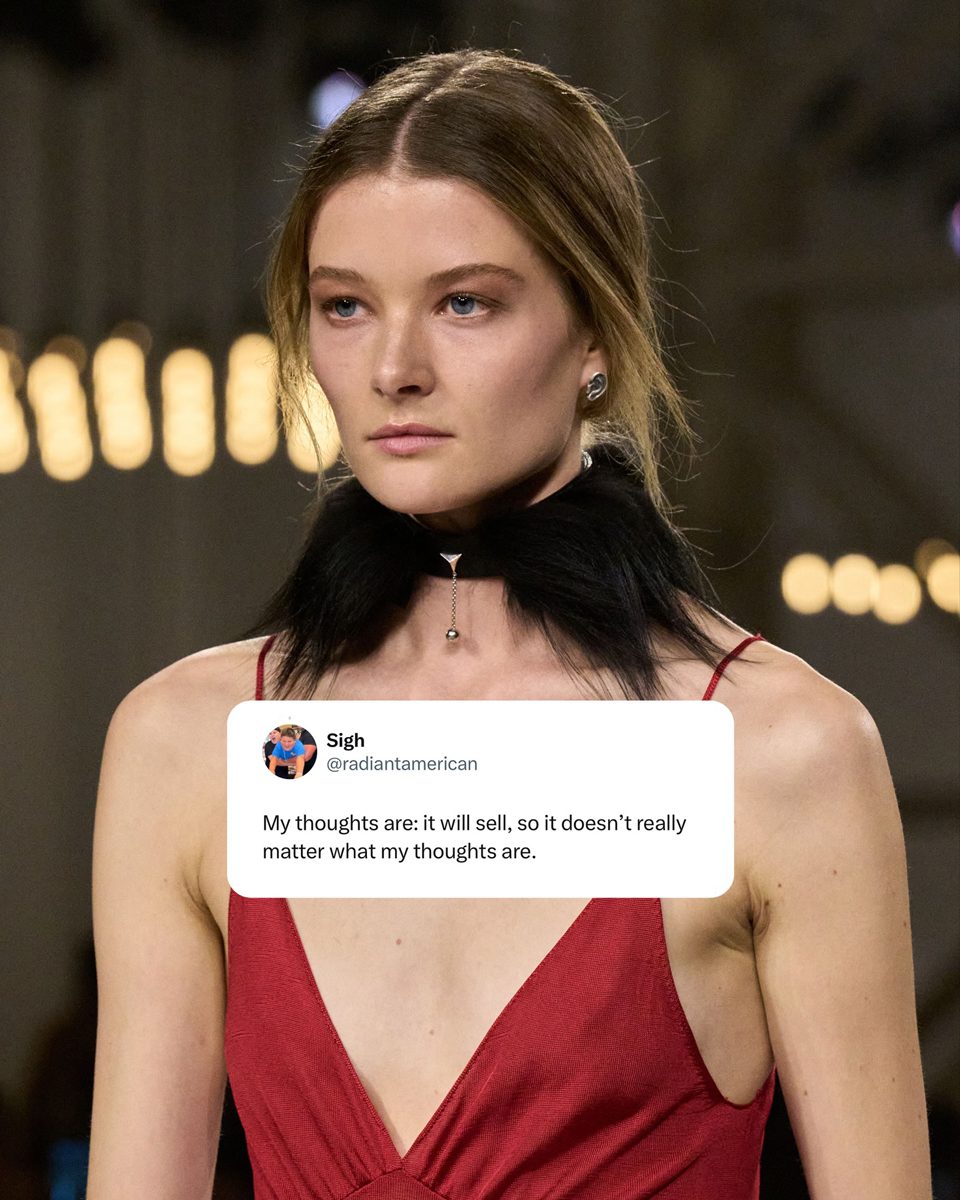
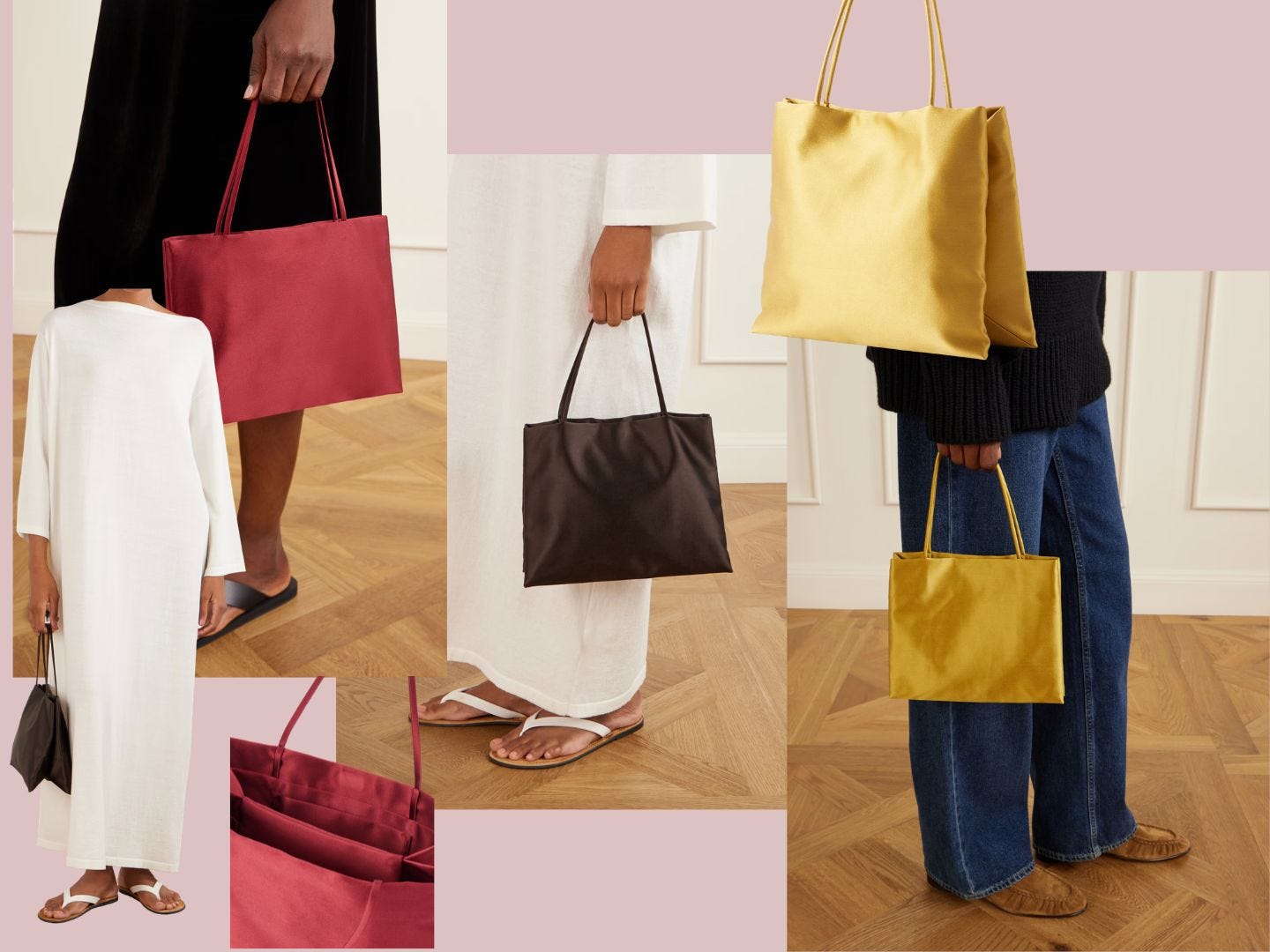
After all, what else would explain the existence of those $800 The Row foam flip-flops?
Can We Break the Cycle?
But here’s the thing – we’re exhausted. Exhausted from the outrage-loops, exhausted from the endless scroll, exhausted from being told that clicking, commenting, and raging is somehow participation. And although fashion didn’t quite invent this, it has (unwittingly or otherwise) become one of its loudest proponents. We often tend to point to the greats in this regard – the McQueens, Gallianos, Westwoods, and Marc Jacobses of their day – and say, “They did it too!” Yet there too lies a fundamental difference in the texture of shock – and yes, there are degrees of shock, alright.
When McQueen put a model in a glass box filled with moths for Spring 2001, for instance, he wasn’t looking for “engagement” or tracking media metrics. He was exorcising demons, challenging the fashion elite to reflect on their ideals of beauty. The casting of looksmaxxing streamers, Bryan Johnson and Clavicular at the FW26 runway presentations of Matières Fécales and Elena Velez, respectively, not to mention the myriad musclebound models and celebrities at Gucci, on the other hand, serve to do the exact opposite.
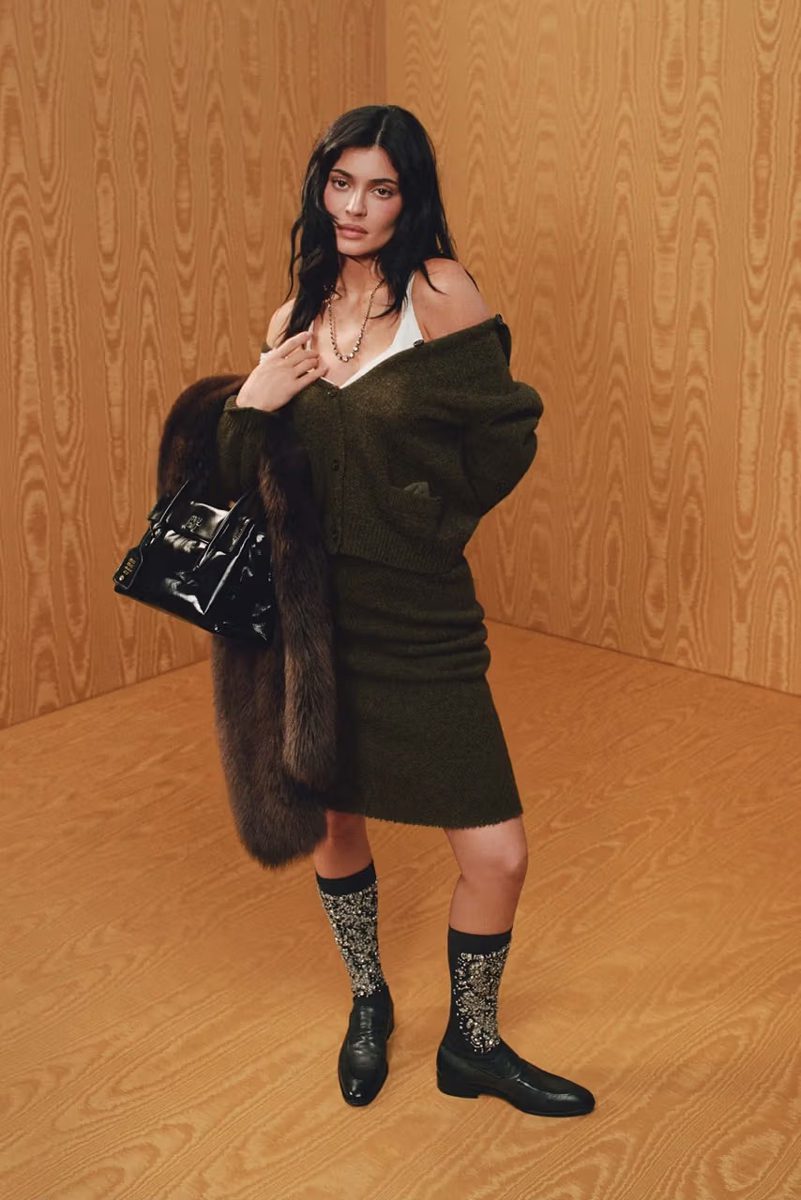
And because today’s “Internet-breaking” moments feel like they’ve been reverse-engineered in a marketing suite – take cool-girl brands Miu Miu and The Row’s brushes with the Kardashians (the former with Kylie and the latter with Kendall) – they feel staged. After all, is it really so outrageous anymore if it tries to enrage everyone? Critic Sol Thompson agrees: “Outrage is dulled due to repeated bludgeoning by outrageous material.”
Creator Ryan Yip calls this fashion zoochosis: “We desire freshness, and therefore we induce freshness,” he explains to CNN, “Because whatever brands are putting out is not stimulating us, we create the stimulation ourselves. We might try to start an argument, we might be more inclined to be contrarian, just so we can debate about something because, oh, my god, I’m so bored.”
Could it be that we are all really just bored?




I have no idea how Demna continues to be employed because … well… there’s no nice way to say this, so …
He’s boring.
Under his leadership, Balenciaga looked like a half-price Moschino knock off.
And the last two Gucci collections… he’s trying to do Tom Ford, but it’s coming across as a 90s teenager trying to pretend her Calvin Klein diffusion line really is Gucci.
100% this!
The algorithm rewards outrage.
The audience remembers fatigue.