
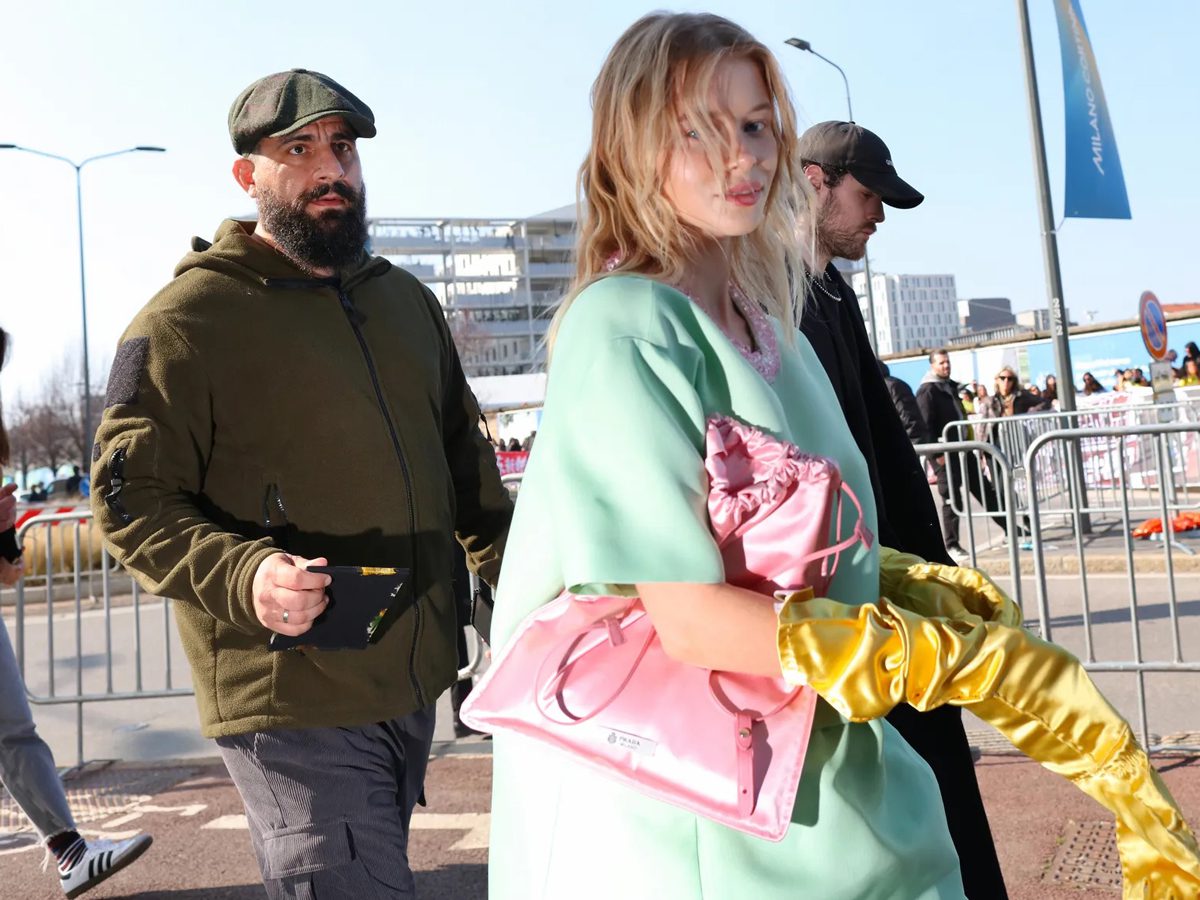

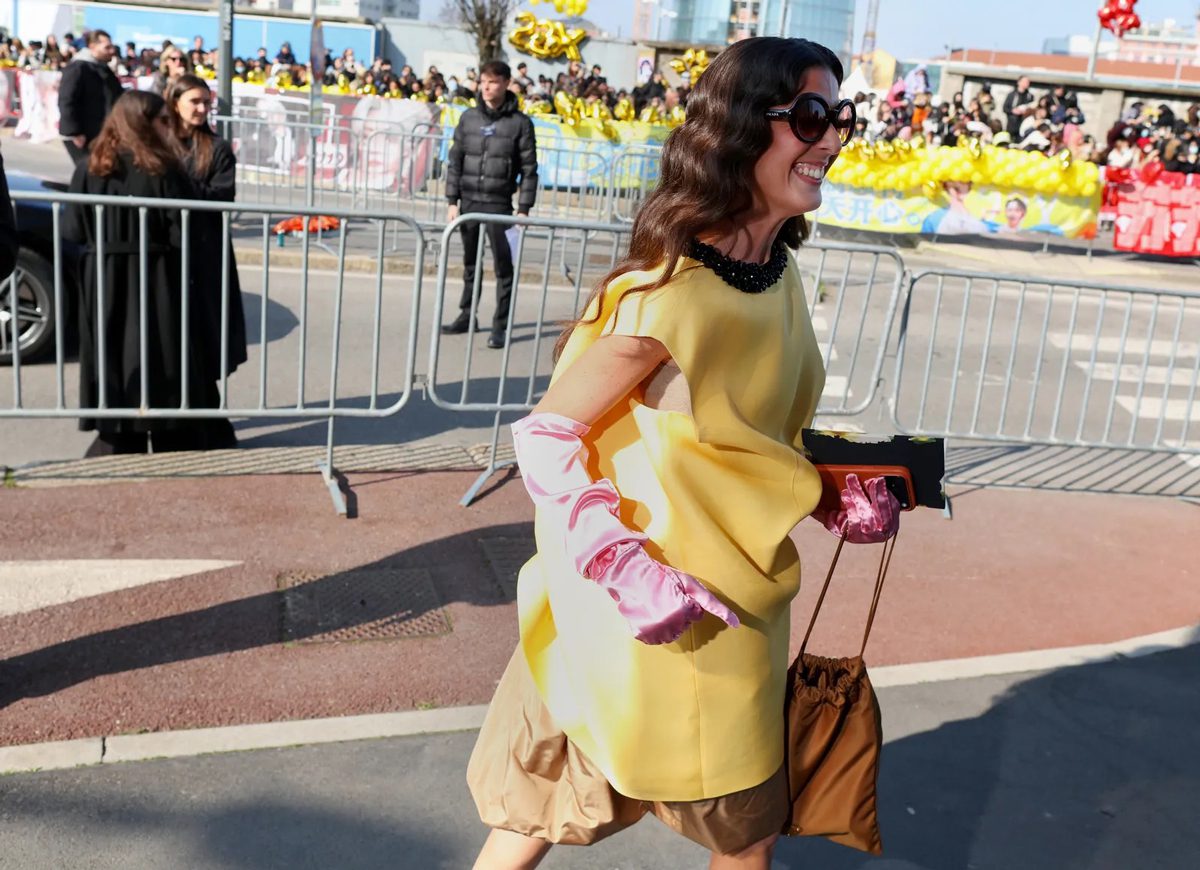
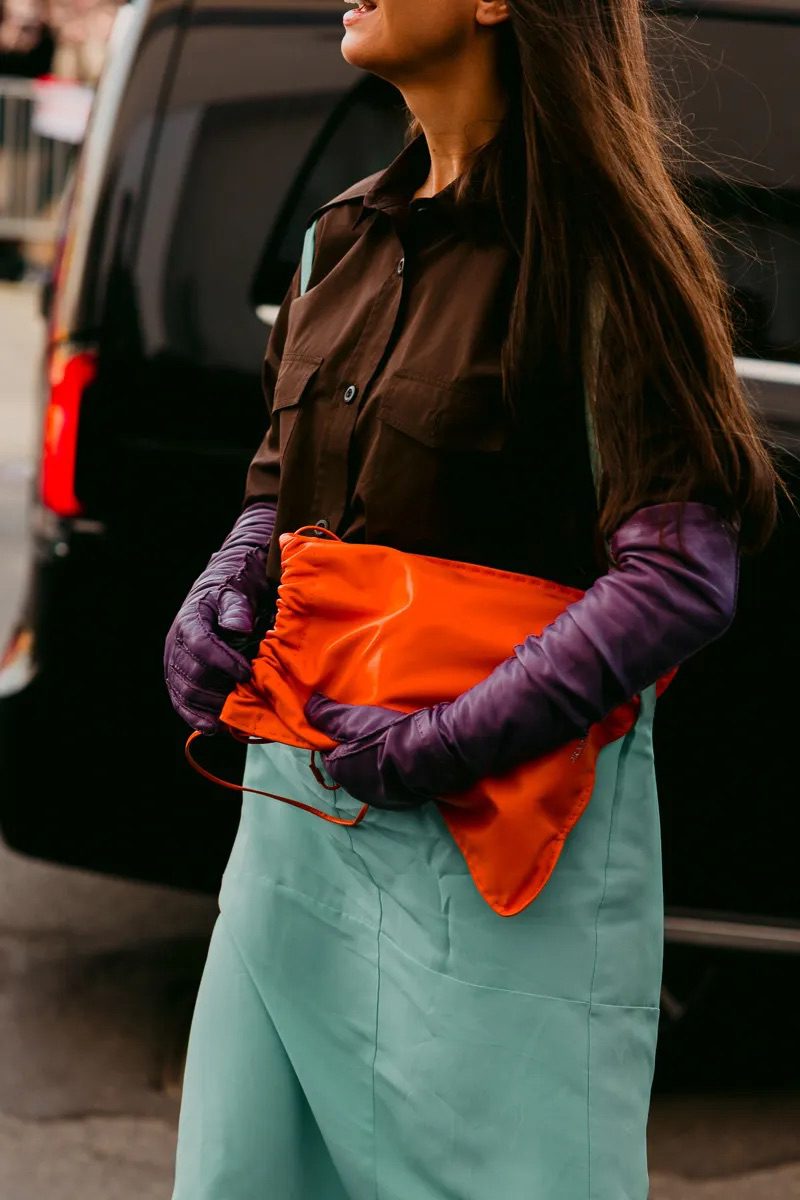
There’s an incredible image of an attendee outside of the Prada show at this season’s fall presentations in Milan. She’s clad, as fashion week folks so often are, in head-to-toe Prada, an explosion of soft tints with just a hint of blazing orange, just as Mrs. Prada intended.
She has her pastel pink Wish pouch tucked under her arm as she’s peeling long, yellow satin opera gloves off her hands, hair strewn over her face as she bashfully beams at the camera, having been caught in the act of shedding her Prada persona, most likely in preparation for the next show schedule.
It’s also a rare glimpse at the shapeshifting silhouette of the fashion show attendee today. At the Alaïa show next, she proceeds to slip into a blinding yellow puffy skirt, a satinated chartreuse Le Teckel tucked discreetly under the shoulder. Over at Courreges, she’ll subsequently show up in full punk-princess garb: an all-black hyper-miniskirt and thigh-high boots.
Yet, what makes the first picture so incredible is not the aspirational appeal of what she’s wearing – of course, who wouldn’t want to be dressed in head-to-toe Prada? – but a more grounded essence that anchors it in reality.
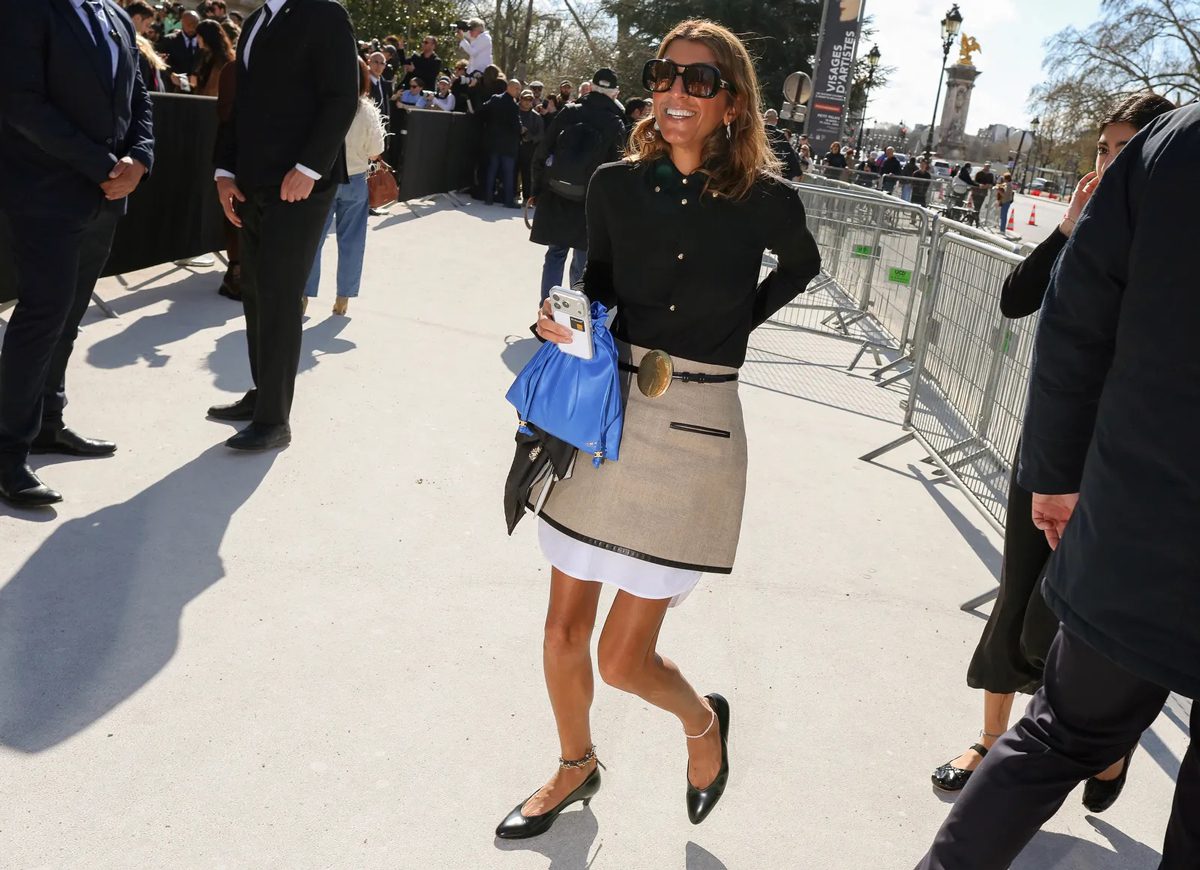
Here’s a woman who dressed up for the ultimate fashion fantasy: to sit front row at a fashion show, with a silly little pouch that likely won’t fit anything beyond her barest essentials, in elbow-length opera gloves that likely restrict mundane chores like scrolling and scheduling, and in a seafoam dress not entirely unlike a subversive Cinderella.
And here, at the end of the show, we see her taking off her glass slipper (or well, Prada opera gloves). If anything, this is a vision that feels even more aspirational to me, if for no other reason than how real it feels.
Not to mention, it does make me want to get my own silly little pouch.
The Silly Little Pouch Industrial Complex
But our seafoam Cinderella wasn’t the only princess in fashion week this season with her silly little pouch of magic.
The trend, in fact, dates back to the SS26 runways, when Mrs. Miuccia Prada sent models down the Prada runway clutching tiny satin pouches – in bubblegum pink, moss green, and butter yellow duchesse silk, olive green and classic black Re-Nylon made from recycled ocean plastics, and leather.
This, dear reader, was the Wish Pouch – small, slightly formless, finished with a leather drawstring and a discreet logo. Architecturally speaking, they fit snugly into the palm of your hand, the exact antithesis of those voluminous logo it-bags you slung over your shoulder to ferry your insecurities and broadcast your self-esteem out into the world.
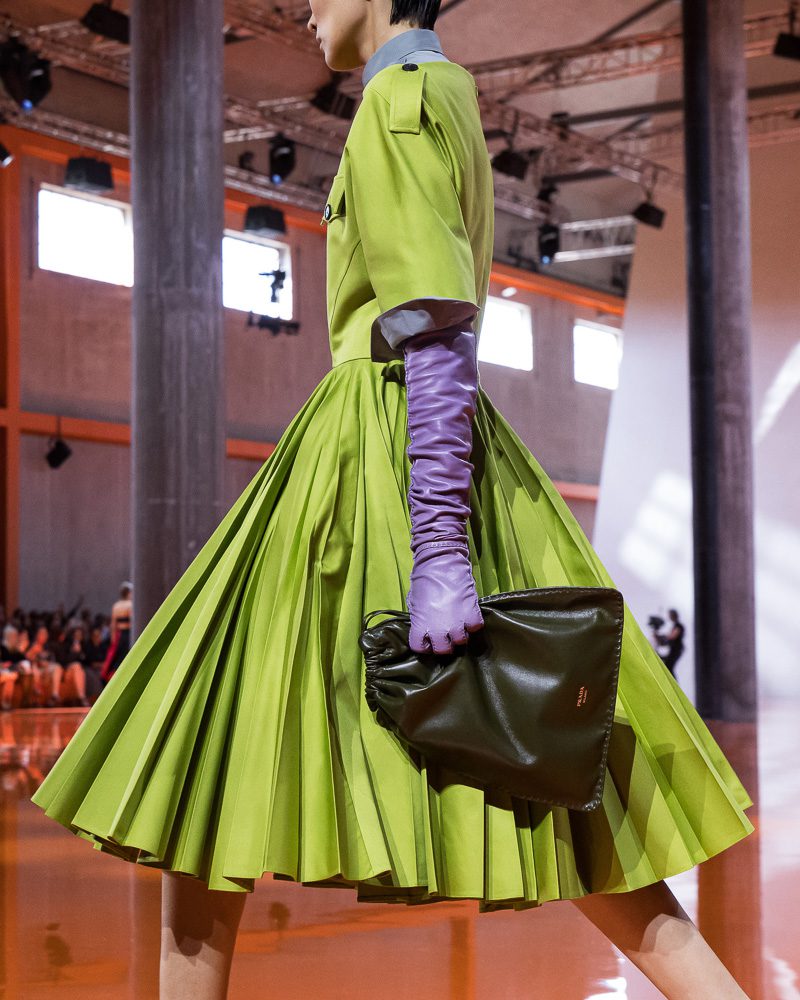
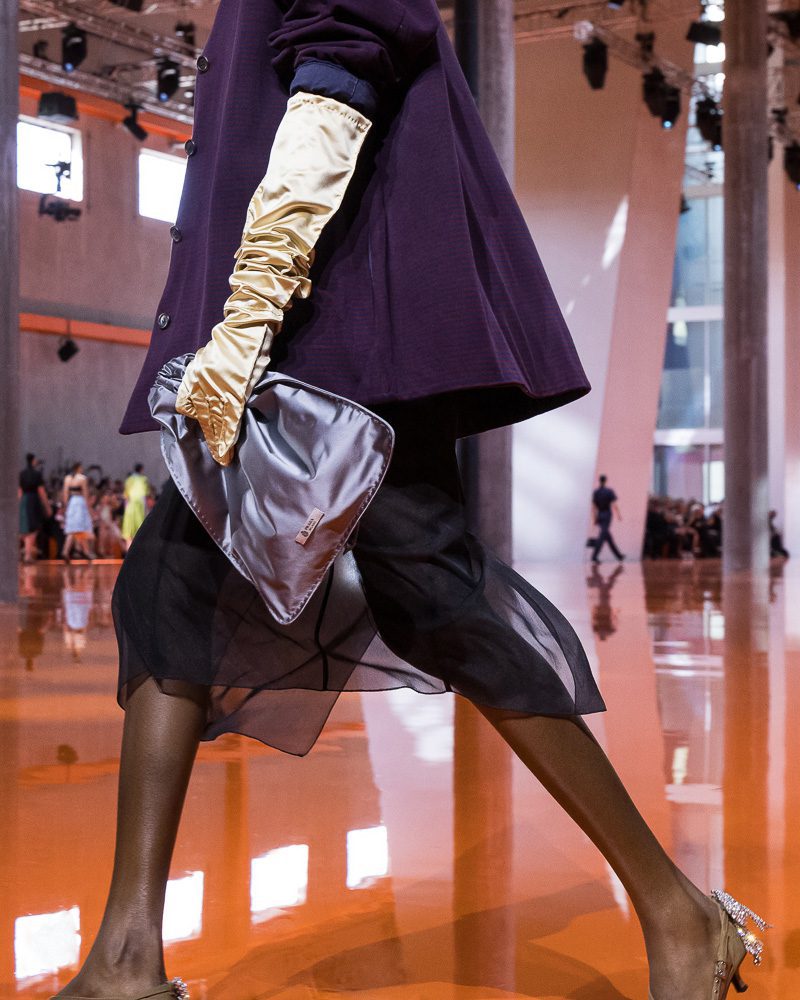
Sentimentally speaking, they’re the exact kind of purse you had always wished for. It’s even in the name – Wish pouch!
But Prada was far from the only one. By the time fashion month wrapped, the silly little pouch had colonized collections all over. At Valentino, Alessandro Michele produced soft black versions embroidered with beads and trimmed with fringe.
Over at Loewe, the Proenza boys doubled down on the historic Flamenco clutch – essentially the silly little pouch in grown-up guise, choked at the throat by slinky leather cord, beloved by women who have both excellent taste and nowhere urgent to be.
At Celine, Michael Rider debuted the lambskin Crystal pouch. Miu Miu had one too. As did Calvin Klein. Louis Vuitton – in true Vuitton fashion – added metal trunk corners to its own.
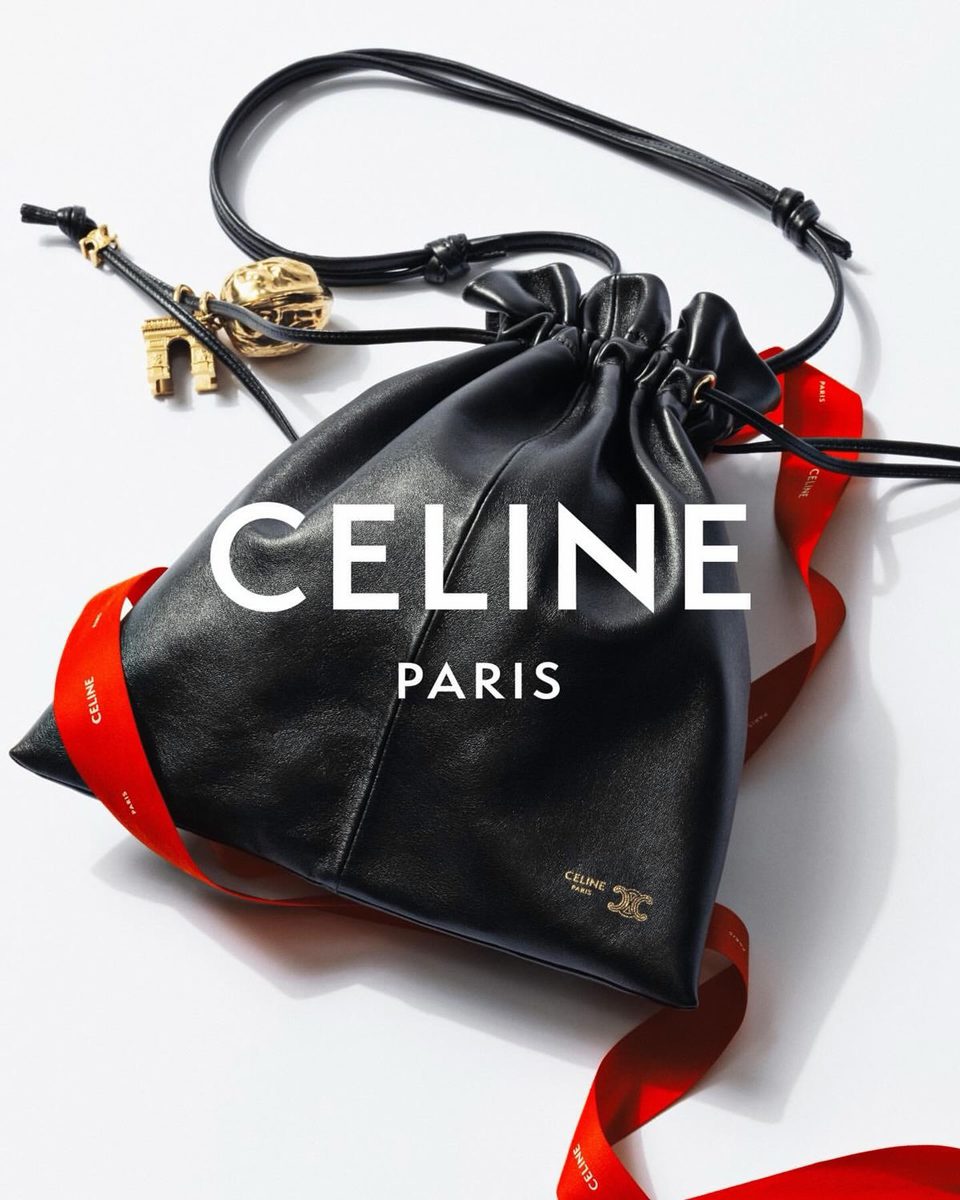
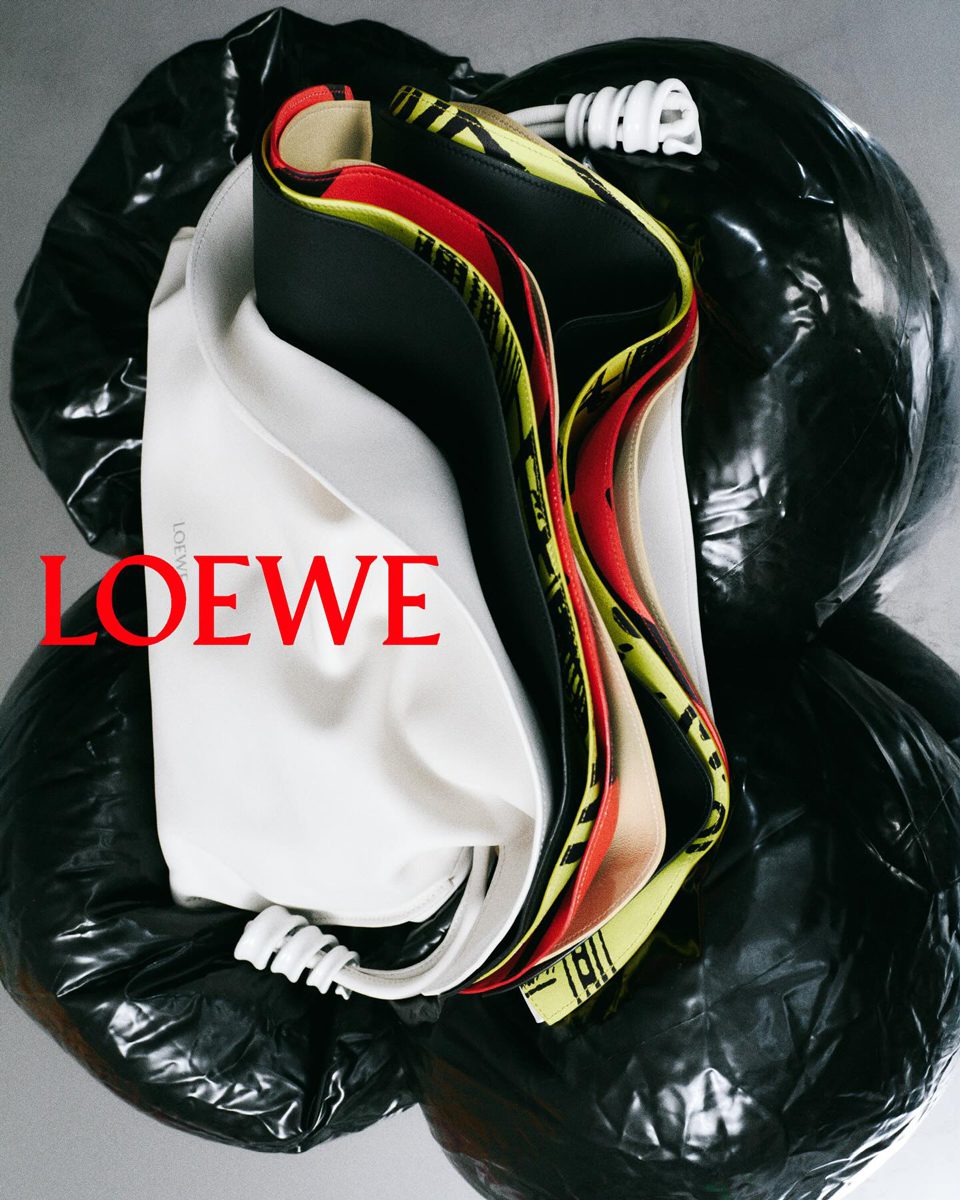
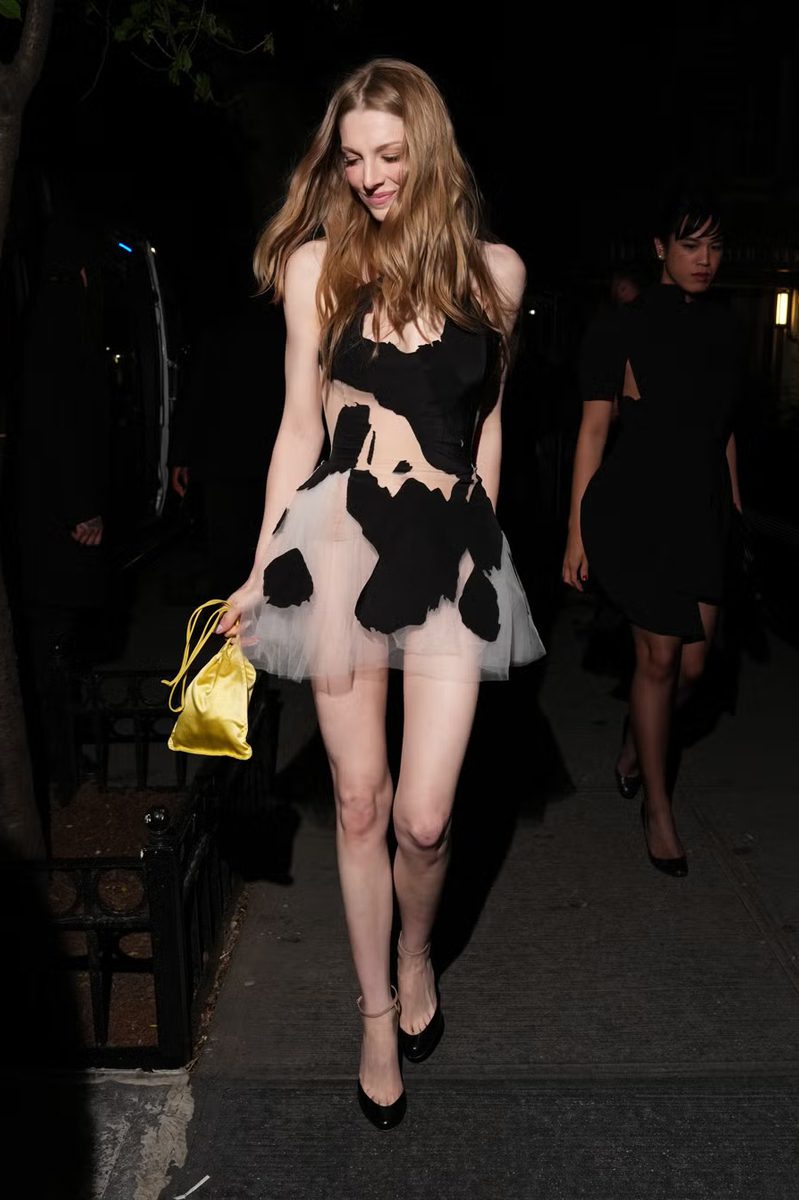
Then Hunter Schafer showed up to the Met Gala afterparty in a custom Steve O. Smith dress, clutching a Wish Pouch. Vogue’s Andrea Zendejas has been carrying a vintage Prada rendition in printed twill for years.
Big bag theory be darned, the silly little pouch is in!
The Miuccia Prada Paradox
Then again, the drawstring pouch is, technically speaking, one of the oldest silhouettes in the existence of the handbag. Known as the reticule, it dates back to the late 18th century, when it replaced hidden pockets in petticoats and gave women something decorative to carry their essentials in. Rendered in delicate silks with intricate embroideries, it was the Regency-era equivalent of the status symbol. The it-bag of Downton Abbey, if you will.
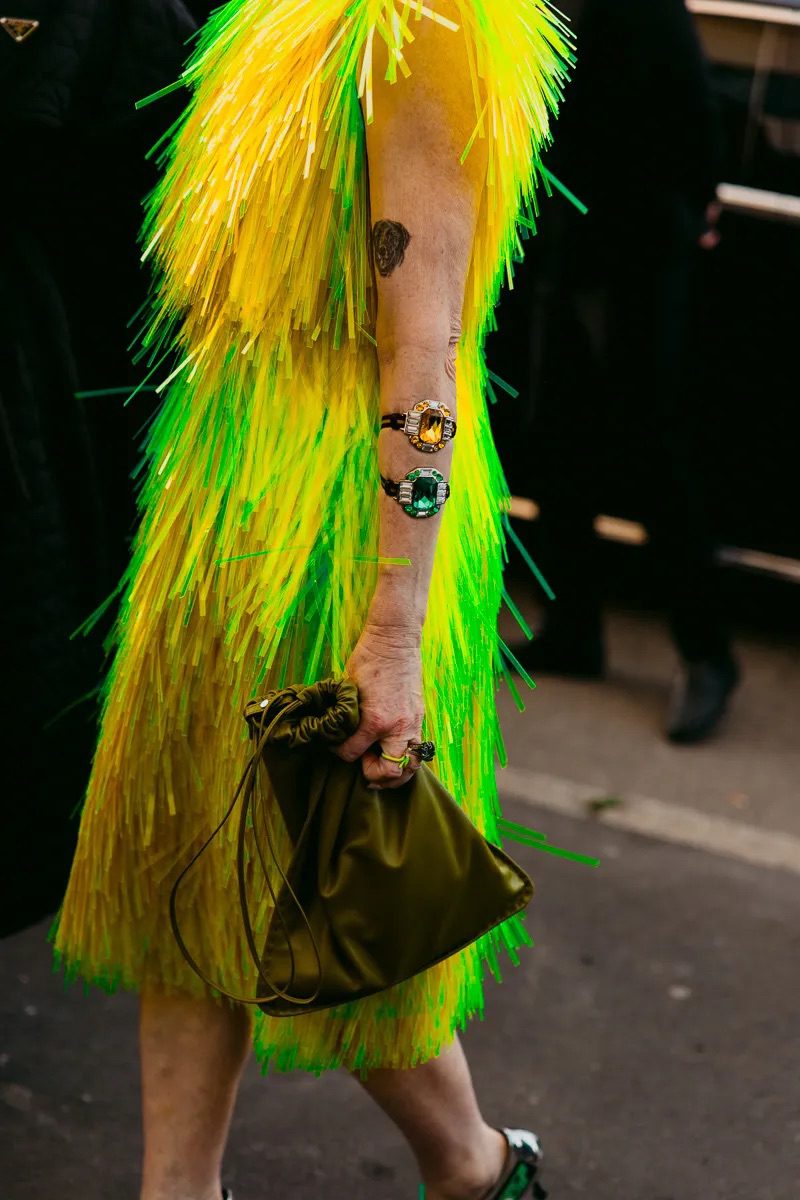
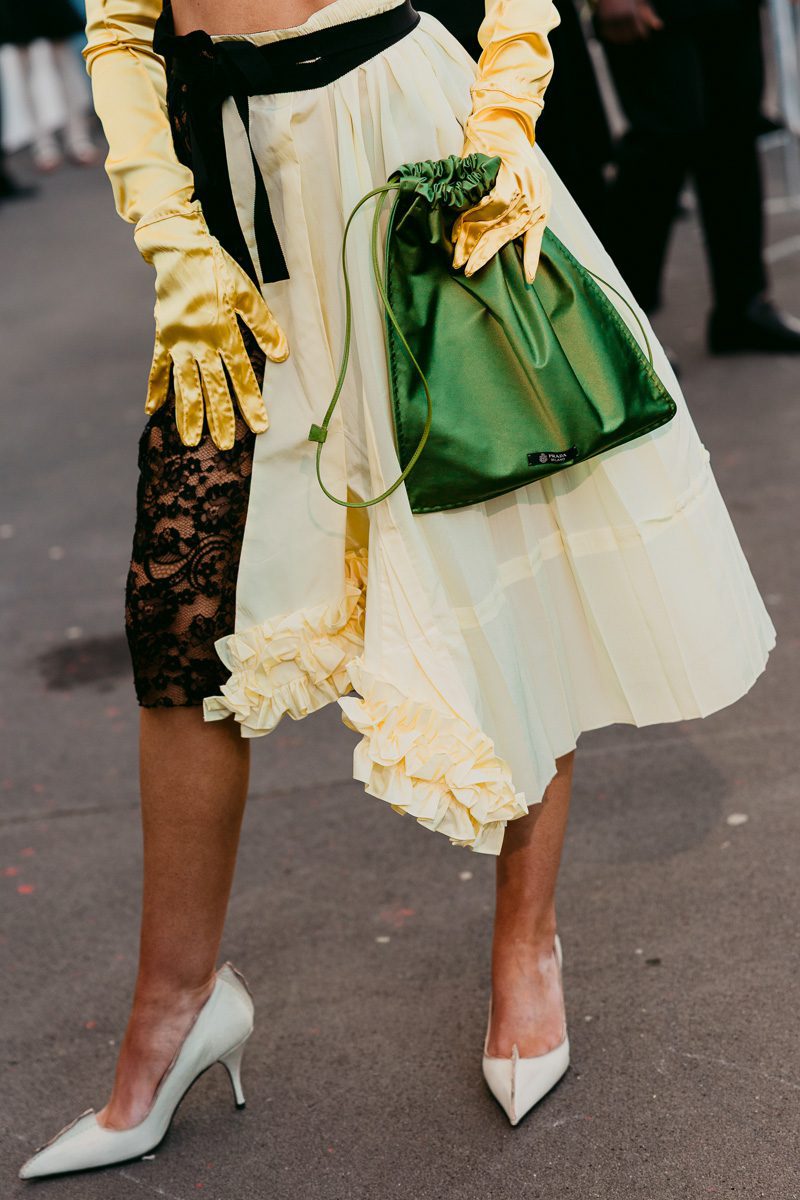
But even this dates back to the most primitive pouches our cave-dwelling ancestors fashioned from the animal skins they hunted; it’s far from new or novel. So how has it become so covetable all over again?
To understand the phenomenon that is the Wish Pouch, you need to understand the phenomenon that is Miuccia Prada.
“We have a palazzo in Tuscany, a real palazzo, but it’s empty,” explains Mrs. Miuccia Prada – with a conspiratorial giggle – in a Vanity Fair profile, “We live in our country house.” When asked why, she exclaims, “Because I hate it! I always hate the bourgeois rich…” Here’s a woman who’s lived many lives. “Prada, 76,” writes Blackbird Spyplane, “is not merely a (the most?) totemic living fashion designer. She is a tremendously talented, important, and enigmatic one, up there with Yohji and Rei in the Actively Relevant Living Legend Pantheon.” It is industry insider convention to refer to her as Mrs. Prada. “For a rough equivalent,” explains the newsletter, “imagine if Apple employees, fanboys, and tech critics all agreed to call Steve Jobs ‘Mr. Jobs.’’
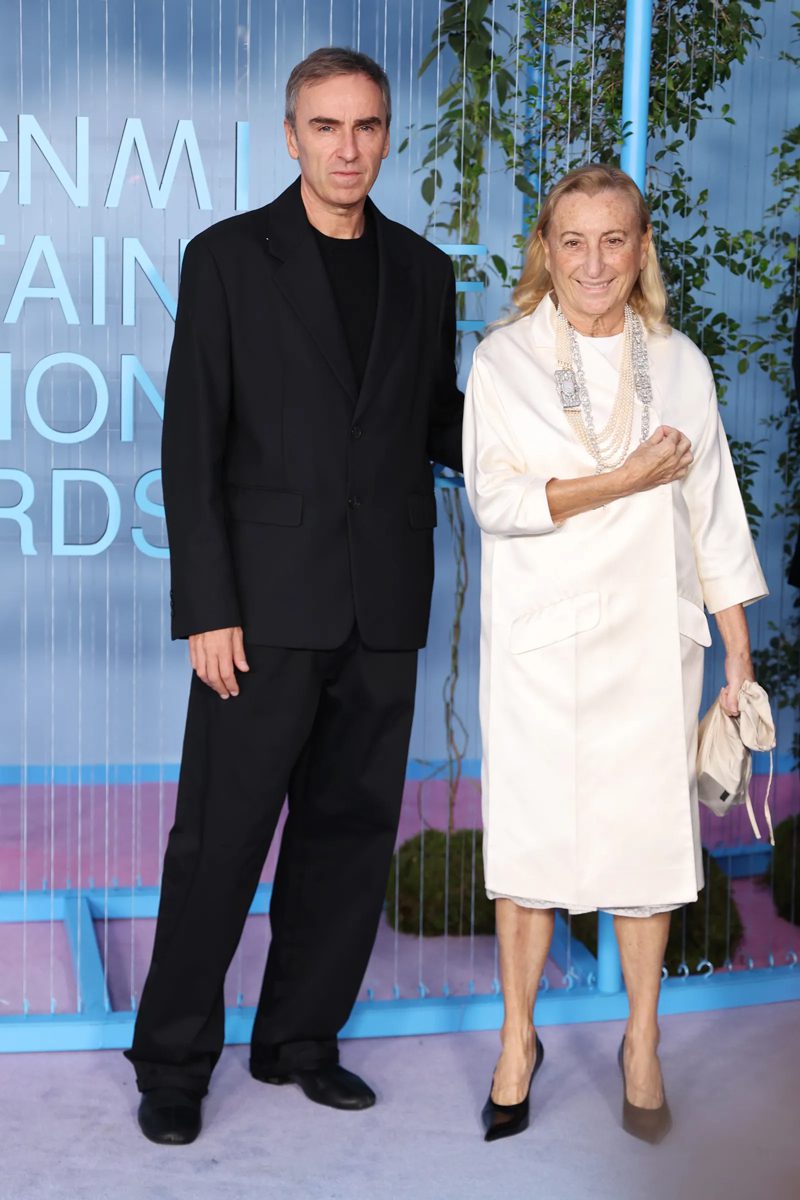
This is a woman who studied political science and mime as “an excuse not to talk.” A woman whose grandfather sold walrus-skin suitcases – “so heavy”, wrote Ingrid Sischy in a 1994 New Yorker profile, “that you needed servants to carry them.” – to the Italian royal family, and instead chose to fashion handbags out of nylon, the exact kind developed for military pursuits and parachutes, cheap and utilitarian and aggressively unbeautiful.
And the industry went on to declare it the chicest thing imaginable.
For the Wish Pouch, Prada tapped into her personal style, drawing on a silk scarf, knotted loosely at the top and held messily in one hand, that she has been carrying to fashion events over the last 40 years. Some have likened it to a shoe-bag. Marie Claire’s Julia Gall likened it to a Chanel dust bag she used to carry her lunch in. And now it’s Fashion with a capital F.
That’s the Miuccia Prada paradox right there.
Fashion’s Latest Gateway Drug?
But when Gall recalls her Chanel dust bag – bestowed upon her by a former editor – she does so with a touch of wistfulness, “she ‘gifted’ me the dust bag because she had ‘so many of these already,’ while also reminding me that ‘you know, it’s not a real Chanel bag…’ As if I’d try to pass it off as one.”
What’s ironic is that today, its spiritual successor – rendered in duchesse silk, finished with a leather drawstring, stamped with a discreet logo – is sitting behind glass at Prada boutiques worldwide, for a cool $1,290. The lunch bag has now become the It-bag. Mrs. Prada would probably find this very funny.
But in a market where a new Chanel Maxi Flap starts at $8,500, and Prada’s own pricier offerings regularly cross the $5,000-mark, this doesn’t feel accidental. “I’m very upset when people say the big companies destroy everything, when they say that they destroy craftsmanship,” Mrs. Prada once opined to The Independent.
So thoughtfully, she gave us the gateway drug of the current moment – with a starting price of $795 for the Re-Nylon version – something aspirational that a normal person can actually buy.
Of course, we in fashion are no strangers to the draw of a status symbol. “One might as well argue,” writes Robert Armstrong, “that we should give up on walking on two legs and revert to scampering on all fours. Status seeking is wired into us in the same way language is.”
And if FW26 fashion month is any indication, Mrs. Prada’s subversive shoe bag already has half the fashion industry reaching for their wallets.
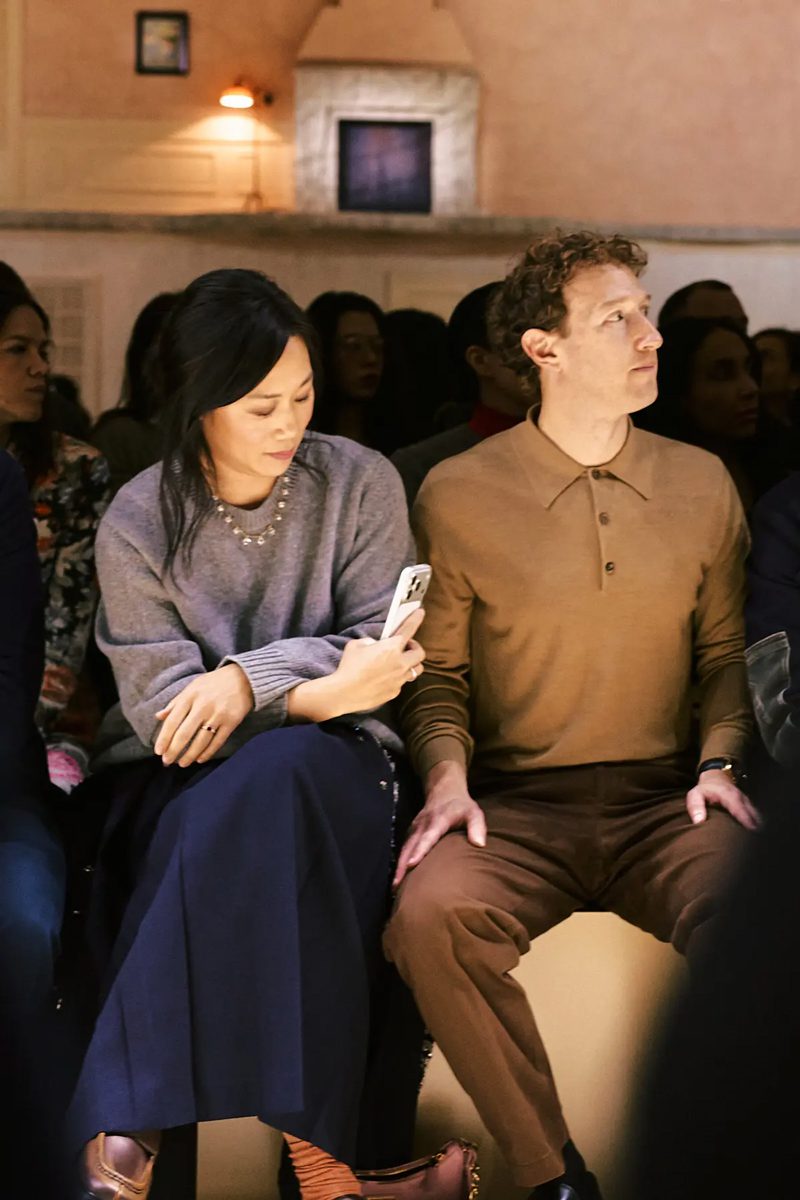
So, much like a certain Mr. Zuckerberg who notoriously sullied the hallowed grounds of Milan’s Fondazione Prada during fall fashion week, Prada herself is an astute industrialist who knows something about engineering addictive products, stoking our (sometimes unhealthy) compulsions, and ultimately, selling well. Very, very well. Perhaps they’re not so different after all?
They are cute, but look like more of a DYI craft project for anyone with a simple sewing machine- any home economics student could make this. Definitely not something I’d pay designer prices for.
At this point, it’s the emperor’s clothes. There is nothing cerebral or sophisticated about a pillowcase/shoebag.
Another way to separate fools from their money.
I have to agree with you.
No, thank you. Just from the pictures, it doesn’t look practical. I’m done with impractical bags except for clutches I carry for formal events.
With the reticule (about a century before Downton Abbey, btw) you were flaunting your own abilities. You designed it (or followed a pattern out of a book) you embellished it, and you were the one who netted or sewed it.
Wish is the attempt to be ironic, and instead being sad.
Upscale shoe dust bags; I can just carry those….. lol.
Loewe’s Flamenco did the high end everyday-pouch right in supple leather and scrumptious lining and the same leather drawstring. Simple, but definitely not an amateur craft project.
Prada used to have that Tessuto wristlet with thick fabric and lovely colors and of the right size (not too big not too tiny) and it didn’t cost a purse price. That was the best “silly little pouch”.
I’m thinking of the recycled nylon Wish bag being “aspirational” and feeling sad there might be someone who actually aspires (and saves) to buy a plastic pouch with a logo on it. I might buy the silk version for $200, in a pretty color. Maybe.
That reminds me when, around 2005-ish, some people were carrying the gray Prada Linea Rossa shoe bags—trying to flex them into actual handbags.
I use that bag as rain protection for my camera, it works and packs so well! I still always pack it on travel for that purpose.
dust bags..?