

Thirst Trap
A sexy photograph or flirty message posted on social media for the intent of causing others to publicly profess their attraction. – Urban Dictionary
“Men act,” art critic John Berger famously snarked, “and women appear. Men look at women. Women watch themselves being looked at.”
But thirst traps – ranging from the simple sweat-drenched vanity of a post-workout selfie, to the artfully calculated “candid” that employs a strategic selection of filters, right angles, and good lighting – have historically been the province of gentlemen. An express statement of intent from the most predatory of nature’s primates to trap their prey, preferably in a fit of lust.
Now, however, the definition of a thirst trap has evolved.
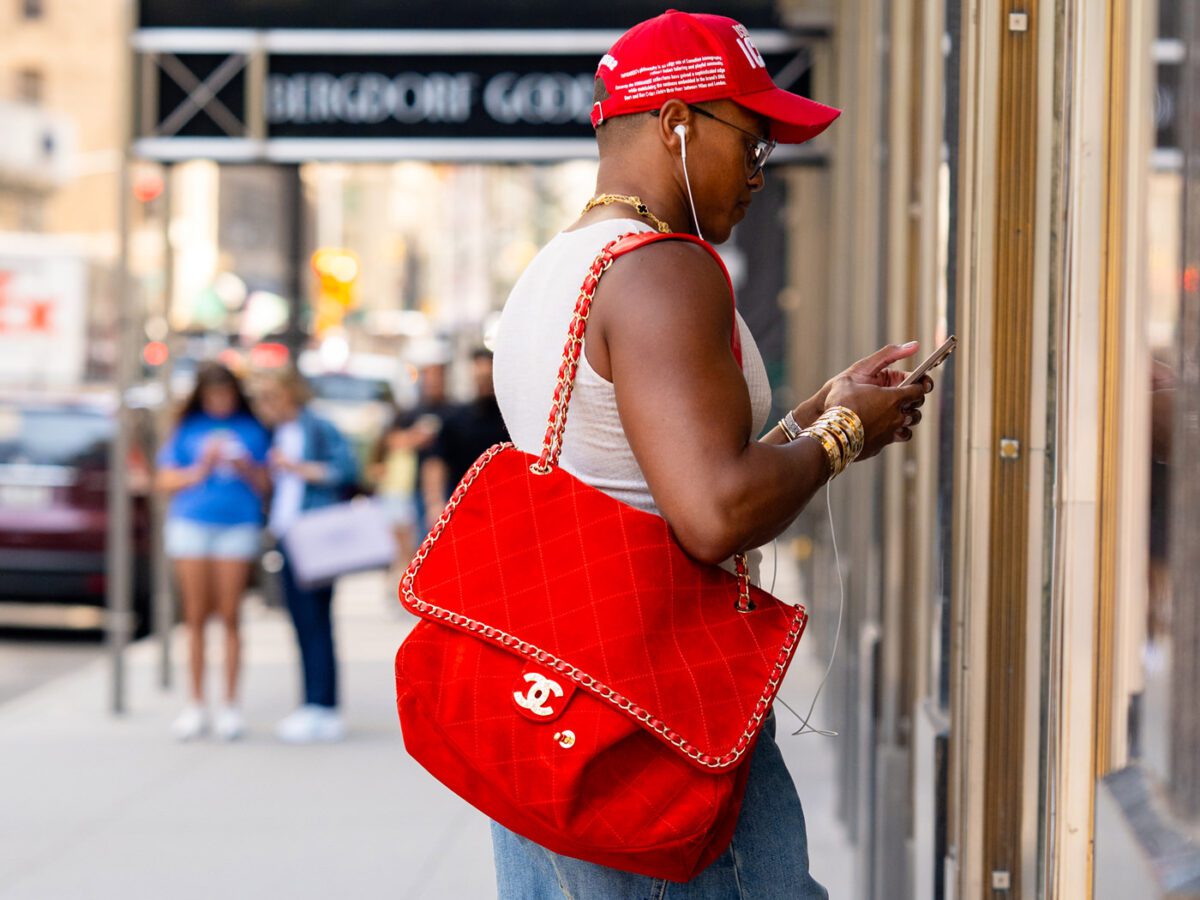
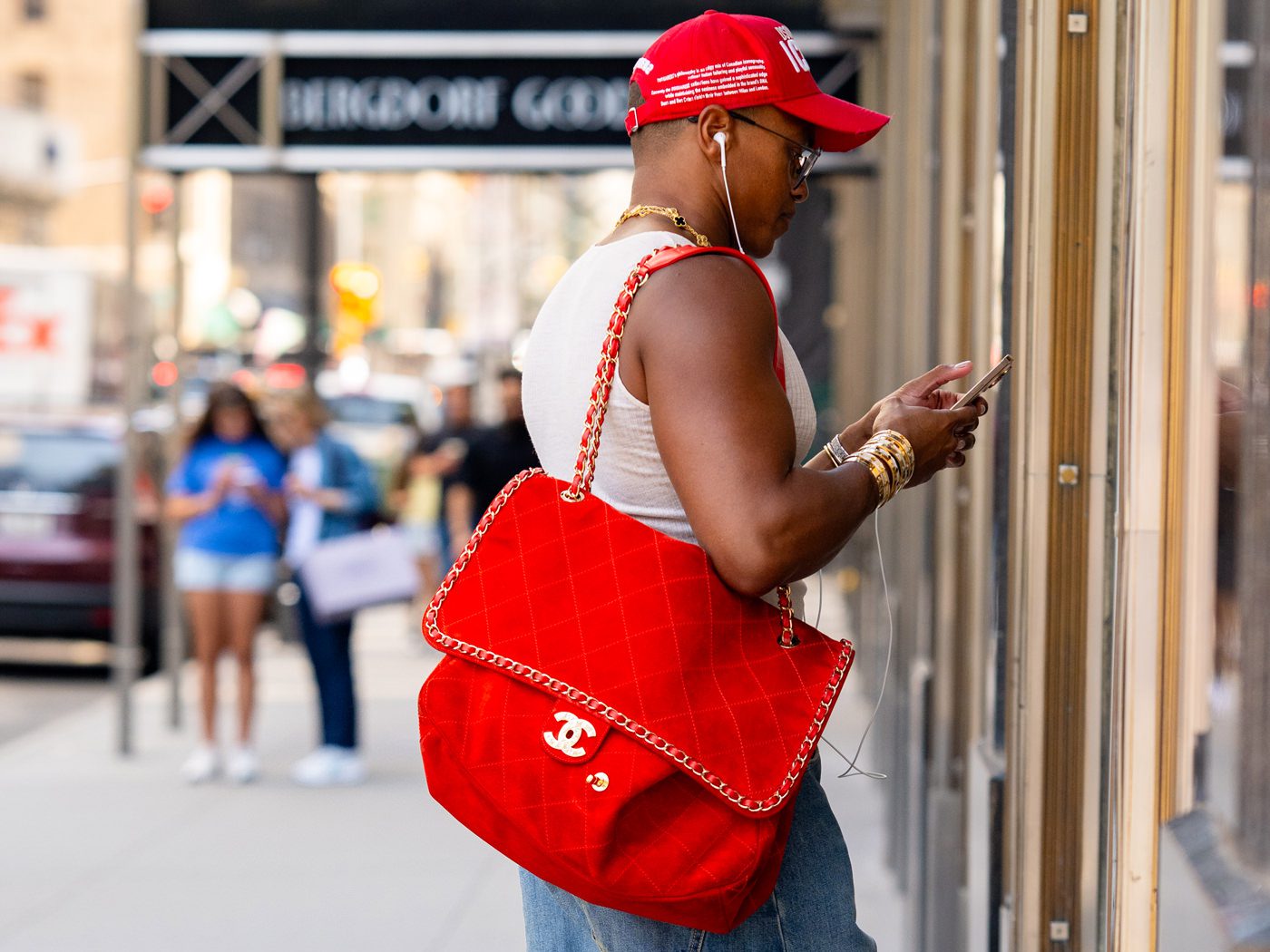
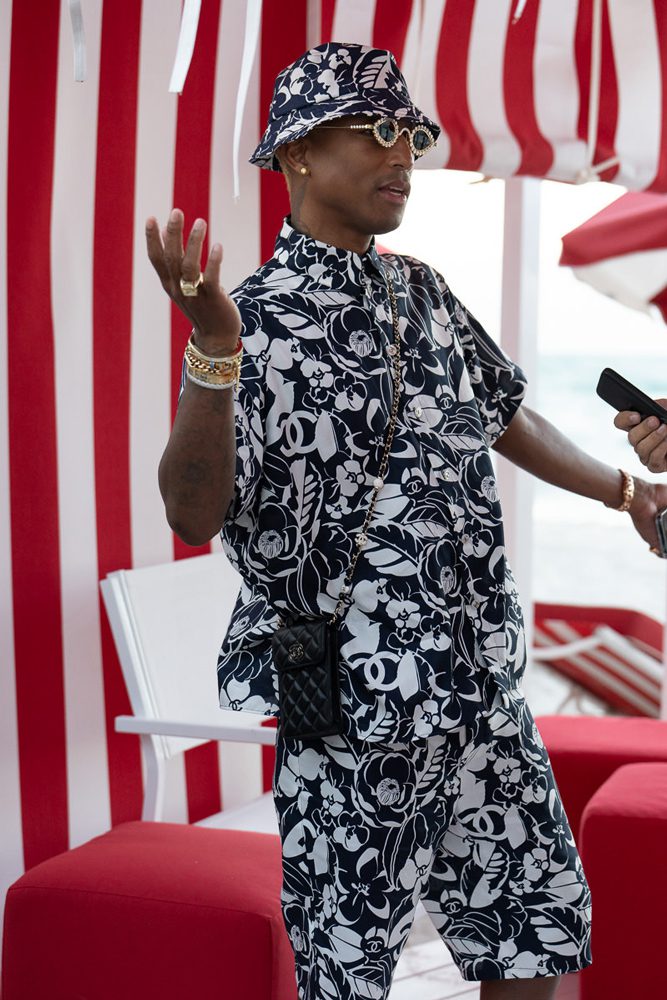
Today, a thirst trap consists not of a flexed bare bicep, but often a fully clothed arm cradling a carryall in luscious lambskin. Attached to said arms are not bare torsos with bulging pectorals, but bouclé-clad bodies in cropped tweed blazers. Gone are the cruel, cold bites of the iron barbell straining against a sinewy neck; in their stead are delicate strands of freshwater pearls.
And those same forearms that once bore the bruises and blisters of frantic fitness regimes? Now they bear the proudly ticking timer of a ceramic wristwatch. And the wristwatch, blazer, and handbag in question? Why, all emblazoned with those tell-tale interlocking C’s, of course!
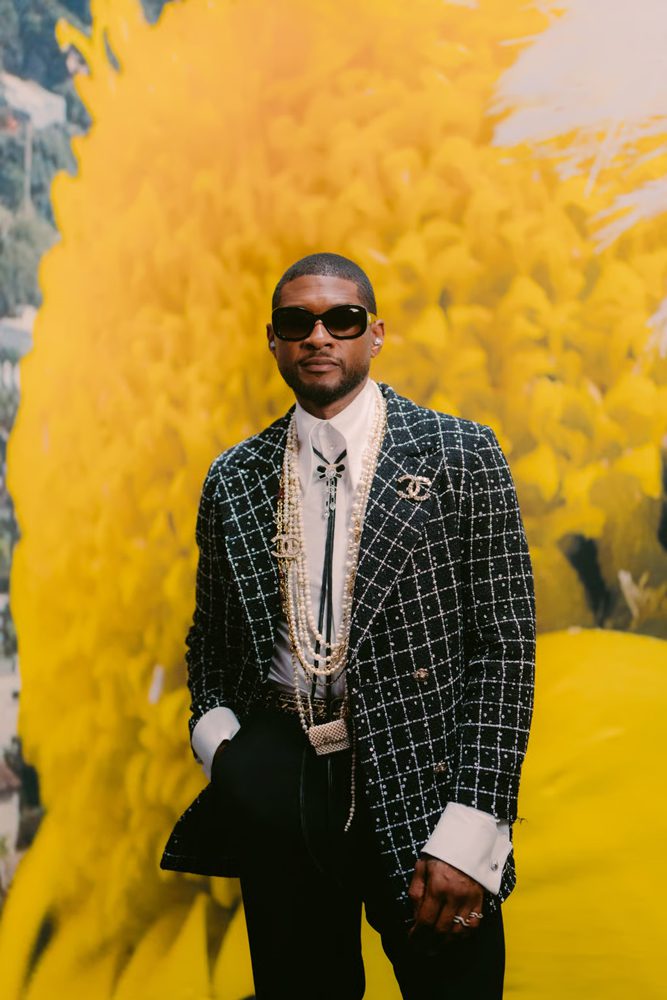
It’s true, dear reader. The hottest thing a man can wear right now is Chanel, and men are going Coco-crazy for it!
“Balls are to Men What Purses are to Women”
Or so proclaimed our problematic queen, Carrie Bradshaw. And I couldn’t help but wonder, are men with bags without…?
Now, it’s true that the last time around, when men were carrying handbags higgledy-piggledy, was roughly 300 years ago, right around the time pants were becoming tighter, stitched-on pockets had come into existence, and skinny bottoms reigned in the Victorian menswear scene.
But after two centuries of cultural corrosion, “handbag” itself has become a loaded word, fraught with feminine implications so deeply entrenched that when a man deigns to carry one, it’s no longer a handbag, but a ‘manbag’ – a word, might I add, I rarely use despite owning multiples myself.
In Working Girl (1988), Harrison Ford presents secretary Melanie Griffith with a hulking, ugly, brown briefcase – to change into heels and stow away her subway flats – while he himself continues to move about the world unencumbered. In her essay Men Know It’s Better to Carry Nothing, Lisa Miller writes: “Men are walking around empty-handed, uncompelled to be useful,” while women are lumbered with “tool kits of servitude.”
Carrie clearly wasn’t the only one with a problem!
Oddly enough, Coco Chanel – the same Chanel who freed women from the shackles of the handheld purse, and borrowed liberally the jerseys, tweeds, and trousers of her various lovers (most notably, prolific Polo player Arthur “Boy” Capel) – held the same notion herself. “She was a disruptor and broke all the rules of dress in her time, of course,” says fashion consultant and branding expert Inmaculada Urrea, “however, for gender roles she was very classically minded, old-fashioned even: women had to dress to please and seduce the opposite sex, she said. At the end of her life, she was very angry because, as she lamented, ‘Today women are more men than men.’”
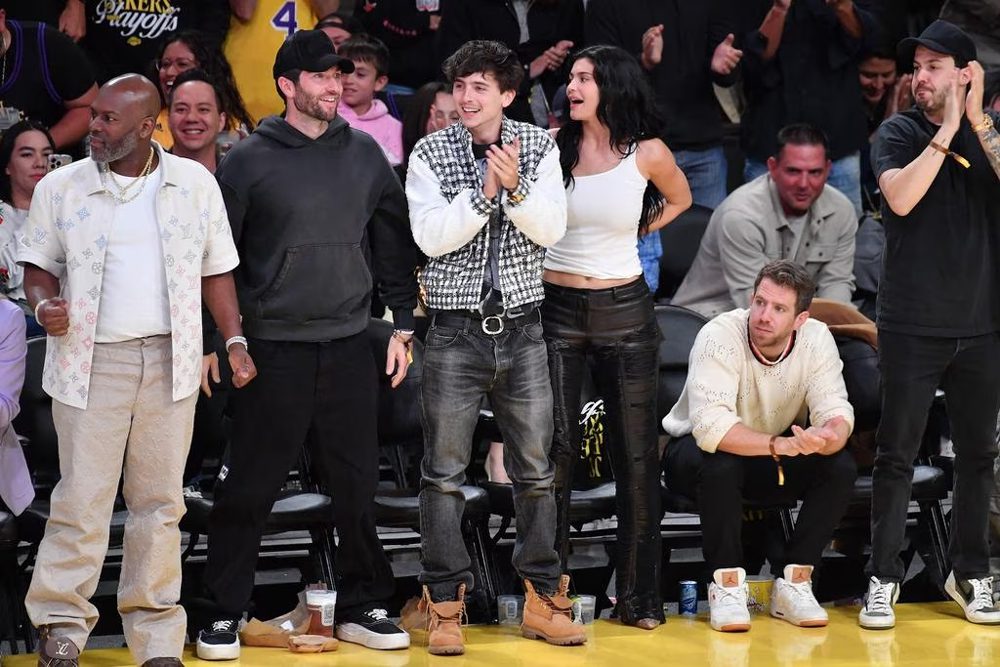
image via Vouge Au
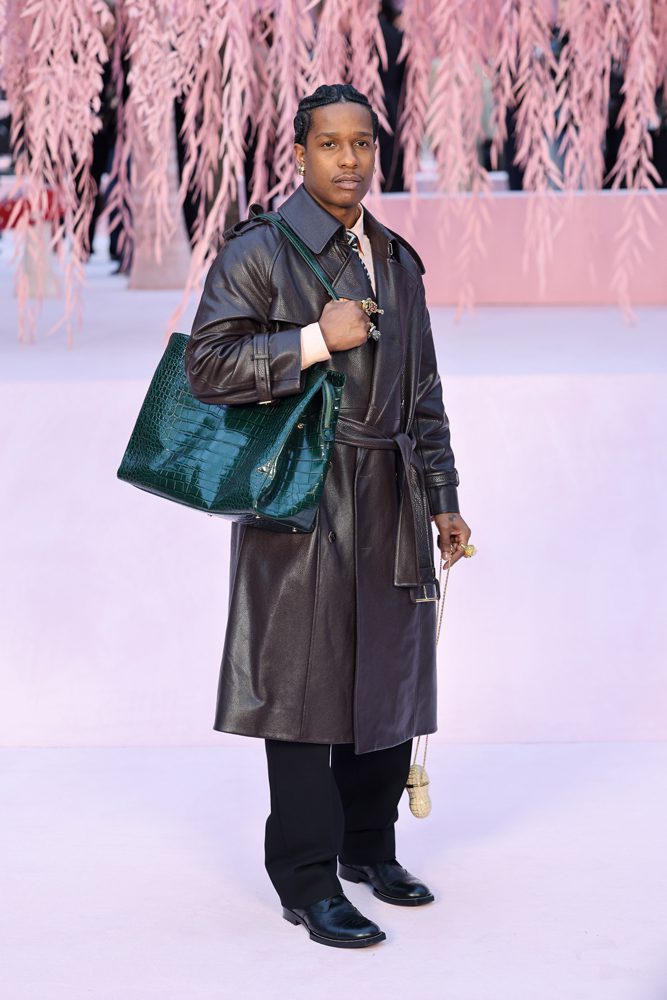
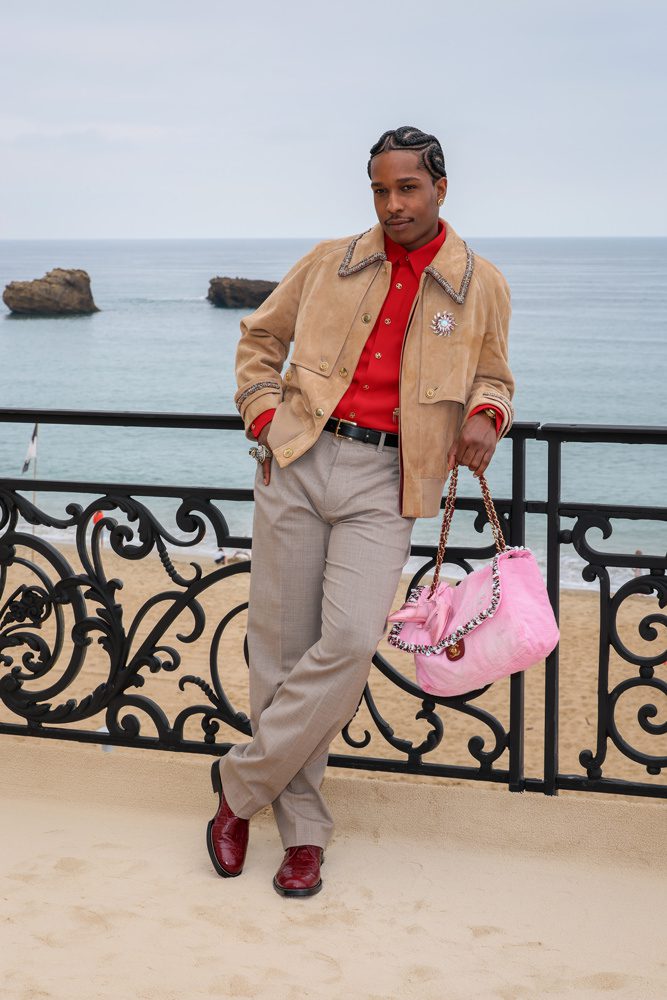
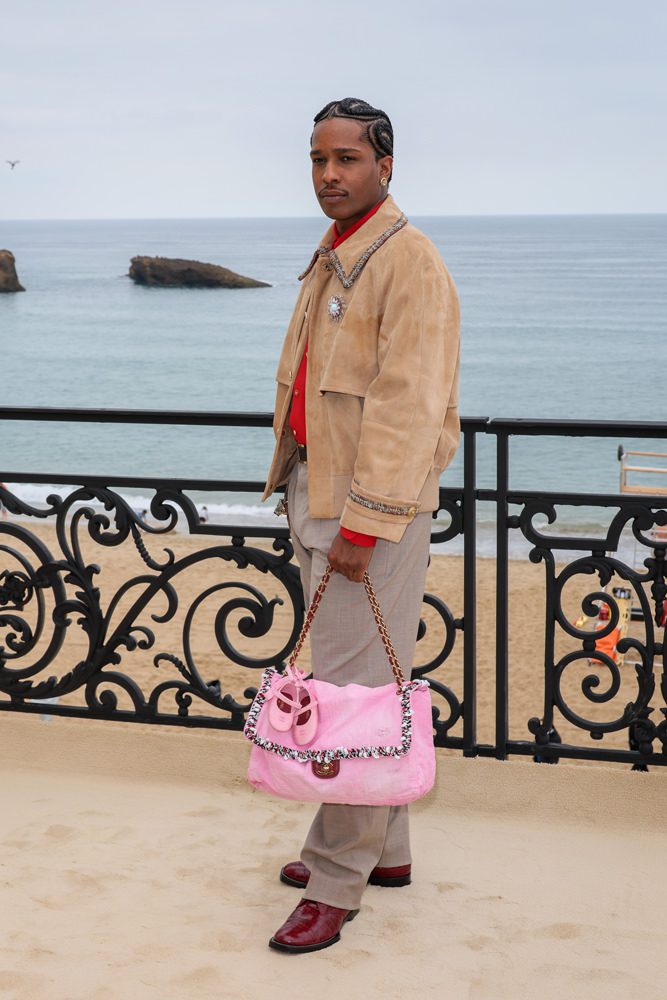
Had she seen A$AP Rocky roll up to the SS26 show with a Maxi Flapbag in tow? “She would have screamed her head off,” chuckles Urrea.
Gentlemen Prefer Chanel
“Tell me about the twinset and pearls for men,” an interviewer famously asked Vivienne Westwood in 1988, mocking laughter echoing through the studio, “has it caught on?” Westwood, her demeanor characteristically cool, deadpanned: “You might see your bank manager in five years wearing that.”
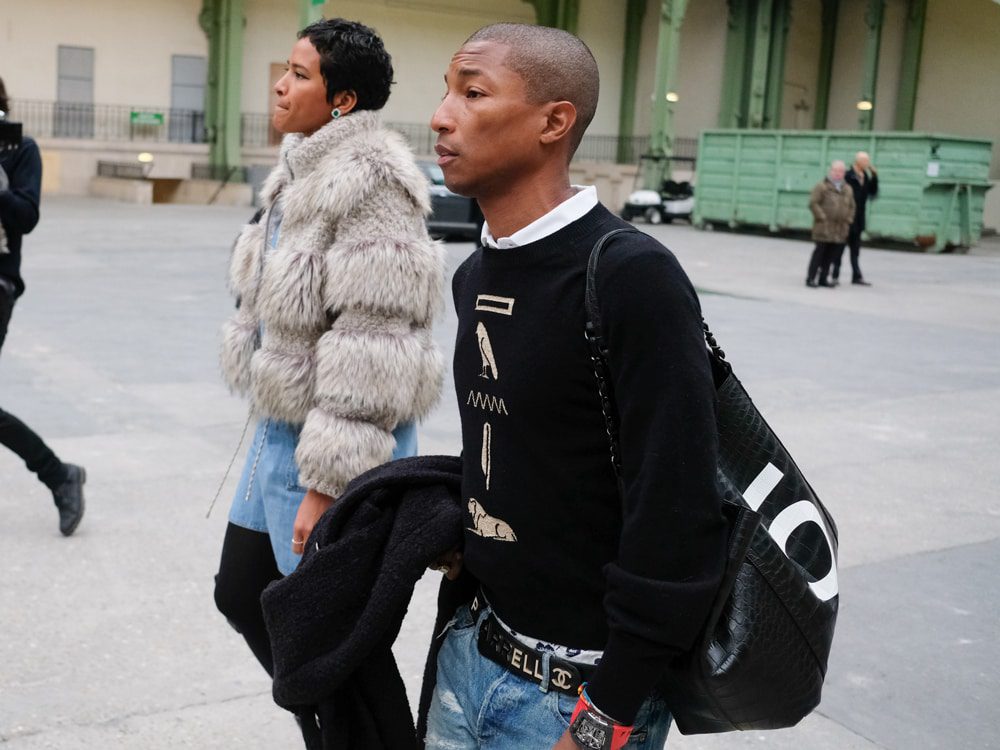
Three decades later, it wasn’t Westwood’s bank manager, but instead rapper, tastemaker, and entrepreneur extraordinaire, Pharrell Williams, who walked the Chanel Métiers d’Art show in Paris draped in classic Chanel pearls. The next year, fellow rapper Future was papped in gold-link chains and strings of pearls interspersed with the double-C logo.
In fact, the house has been secretly courting men for decades, much like its namesake. Karl Lagerfeld, for one, favored masculine packaging to complement Chanel’s cruise collections; his male muses, Brad Kroenig, Sebastian Jondeau, and Baptiste Giabiconi, served as sporty accessories, just like the CC-branded rugby balls, paddle rackets, and boomerangs they wielded. Pharrell himself later collaborated with Lagerfeld on a streetwear capsule, replete with custom Adidas sneakers and limited-edition bumbags.
“Karl loved breaking the rules,” says Giabiconi.
Mathieu Blazy, however, rewrites them.
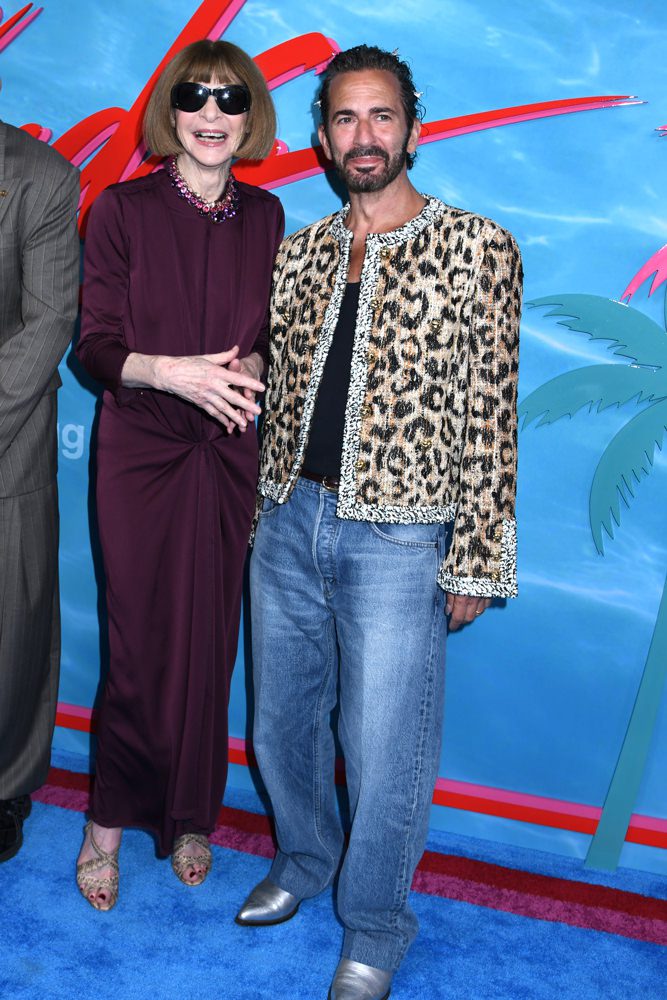
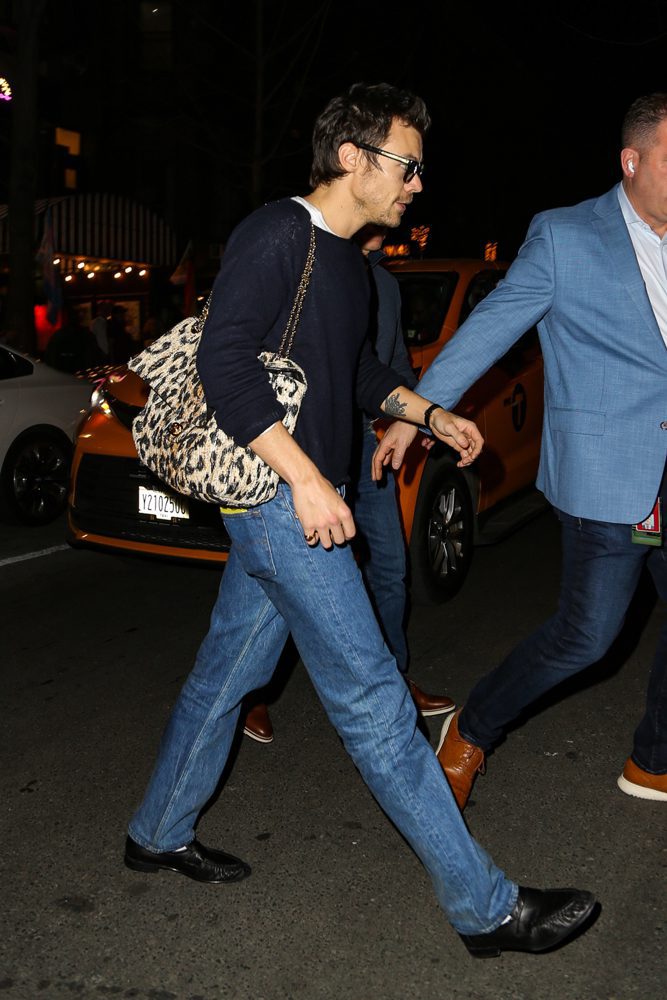
“It’s not just for ladies who lunch,” said Bryan Yambao aka Bryanboy, OG fashion blogger and loyal Chanel VIC, “Maybe it’s for men who dinner, too.” Chronicling how, amid the “pandemonium” that was the Rue Cambon store, he failed to secure a black Maxi Flapbag that his dentist (who flew in from Frankfurt to Paris) lost his Chanel virginity to, Yambao noted, “Non-fashion guys were in on it, too.” Blazy’s new Maxi Flap then made the paparazzi rounds on Pedro Pascal; Harry Styles carried it in leopard print, as did Marc Jacobs. And of course, A$AP Rocky, enlisted as the brand’s latest poster boy alongside Margaret Qualley and Kendrick Lamar, wore it in burgundy.
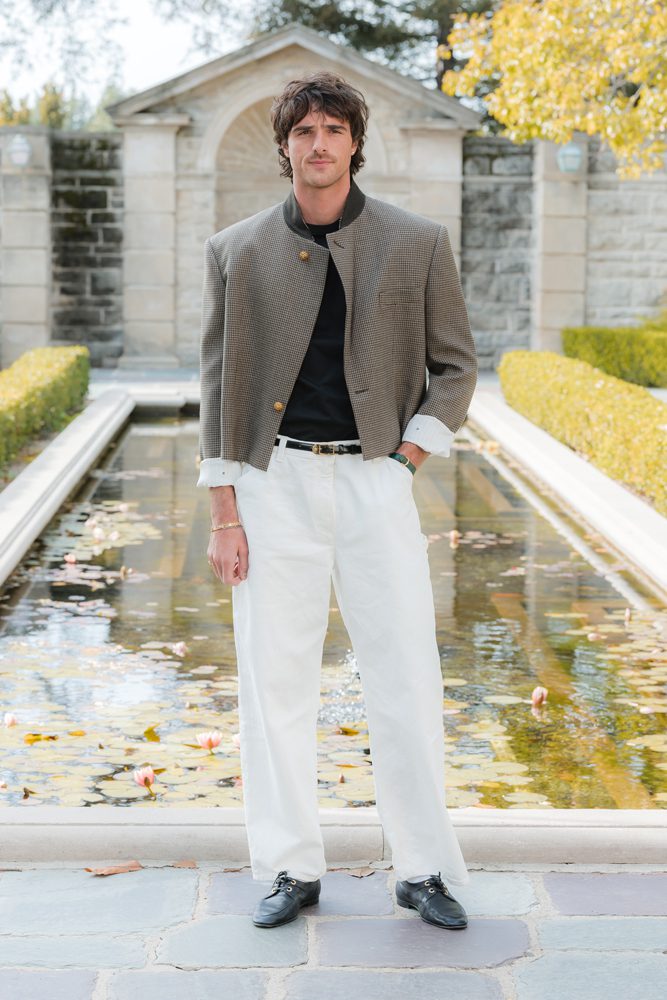
And if that weren’t proof enough, at the Venice Film Festival last September, “all six feet, five inches of Jacob Elordi, not so much a tall drink of water as the entire office water cooler,” writes GQ, wore Blazy’s opening tweed look for SS26, also worn by Dua Lipa, Jennie, and Michelle Obama!
Boys Just Wanna Have Chanel
On the other end of the SS26 spectrum, however, was Demna’s debut collection for Gucci, where American football player Gavin Weiss walked the runway in fitted leather pants and a skintight polo, bulging biceps buckling under restrictive sleeves. The biceps managed to break free through the sleeveless tailoring at Calvin Klein, while controversial streamer Clavicular walked for Elena Velez in similarly restrictive clothing.
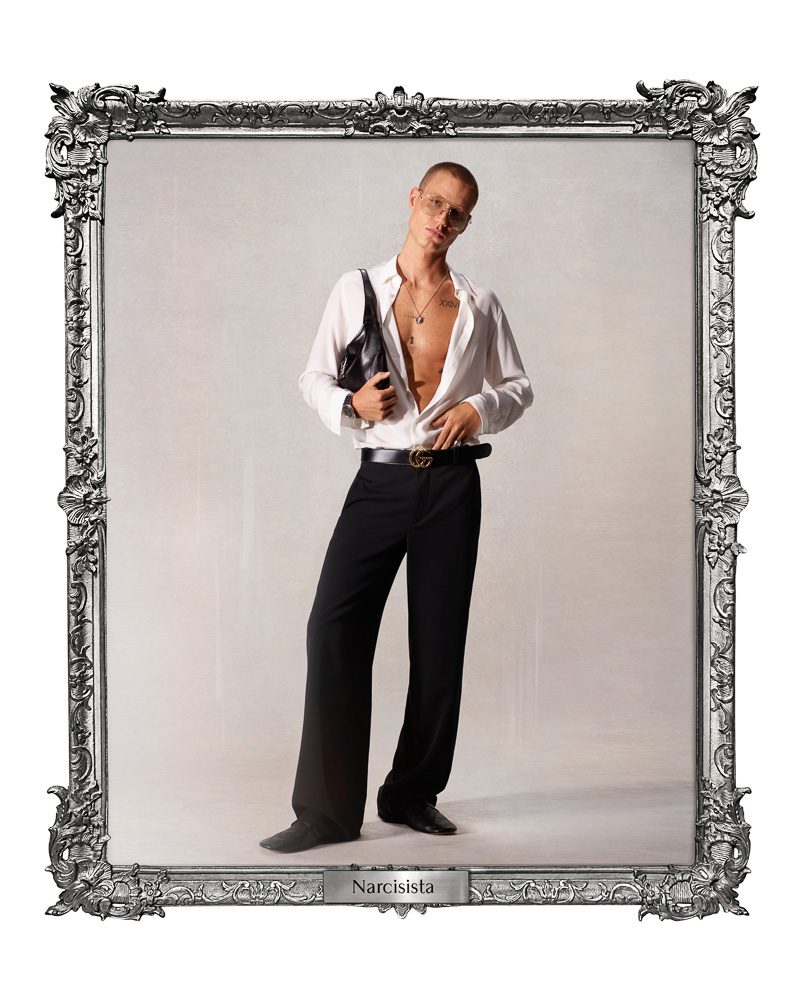
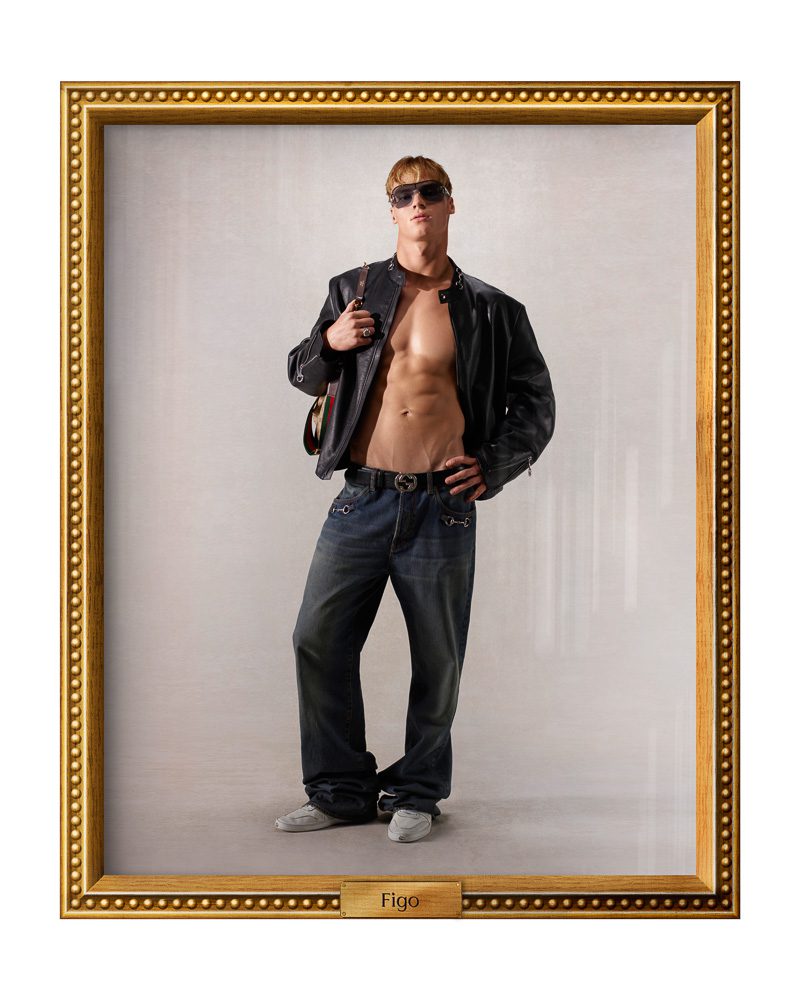
Not to mention, Haider Ackermann’s Tom Ford evoked, by way of clear plastic raincoats over banker-style suiting, Patrick Bateman of American Psycho, the very blueprint of “the kind of controlled, optimized bodies you see circulating in tech, venture capital, and longevity culture,” notes Professor Andrew Groves, director of the menswear archive at the University of Westminster.
In fact, far from Blazy’s trailblazing vision for the Chanel man, there’s something far more sinister lurking just below the surface, waiting to reach out through the screen like Samara from The Ring. And it’s coming for your cheekbones, bearing a hammer. This, dear reader, is looksmaxxing.
For the blissfully uninitiated, looksmaxxing refers to the systematic optimization of one’s physical appearance, articulated in clear, distilled terms as the modern taxonomies of male attractiveness.
“In a time when many consumers feel powerless about almost all aspects of their lives,” says Dr. Antonia Ward, chief futurist at trends intelligence agency Stylus, “they can still feel like the CEO of their own body.” Which all sounds like harmless vanity until men started hammering away at their faces trying to conform to precise, quasi-scientific craniofacial ratios.
And having originated in some of the darkest corners of the internet, the incel-to-looksmaxxer pipeline, unlike the thirst traps of yore, is less about attracting women – or for that matter, social validation – and more about punishing yourself into a shape the algorithm will approve of. Clavicular and the Calvin Klein runway are merely its next logical progression.
Which is precisely why the men in Chanel feel so genuinely, unexpectedly radical. A$AP Rocky in candy-pink tweed is not a man auditioning for anyone’s approval. Neither is Harry Styles with his leopard Maxi Flap, nor Jacob Elordi wearing the same Blazy opening look as Michelle Obama.
In fact, these men picked up pieces designed specifically for women and decided to wear them anyway. In a world that asks them to be less – less soft, less strange, less themselves – in pursuit of algorithmic perfection, they chose to be more. What could be more subversive than that?
Featured image courtesy of CHANEL
Another amazing article by Sajid!!! LOOOOVE reading your take on things!