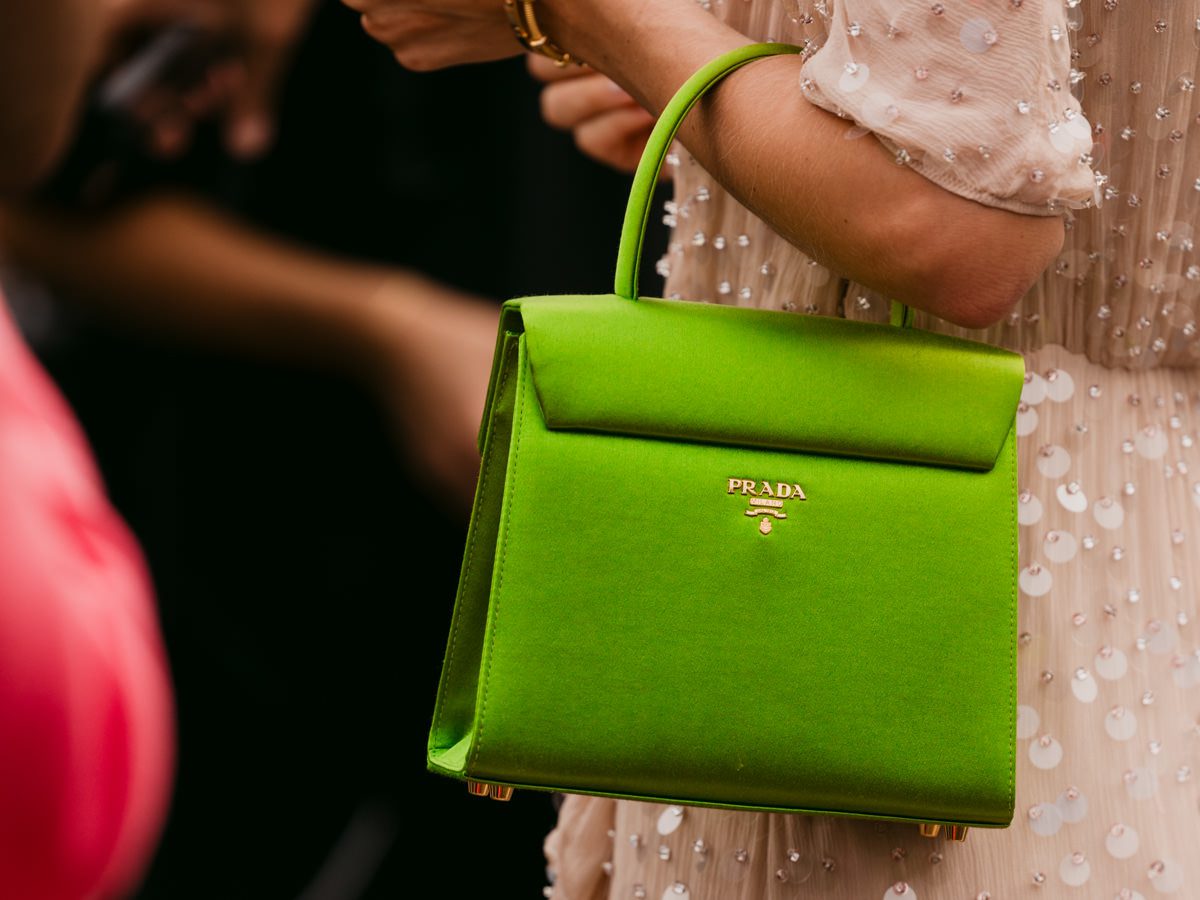

As we hurtle through what are supposed to be the slowest weeks of the year (September already? What’s next, October?!), there’s something, dear reader, that I’ve got my eyes on. And the best part? It’s already in my closet!
You see, my fellow fall fashion obsessives, there are exactly two weeks in the Gregorian calendar when our otherwise-useless leather jackets, suede satchels and selvedge jeans – hibernating in the back of our closets through the globally warmed and gloriously sweatmaxxed months of summer and the frigid frostbite of winter – once again get to see the light of day.
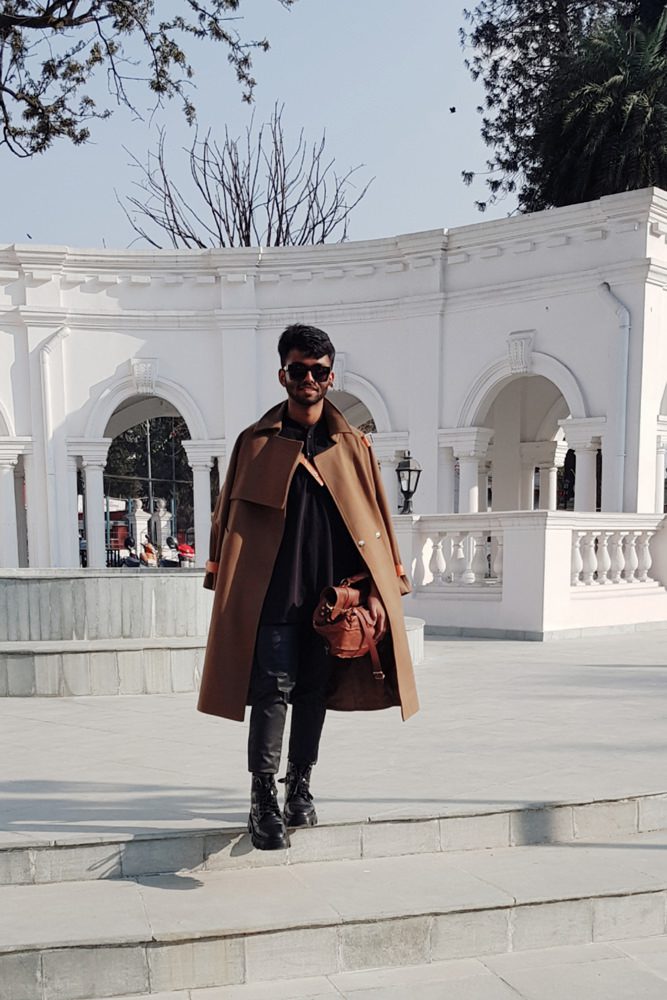
And it is for those two weeks specifically – although with some stubborn (some would say, stupid) defiance of mother nature, another week’s worth of leeway might just be achieved – that I’m excited to wear my prized green peacoat.
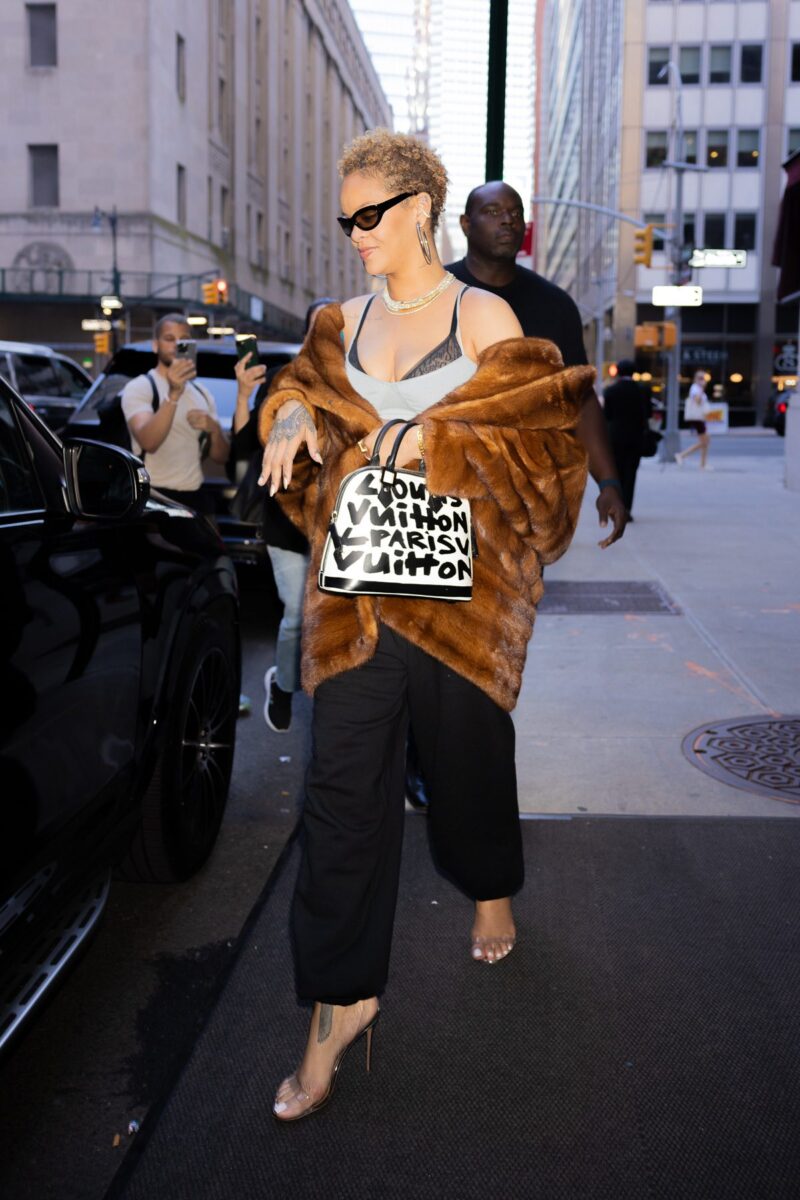
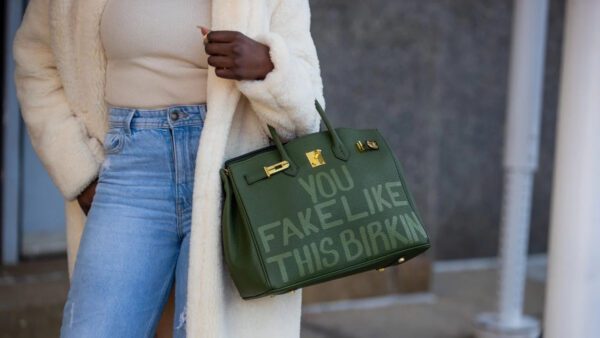
Because a purse, with some carefully exercised caution, can be worn year-round (yes, even suede). So can your dense, double-ply denim, at the (relatively) minor expense of chafed thighs and bruised buttocks. Even leather and fur can work in the summer months. If you’re Rihanna, that is.
But a coat? That’s outerwear territory. It must be wielded with purpose. It’s protection from the elements. Those aren’t circumstances conducive to the great indoors. Which makes me, the proud owner of exactly one (1) peacoat, all the more eager for fall. And I still remember the day I got mine.
Having trudged through a gloomy Nepal winter (and the gloom, tragically, still looms large) in insufficient insulation, it was purely by happenstance that I happened upon this magnificent, label-less, chartreuse concoction. And there it stood, belted and brazen on a mannequin, looking almost olive in the waning rays of the winter sun. But it wasn’t quite olive. Nor was it the rich mossy sage it seems under the fluorescent flashes of the flickering nightscape. In broad daylight, it’s khaki, almost brown even. Yet it’s actually neither.
Instead, it’s that viscerally vague colorway Alexander Fury calls a “yellowy, bilious green that is so Prada, it could be dubbed, The Miuccia Sludge.”
Algae in the Prada Pool
The first signs, however, that bioluminescent greens were about to become the hottest hue this year came not from Madame Miuccia and her high-fashion minions, but instead, straight from the top. And by top, I am, of course, referring to the Lincoln Memorial Reflecting Pool in Washington D.C.
In fact, the site that has historically drawn protesters, press, and most importantly, tourists, also drew cultural discourse earlier this year when it was given a patriotic facelift in the colors of the American flag, only to be covered – literally within 48 hours – in the season’s most covetable colorway – green.
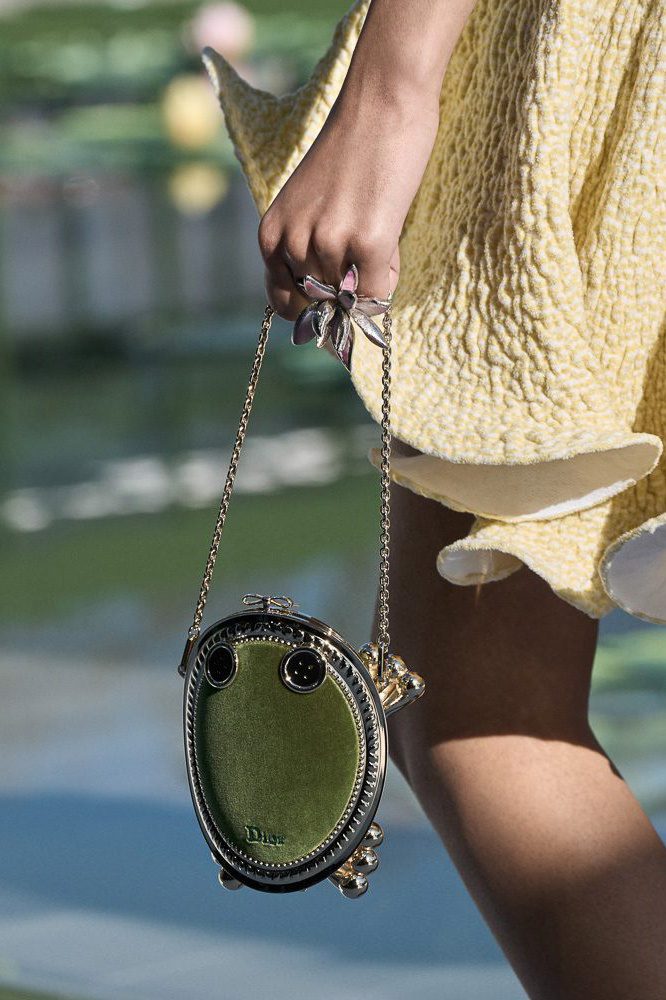
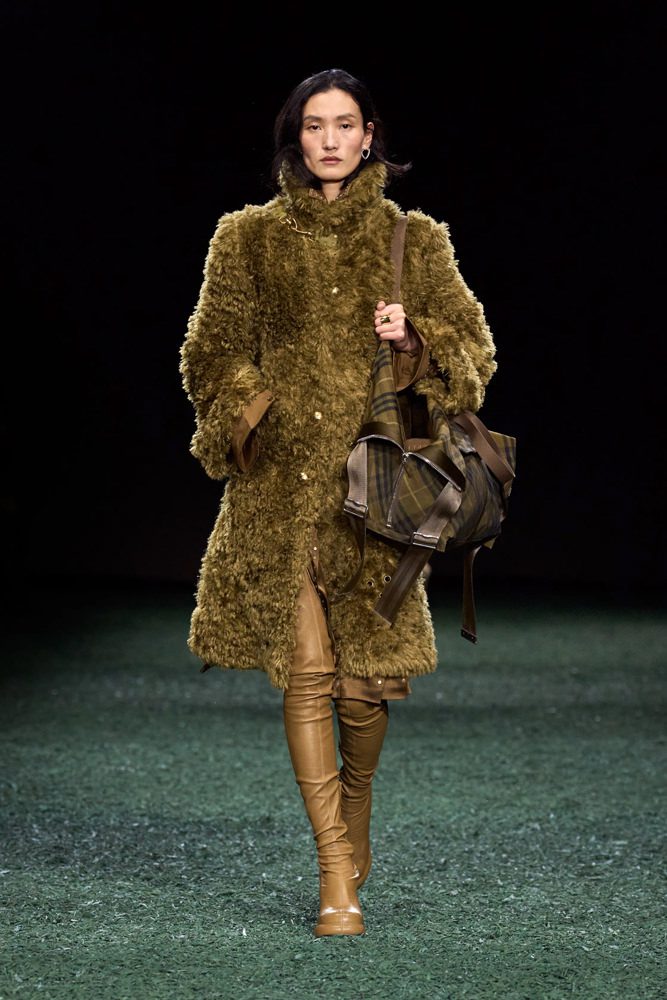
More specifically, that mossy, swampy swatch of green that a shallow and still body of water naturally achieves when exposed to heat and the sun.
Within days, protesters in inflatable green froggy suits walked the steps of the Lincoln Memorial holding up pro-algae signs, while in New York, Ulla Johnson and Daniella Kallmeyer models walked the runways in a similarly radioactive array of nauseating greens. Meanwhile, across the pond in Paris, Jonathan Anderson’s Dior presentation at the Jardins des Tuileries answered fashion’s most pressing question: “Is pond scum fashionable now?”
The Cultural Landscape Foundation, in a lawsuit appealing to halt the Reflecting Pool renovation, argued that its green color amounted to an “aesthetic injury”. One of their lawyers also fell dramatically ill in the middle of the hearing – presumably to demonstrate the magnitude of said injury.
But nobody, and I mean nobody, wields an ugly green like Miuccia Prada. And true to form, at Prada FW26, pops of color came via shades of decomposing moss, while dying grass acted as the backdrop for the Miu Miu show.
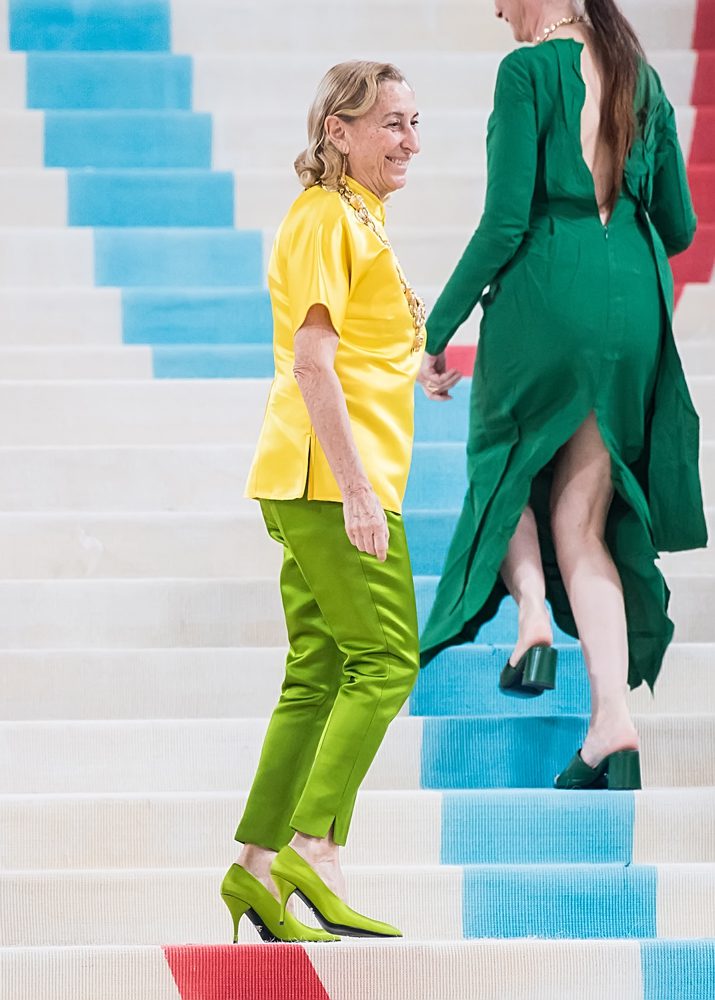
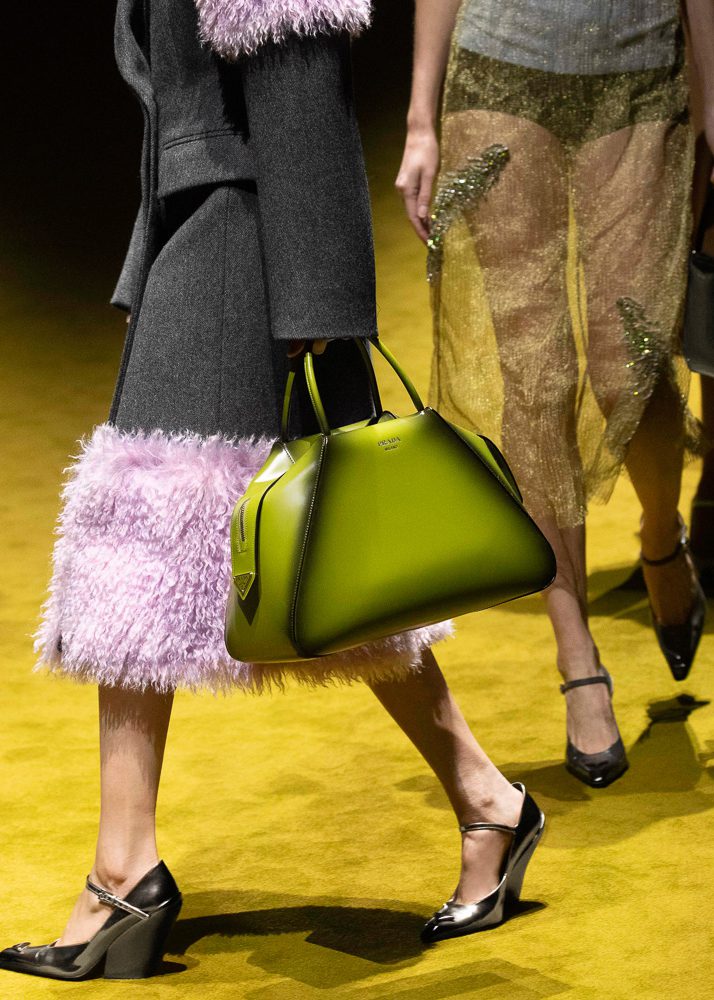
And this wasn’t the first time Madame Miuccia made the color that resembles something dying in a ditch feel entirely covetable either.
It’s just that the state of the world has only caught up to it now.
Second-Gen Supers, First-Gen Fashion
“The collection was ugly,” wrote Robin Givhan for The Washington Post in 1996, “Ugly and banal and purposefully so.”
It was, dear reader, the era of the slip dress, the heroin chic, and the sultry seduction of an optimistic minimalism, brought forth by the purist practitioners at Calvin Klein, Jil Sander and Tom Ford’s Gucci.

Image via Substack
On the final day of Milan’s Spring 1996 Fashion Week, a bomb scare jilted the Fondazione Prada. Editors wondered: will they skip the show? Eventually, Italian explosive experts declared the show space safe.
It was then that Mrs. Prada proceeded to drop the real bomb of the night.
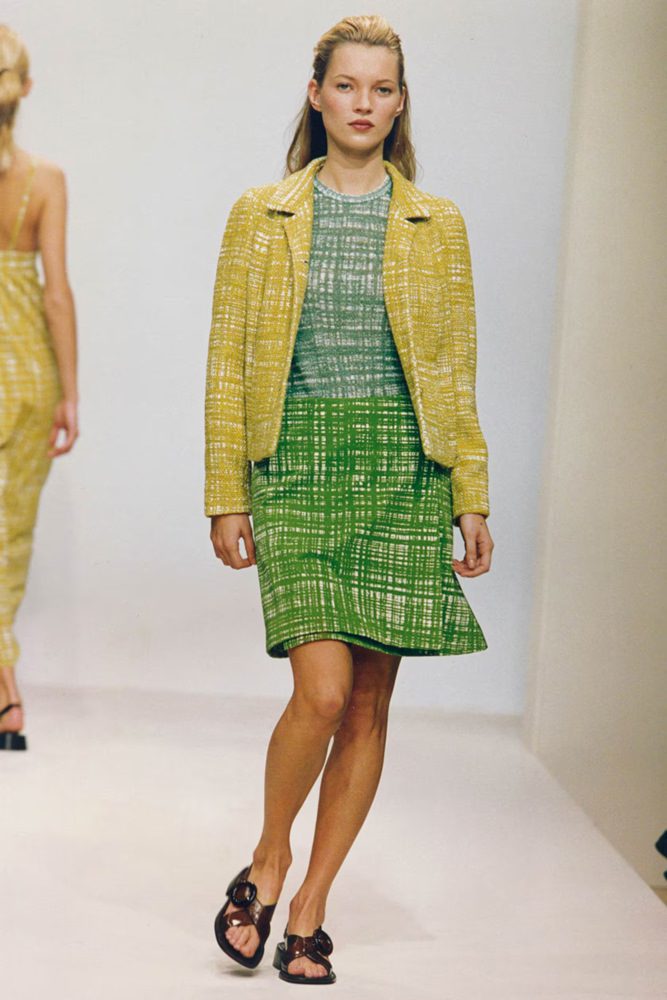
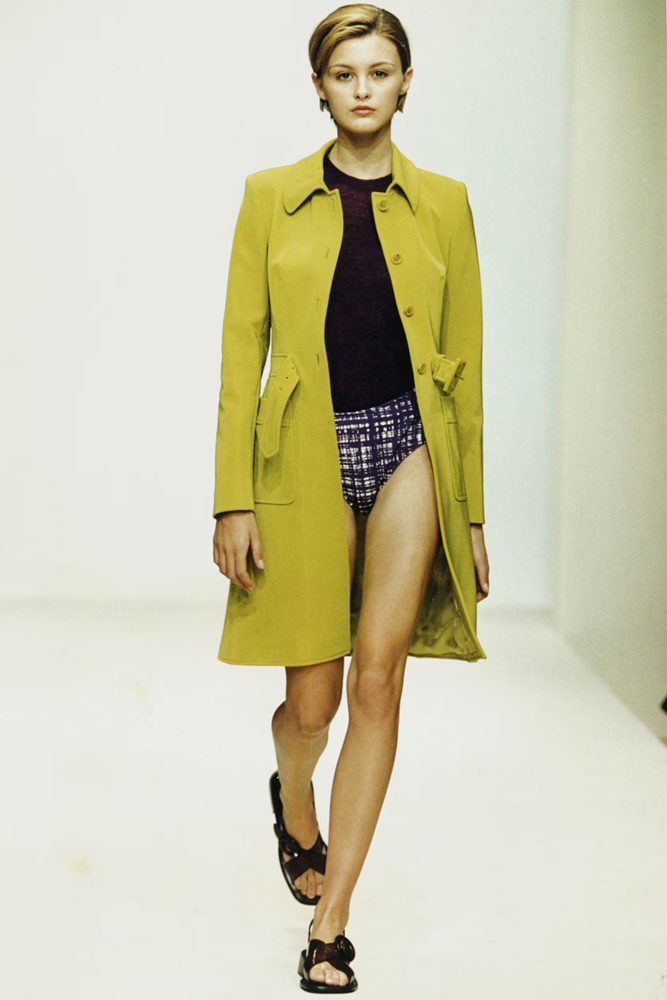
The collection in question – titled Banal Eccentricity – featured a slew of second-gen supers: Kristen McMenamy, Amber Valletta, Kate Moss, Shalom Harlow, Kirsty Hume and Carolyn Murphy strutting to the ‘Rio Boogie’ beats of Marcos Valle. And it was green. Not forest, or sage, or the jewel tone of emerald polite fashion society would later deem acceptable in 2013.
This was the green of something fermenting. “Shades of slime and mold,” is how Givhan puts it, presented alongside sickly “faecal” browns “the color of water as it stagnates over a long, steamy summer,” in geometric prints pulling from the Formica-tiled countertops and librarian-length skirts of the ’50s.
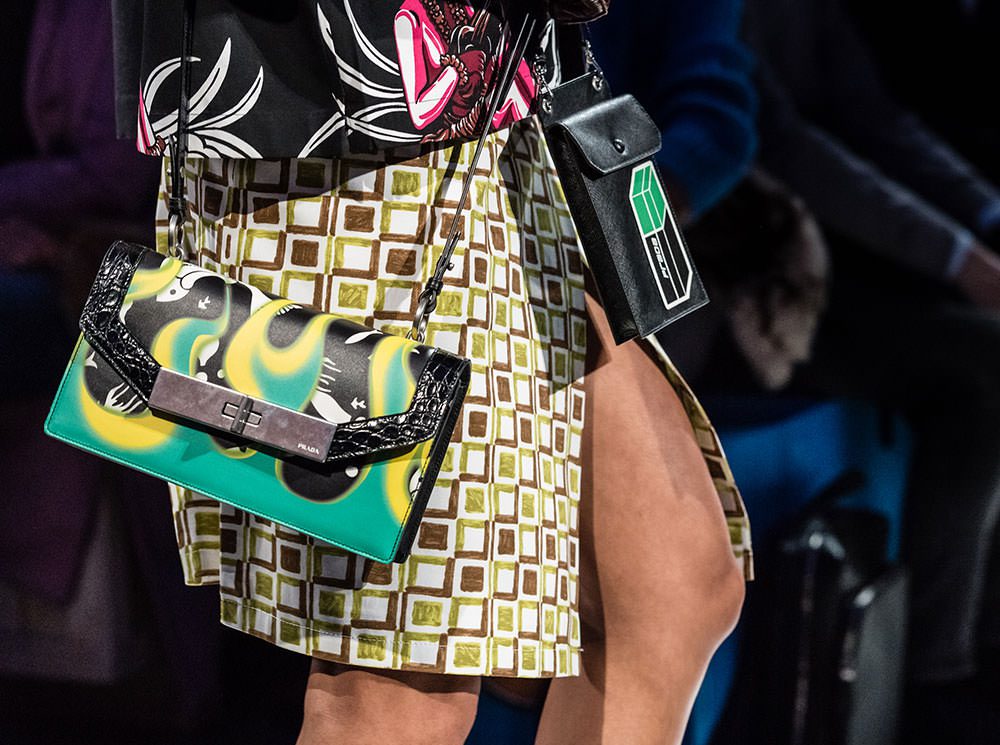
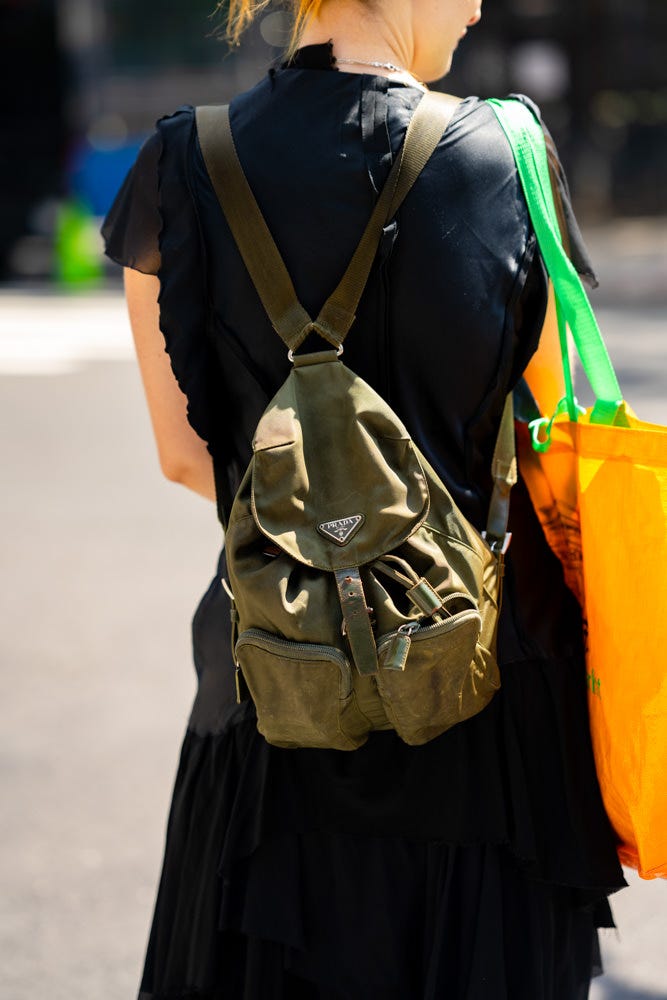
That same chartreuse shade has since become a Prada staple – in the form of gloves, purses, skirts and suits (one famously worn by Madonna at the 1995 VH1 Fashion & Music Awards). My peacoat would fit right in!
Industry insiders too have embraced it, as has tech: Apple released the iPod in 2003 in the similarly saturated, candy-colored “limewire”. Even today, the speech-text bubble for iPhone users is blue, but for non-iPhone users? Green.
And then there was Charli XCX.
You Gotta Show Some Green
“Look at this,” says content-creator Charli Cohen, “AI could never.”
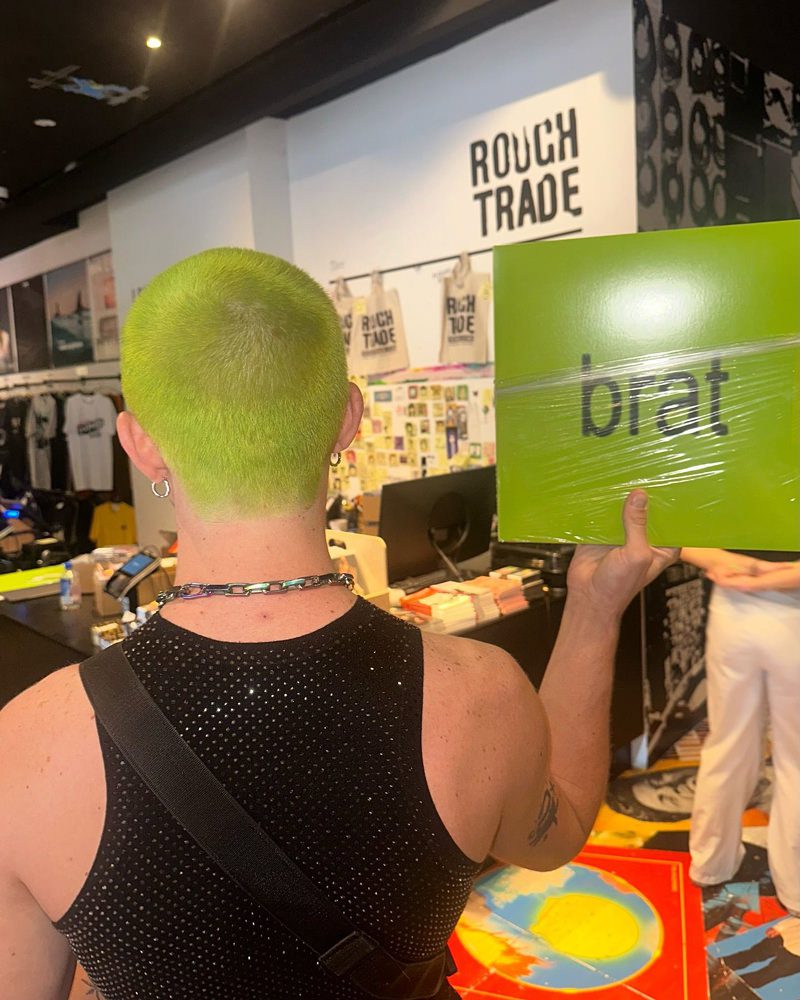
This, in question, is the album art for brat, in its lime-green, slime-green glory that resembles less a work of art and more the underbelly of the human condition. It just also happens to be XCX’s bestselling album yet.
And Pantone 3507C – that aggressively flat and synthetically nauseating tone that was the result of “5 months of work, 500 shades of green, and an export error,” is an uncomfortably lo-fi choice of color no data-driven LLM model could have ever seen coming. In the end, it’s this ugly green that has managed to move more merchandise, dominate more cultural real estate, and sell more DIY $18 nail polish than any other album released that year.
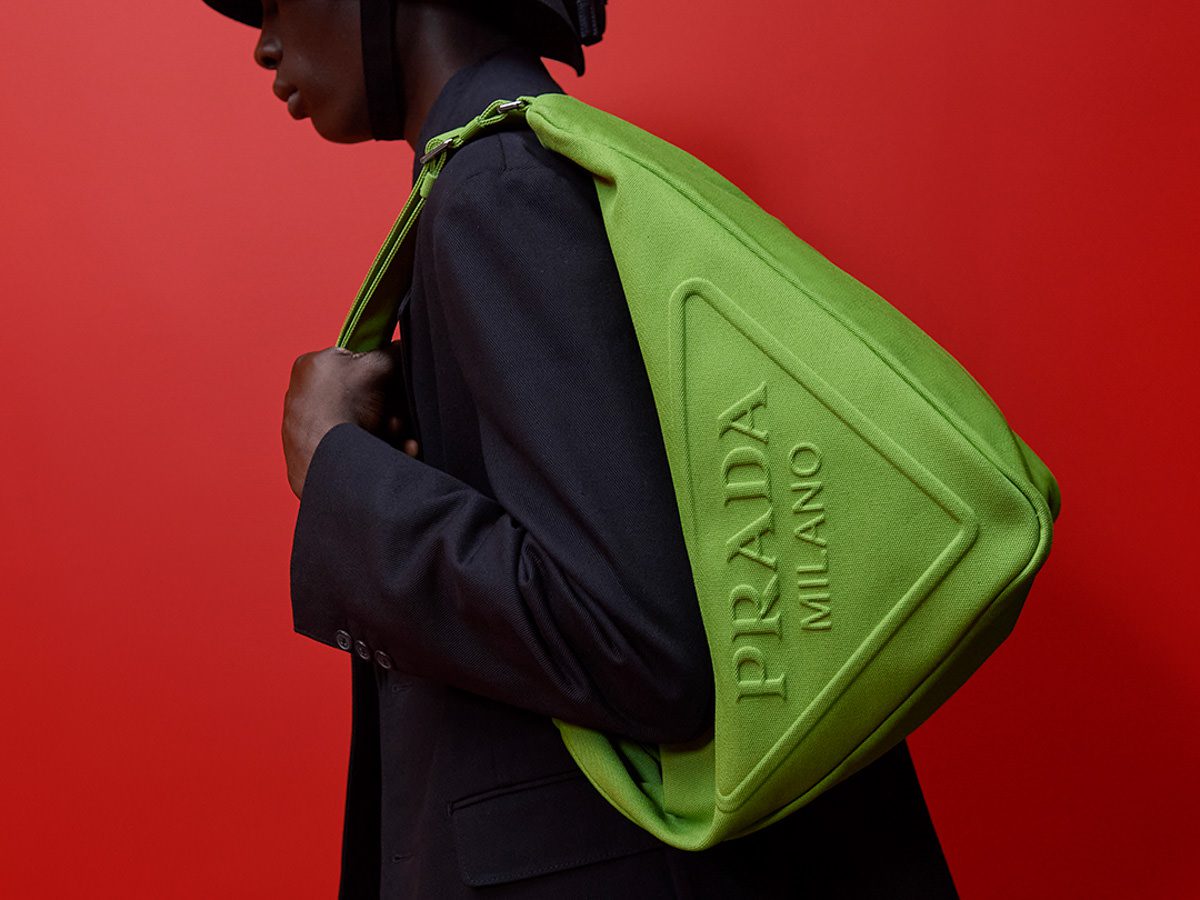
Miuccia Prada, similarly, is no stranger to this psychological trick; she understands that the things that make you flinch are the things that follow you home. “Ugly is attractive, ugly is exciting. Maybe because it is newer,” she explains, “ugly is human. It touches the bad and the dirty side of people.”
Even the name “ugly chic” is almost too knowing, because four years later, Prada released its Spring/Summer 2000 “Sincere Chic” collection. “It drew on resolutely old-fashioned notions of chic,” writes Alexander Fury, yet “to eyes accustomed to minimalism, there was an ugliness again to Prada’s chic, sincere or not.” It’s that perverse back-and-forth motion, the tension, the discomfort that tickles your senses and occasionally makes you sick to the senses, that remains characteristic of Prada even today.
That, and the ugly shade of green, of course. Perhaps that explains why, as September finally arrives and I begin the annual ritual of willing the temperature downward by sheer force of longing, the thing I’m looking forward to the most is a simple peacoat. Madame Miuccia would approve.