
As someone who writes – and by extension, creates (although heavens forbid I ever call myself a creator) – I think one of the greatest joys in life comes from the act of creating. An album, an artwork, an article, what have you.
And then, this body of work, the one you’ve nursed and nurtured over the course of days, weeks and sometimes even months and years of your life, is finally thrust out into the world… and all of a sudden, it’s not yours anymore. The umbilical cord, so to speak, is severed, and under the clinical fluorescence of individual interpretation sits the meaning of your own words – ready to be mangled, morphed, mutated and occasionally misinterpreted.
Sure, you’re pleased. Who wouldn’t be when your work is finally reaching its intended audience? But you’re also drained and depleted. Self-doubt creeps in, and with that, a side of imposter syndrome. What if that last album, the last season it-bag, or for that matter, last week’s article, was where you peaked?

It is this reality that one Mrs. Charli XCX grapples with in a post-brat world, first in her Substack (“After my previous album, brat, I had this feeling that I wouldn’t be able to make music anymore”), then in her satirical mockumentary of a hyperfictionalized brat concert film, The Moment (“I know it’s not chic to be the last person at the party,” she confesses, “but I think I hate going home.”), then at Coachella, where a brat-green “I just want this moment to last forever…” flag burns away to reveal a plea of “PLEASE DON’T LET IT BE OVER” on the screen, and most recently, in her follow-up album to brat, Music, Fashion and Film (the closing track – featuring a monologue by an 83-year-old David Cronenberg – is literally titled No One Lasts Forever).
And no, in this house, we refuse to acknowledge Wuthering Heights.
Rock Music and It’s Completely Different but Also Still Rock Music
Widely believed to be pop’s leading philosopher, when Mrs. XCX strafed our feeds with a heavily-processed guitar tune earlier this May and sang “Me and my friends, we go out, we take pictures,” the crowds collectively went wild.
Because we do, in fact, go out with our friends, and take pictures.
And also because both aesthetically and sonically, Rock Music – the opening single in Music, Fashion and Film – couldn’t have been more different from brat.
When Charli drawled, “I think the dance floor is dead, so now we’re making rock music,” a pissed Madonna took to Instagram to declare, “If your dance floor feels dead, maybe you’re playing the wrong music.” In the second single, SS26, she takes the piss on the maisons and models “walking on a runway that goes straight to hell,” while her MV for Camera in July starred a vaguely-canceled Vincent Cassel spewing spite at the camera shirtless.

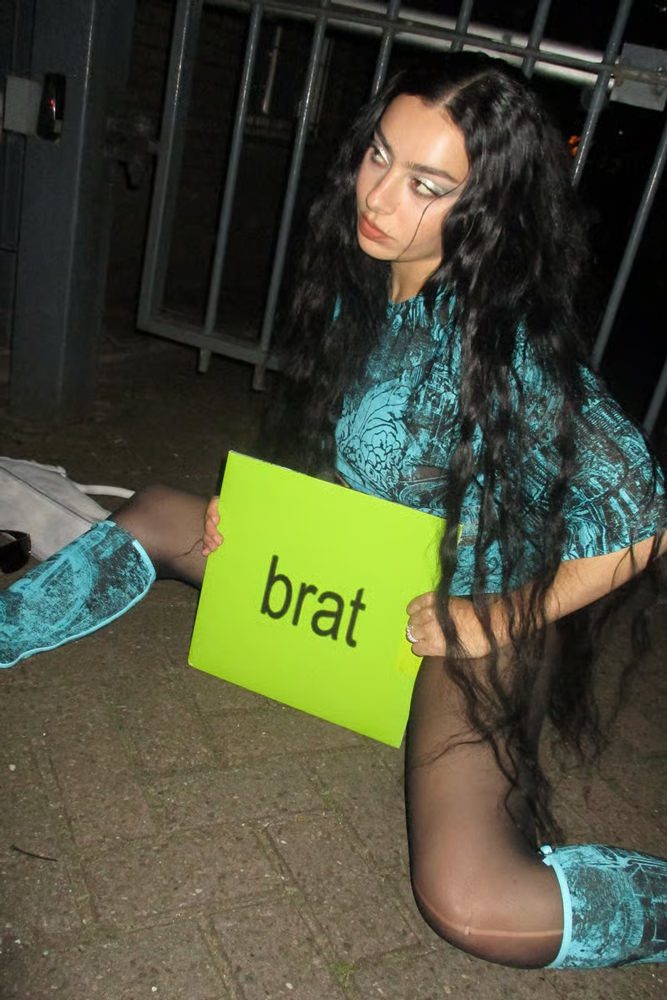
Indeed, everything about Music, Fashion and Film appears engineered to be brat’s antithesis. Where the former’s font – the result of an export error! – lived in lowercase, MFF is defiantly capitalized. Where brat left everything in its wake – from subway seats to Brooklyn brick walls and presidential candidacies – slathered in puke-green Pantone 3507C, MFF announced its arrival in austere black and white with a singular image of John Cale, Marc Jacobs, and Martin Scorsese inside an unidentified kitchen.
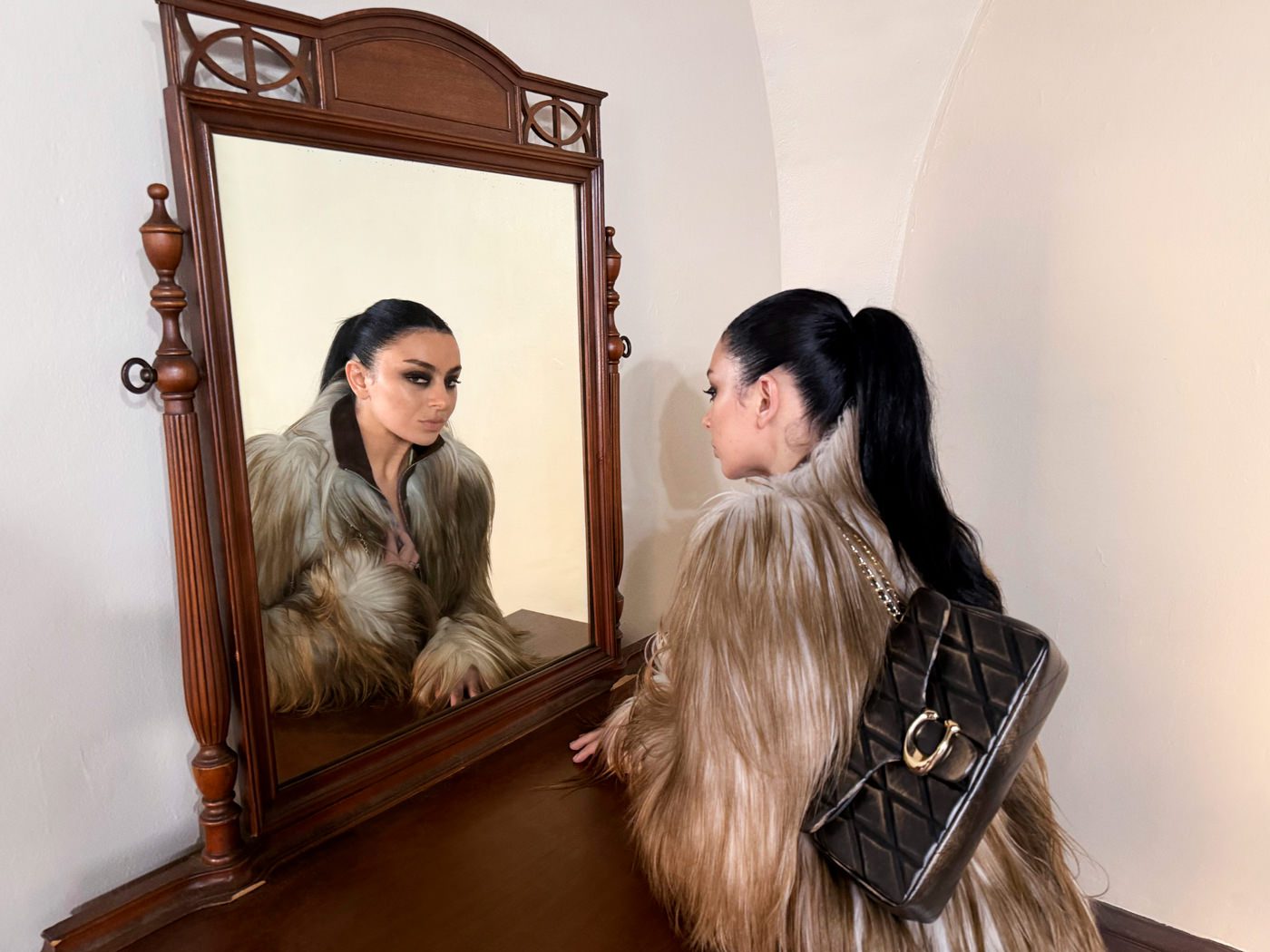
And where XCX’s own brand of brattiness was previously boiled down to a curvaceous caricature in soiled tank tops, cigarettes and messy synthpop hedonism, new Charli is sleeker, tougher, and all the more self-aware. In SS26, she’s front row between Anthony Vaccarello and Carine Roitfeld clad in Saint Laurent and Ann Demeulemeester. In Rock Music, she roughs up her own Vivienne Westwood wedding dress with a leather jacket, boots, and a loved leather Coach Tabby. And in Card Declined, she’s frantically shoplifting inside her giant Matthieu Blazy Chanel Shopper because, well, her card got declined.
The Dance Floor It-Bag is Dead
When British Vogue notified XCX that “the song about the dance floor being dead is going to spark some really boring thinkpieces,” Charli retorts, “I know.”
I like to think that this piece isn’t one of them.
Then she tweeted: “truly believe anti marketing will become a thing soon… still marketing but it’s just a different approach, more intimate, personal, private, one on one. less about the projection of scale. i’m into it xx”
And thus arrived the barrage of boring thinkpieces.

Because over the course of the past year, XCX has been, well, marketing. And not just marketing—she’s been damn near inescapable. When she isn’t throwing undergarments on the Grammys stage to the tune of Guess, she’s taking over Times Square. When she isn’t acting in feature films like Peter Ohs’ Erupcja, she’s doing cameos in TV shows or shilling the virtues of wearing sunglasses in the shower. Yes, really.
The Moment satirizes the nightmare version of this: her record label moulding her into someone safer, shinier, more shillable, right down to a brat green credit card commercial. In her Substack, she decries it, “The second you apply a ‘something for everyone’ approach to art in an attempt to deliberately appeal to more people that, in my opinion, is the moment that coolness dies. That is the death of cool.” And here she is, doing the exact opposite.

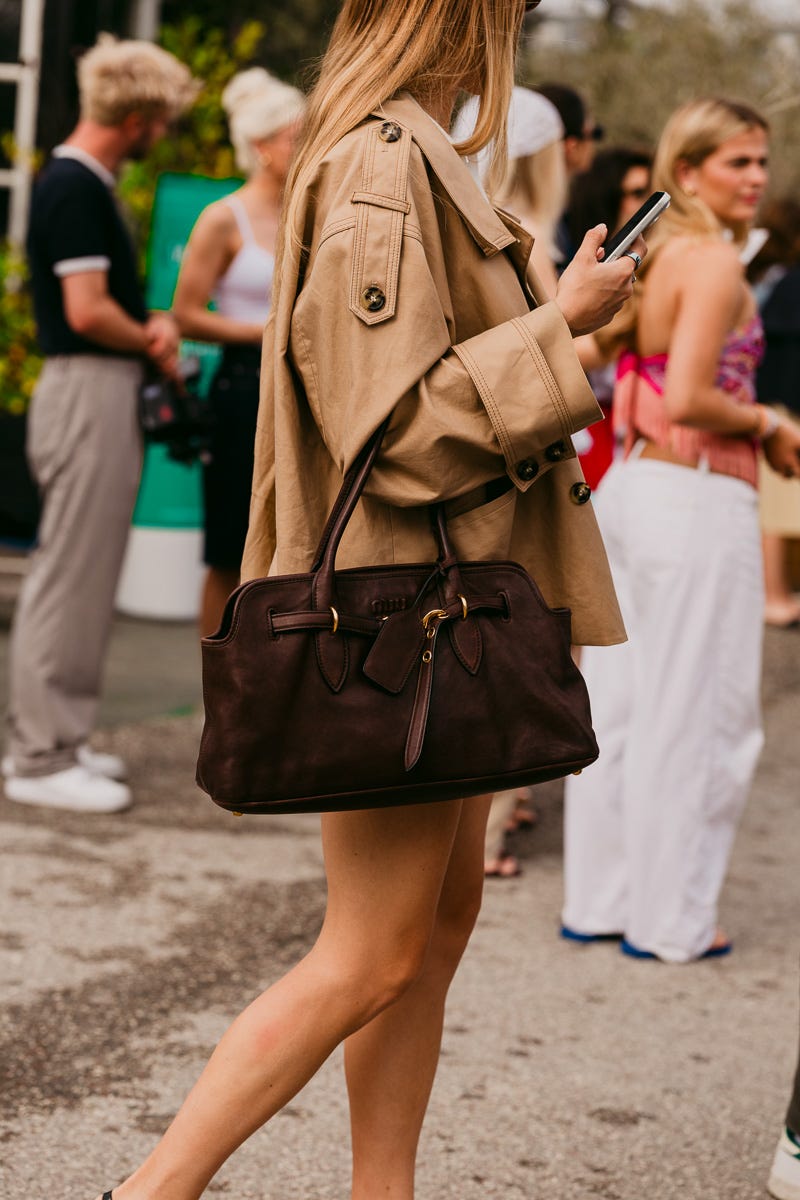
Which, in hindsight, is how the popstar machination works. Now trade “album” for “handbag,” and you’ve just described every it-bag ever in existence.
Toted by tiny-framed WAGs who knew exactly zilch about the offside rule, the it-bags were unapologetically hefty Y2K carryalls from back when low-rise denim wearers were rearing their low rises left and right, and reality TV was still exciting uncharted territory. “‘It bags’ are timestamps. They’re barometers of societal aspirations,” says Ira Lysa, CEO of Imperial Alterations,
Yet, “there is an unresolvable tension,” writes Amanda Mull, “between being told that the thing you’re buying is expensive because it is rare and special and will last a lifetime, and seeing that thing become near-instantly ubiquitous among celebrities, Instagram influencers, and half the girlies at brunch, just to get ditched wholesale a few months later for something newer and shinier.”
Could anti-marketing then really be the answer?
The Age of the Anti-It (Bag or Otherwise)
“Something I respect about her” tweeted X user Sammy (@samfz7) in response to Charli’s anti-marketing diatribe, “is she clearly believes she’s the vanguard of every creative decision there is to make.” User Diabetic of Enlightenment (@dee_of_e), however, was less optimistic about the state of affairs: “it’s hard to overstate how stupid most celebrities are.”
Indeed, direct marketing – “intimate, personal, one-to-one” – has existed since the Sears catalogue, notes social media strategist Jack Appleby.
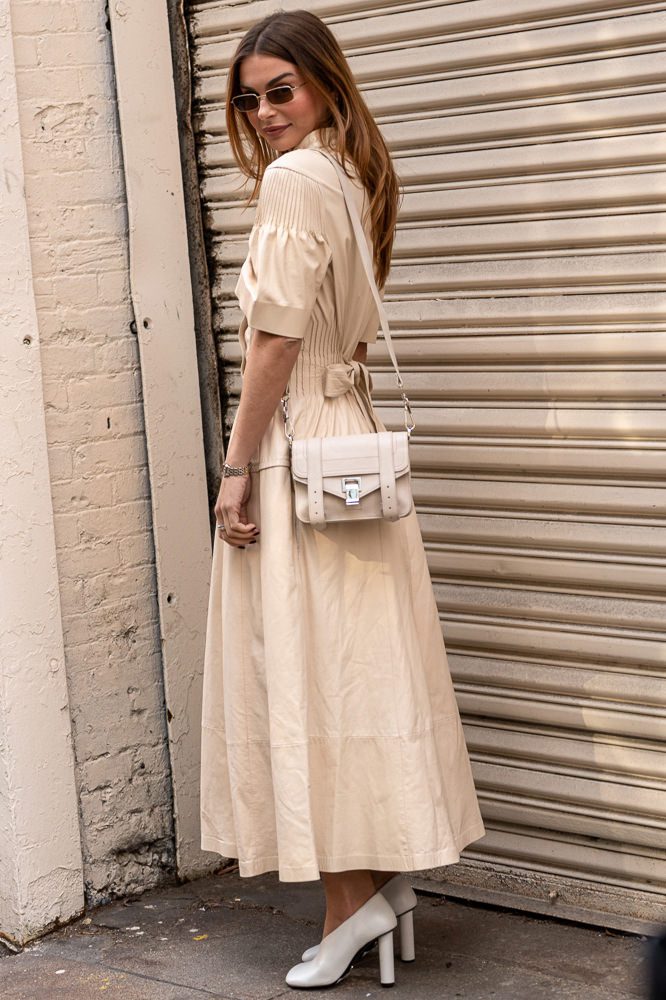

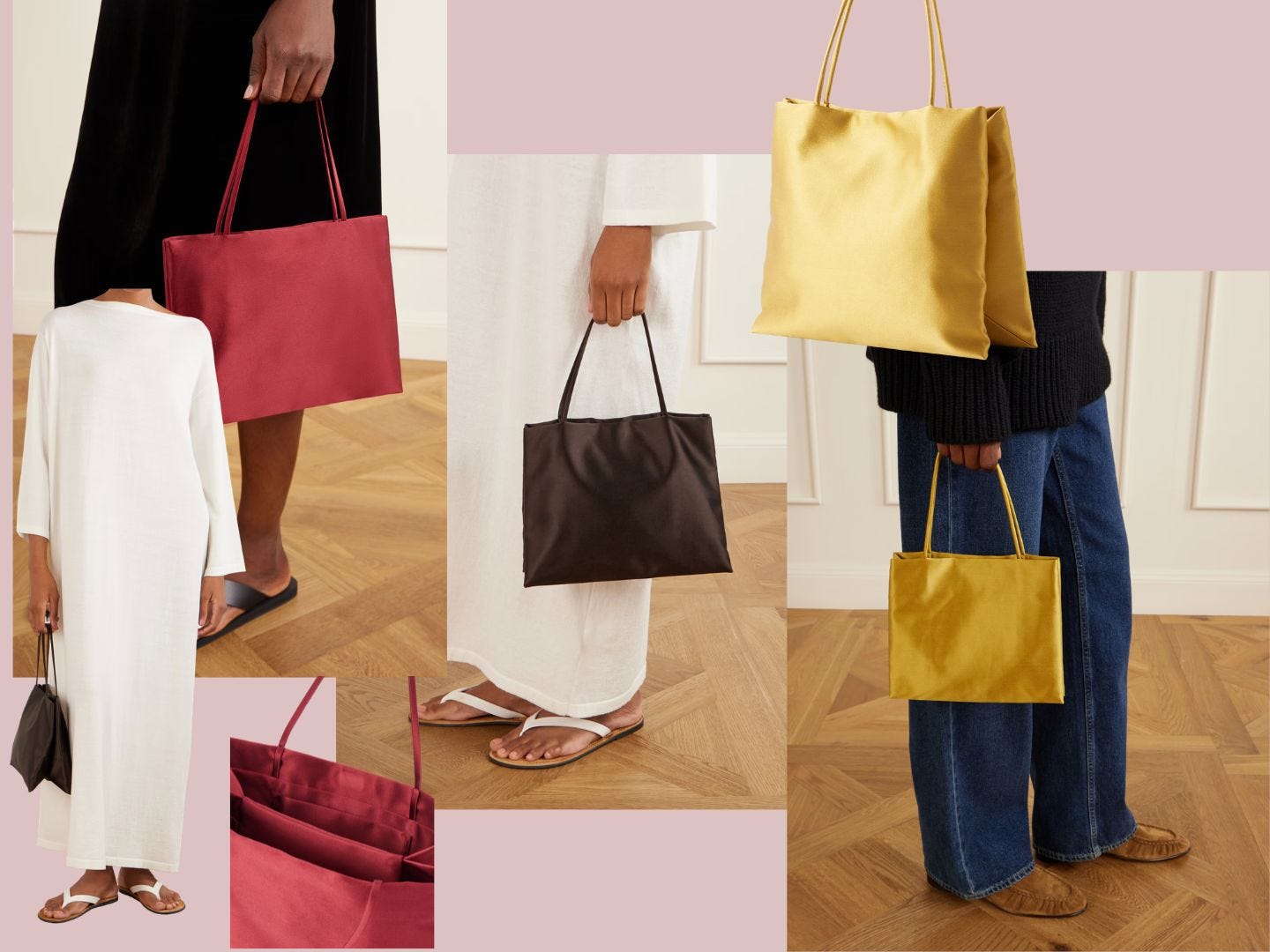
Nor is the anti-it bag anywhere near as novel. Proenza Schouler’s canonical PS1 satchel, for instance, famously never walked the runway. Former Vogue writer Florence Kane had to “beg to get that rich schoolgirl sac in those glossy pages,” writes Liana Satenstein. Founders Jack McCollough and Lazaro Hernandez simply sent it to their friends and let it find its own way into the world, a gesture “straight from the heart! From the loom! From the damn tannery! From the sweating, toiling hands of the creator onto the arm of a gorgeous recipient with an actual relationship with the brand,” Satenstein rhapsodizes, “You won’t find a designer-to-friend gift bopping around The RealReal as much as you would when it’s from a faceless PR!”
The fact that said friends were the likes of Chloë Sevigny and Mary-Kate and Ashley Olsen almost feels beside the point.
Mansur Gavriel’s bucket bag went the same route: no campaign, no celebrity placement, deliberately accessible, conspicuously logo-free. As did Céline under Phoebe Philo, only with a (much) higher price tag.
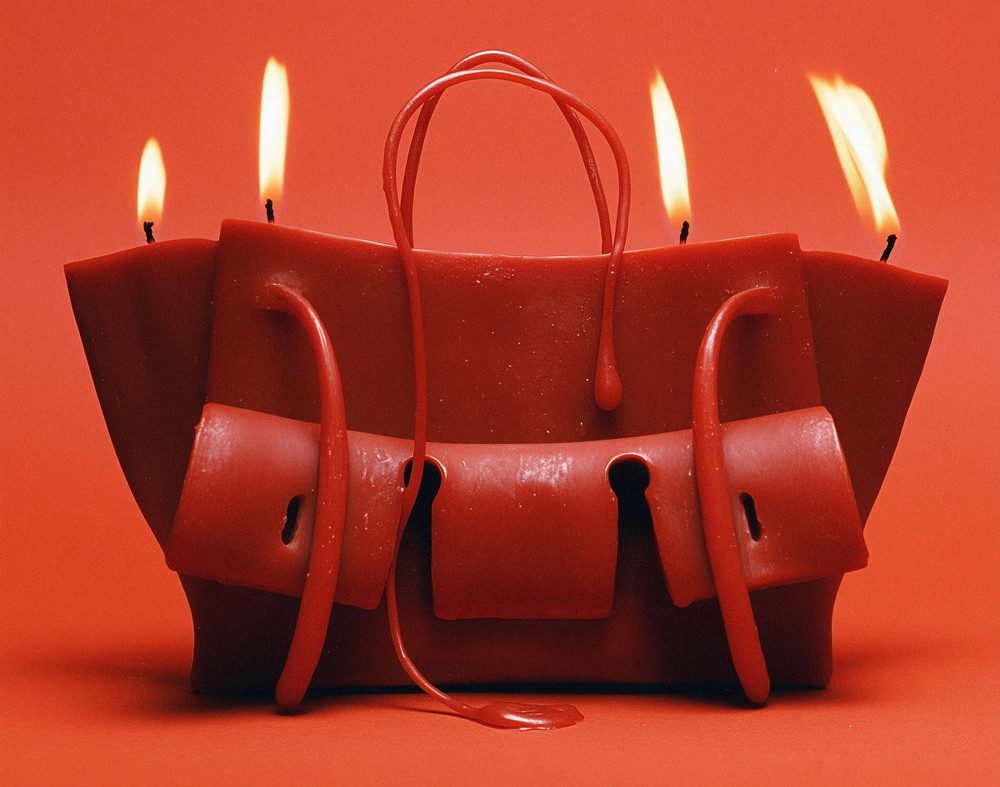
Paradoxically, perhaps, the moment the anti-marketing works is when it stops being anti-marketing. The PS1 is still Proenza’s bestseller. Conversations in your friend group chat get mined for the algorithm. Quiet luxury gets loud.
And Charli XCX knows this, even when she’s praising Phoebe Bridgers decision to do away with phones at her Madison Square Garden show (The Row much?) She is, after all, quick to note that anti-marketing is “still marketing” – and even her private Instagram account and intimate listening parties at independent record stores and movie theaters may not manage to make some of the more regrettable tracks in the album palatable.
But whether Music, Fashion and Film manages to strike this balance – intimate enough to feel discovered, yet visible enough to excite – only time (and Spotify statistics) will tell.