
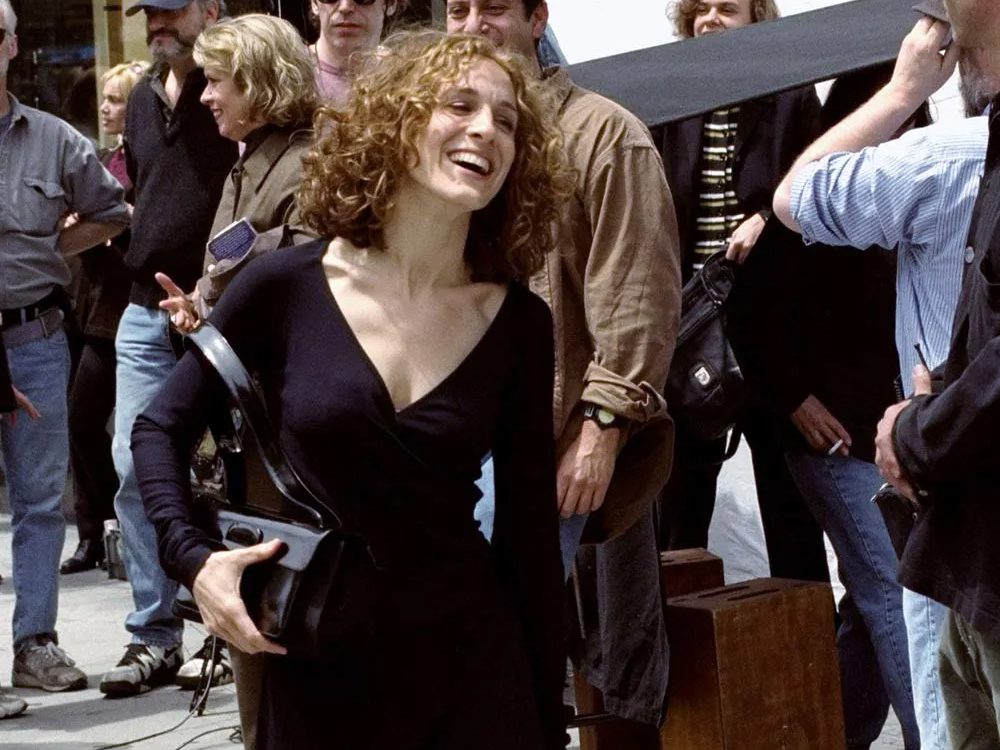

“Do it for a year, and if you don’t want to do it anymore, we won’t do it.”
What was told to one Miss Sarah Jessica Parker when she shot the pilot for a niche, New York television show, salaciously titled Sex and the City, in June of 1997. As a rising film star at the time – with First Wives Club and Hocus Pocus under her belt – Parker was hesitant. So much so, in fact, that she later admitted that she forgot about the whole enterprise altogether!
Which, in retrospect, can be a mildly alarming prospect for fans and aficionados, depending on how many times you’ve rewatched the show.
But then again, the role of Carrie Bradshaw – New York City’s resident “sexual anthropologist” and weekly sex columnist, traipsing through Manhattan in impractical shoes and using her (and her friends’) exploits and escapades as fodder for writing – wasn’t exactly movie-star material.
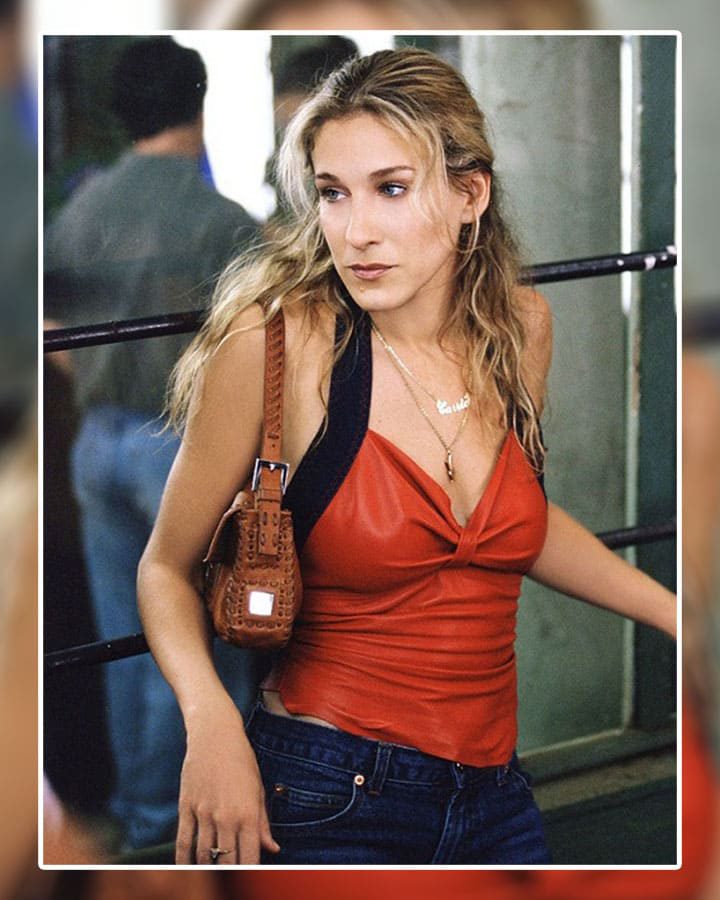
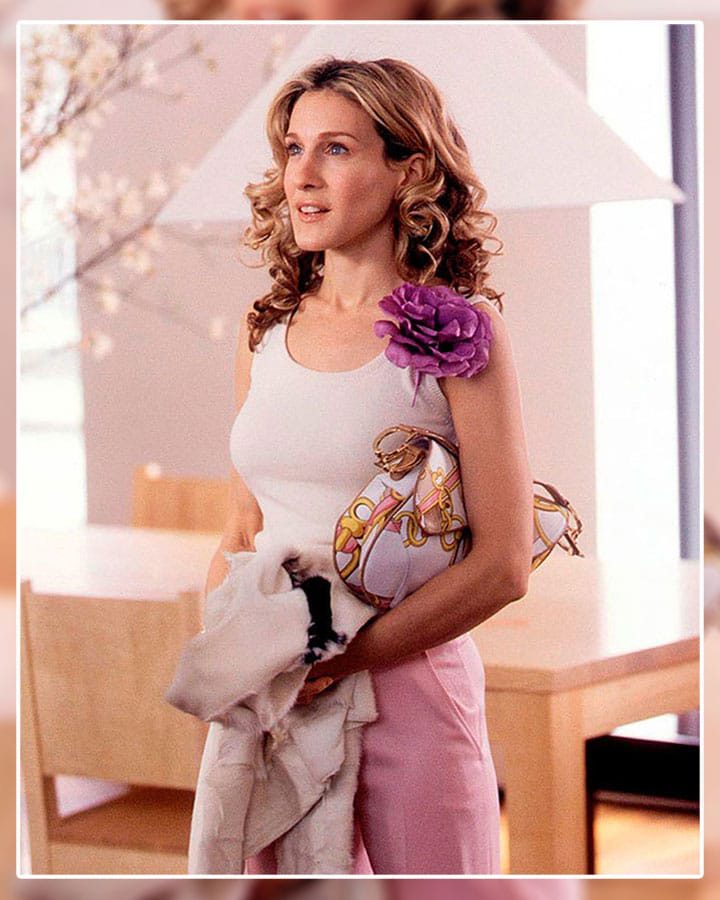
What changed Parker’s mind in the end wasn’t the script, or the premise, or the promise of HBO prime-time television. It was Patricia Field, costume designer, fashion designer, stylist, sorceress, et al. The woman who would go on to make Carrie Bradshaw, well, Carrie Bradshaw: the sum of the parts of her Fendi Baguettes, Dior Saddles, thrifted tutus, and impractical Manolos.
And instantly, the project – now comprising six seasons, two films, a spin-off show, and three more seasons of a largely frowned-upon reboot – went, in Parker’s own words, “from being this oppressive idea to endless possibilities.”
But before the Manolos and the Baguettes and the Mr. Bigs and the big questions about men in Manhattan, there was a sweltering New York summer, a bustling sidewalk, and a small black bag flying across the pavement.
It is this bag, dear reader, that we gather here today to discuss.
Bag Meets Meet-Cute
The year is 1998. Miuccia Prada has already spent the better part of a decade insisting – with her quintessentially intellectual, mischievous wink – that the ugly can be rendered beautiful by sheer force of conviction, that the ugly can be chic.
And with co-signs from Kate Moss, Courtney Love, Lady Diana, and most central to our cultural conversation, Carolyn Bessette-Kennedy, Prada’s nylon purses, having burst onto the scene in 1984 in military-grade nylon stamped with the unmissable triangular logo, were by now an industry staple. It was the cheap championed as the luxe, practical yet aspirational. The women carrying it knew people, went places, and lived a life that you, well, simply didn’t.
Much like Carrie Bradshaw herself.
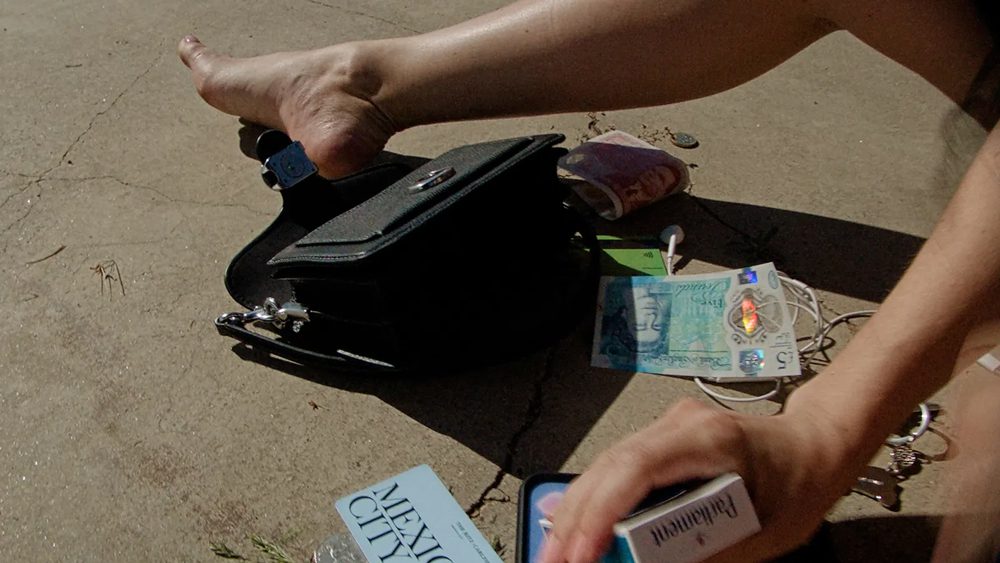
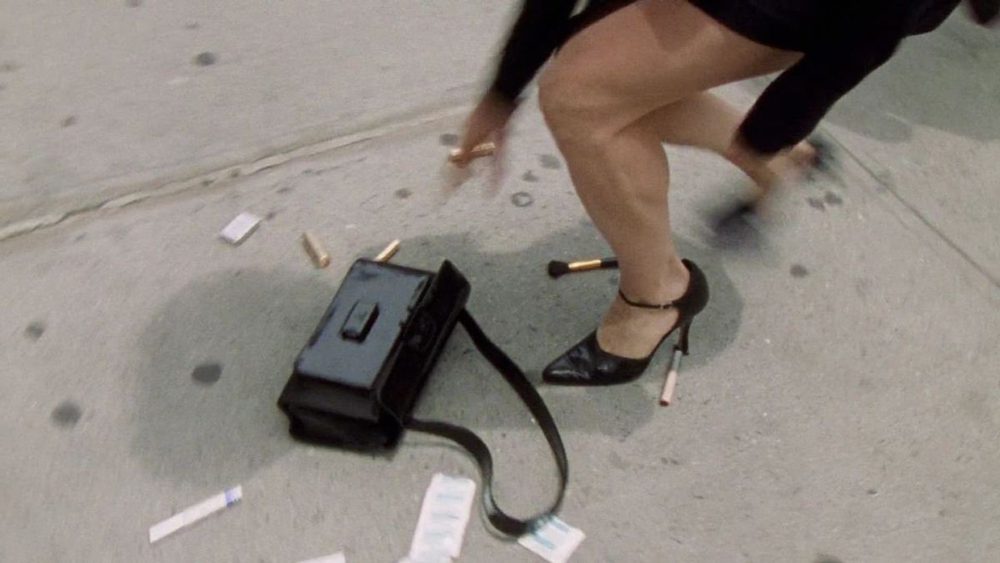
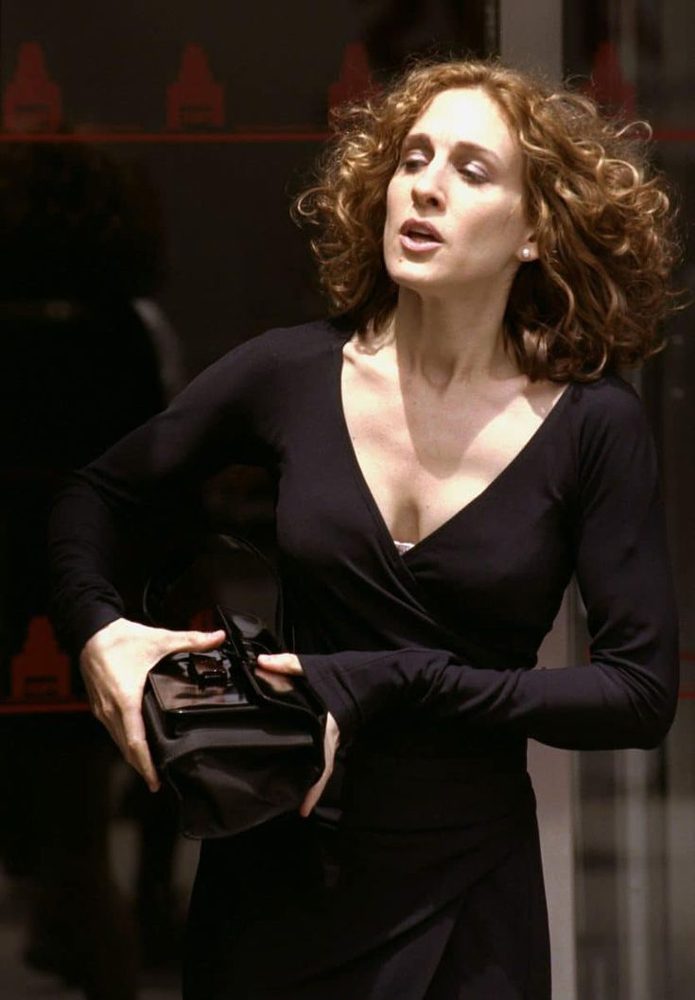
And so, in the pilot, as she waltzes out of a paramour’s apartment on her own quest for carnal liberation, “feeling powerful, potent, and incredibly alive. I felt like I owned the city. Nothing and no one could get in my way,” she fittingly had a Prada purse tucked into the crook of her arm.
Until, of course, in true cinematic Manhattan fashion, a stranger on the street bumps into Carrie, sending said Prada bag flying, and her personal effects – put delicately, not exactly safe for public viewing – scattered unglamorously across the grimy, hot pavement. A hot mess, if you will.
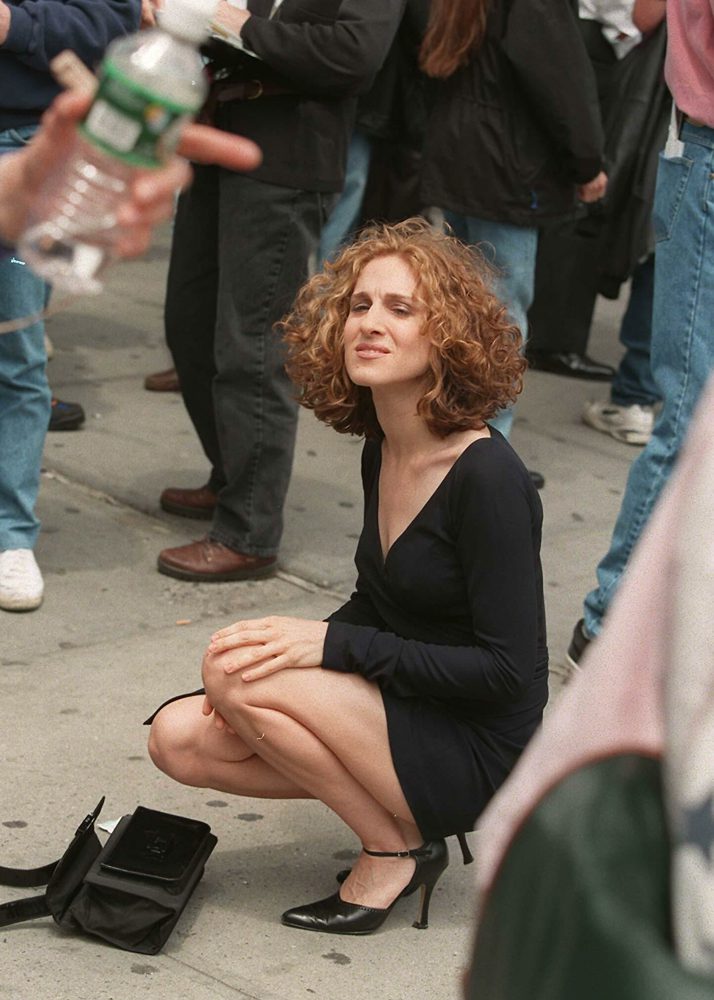
image via Vogue UK
Right at the foot of one Mr. John James Preston, or as we’ll come to know him quite intimately as Mr. Big. The bag appears on-screen for exactly forty-five seconds. But the significance? Pretty big, if you ask me!
The Age of Un-Innocence
There are many reasons why Sex and the City – or most of it – holds up today. Lauren Garroni says it’s because “being single in a metropolitan city and heterosexual men being trash is just an evergreen topic.”
But even within the world of the show itself, the pilot stands apart.
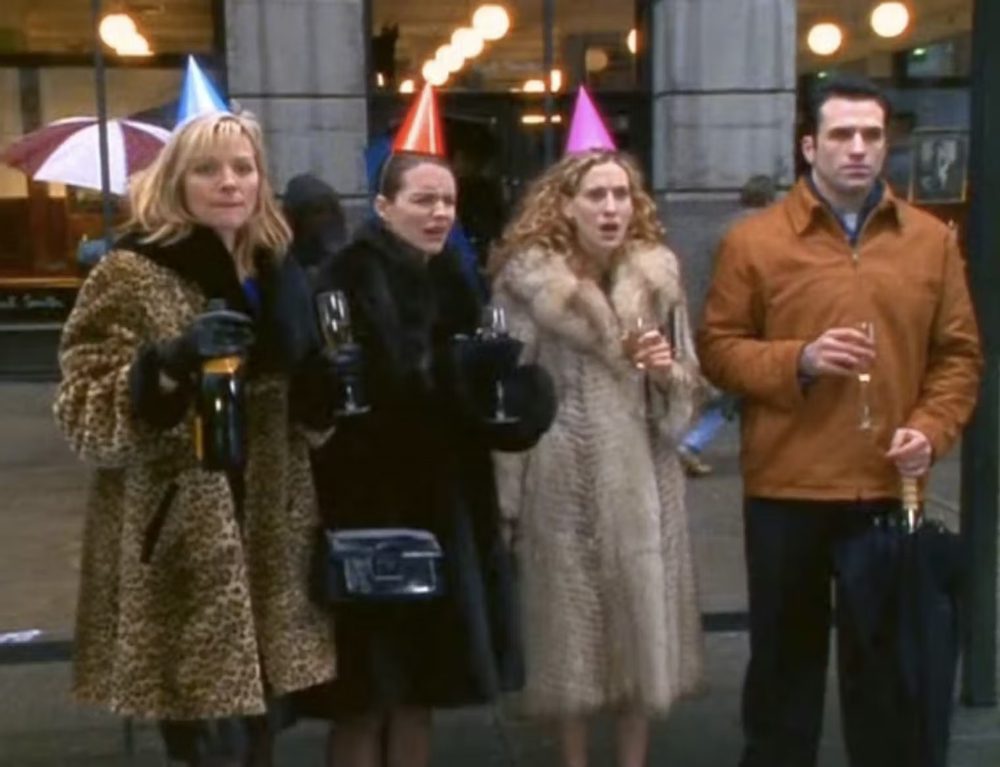
As Garroni – a self-proclaimed SATC expert who has done her 10,000 hours of required viewing, and along with fellow superfan Chelsea Fairless, co-created the Instagram @everyoutfitonsatc, the definitive Sex and the City podcast, Every Outfit, and co-authored We Should All Be Mirandas – a book filled with “life lessons from Sex and the City’s most underrated character” – says, “The introduction of Carrie does make her seem like the Philip Marlowe of heterosexual relationships or something.”
Carrie herself, in the pilot, is almost unrecognizable as the woman she would later become: hard-boiled, observational, a little world-weary. “Welcome to the age of un-innocence,” she declares in her very first voiceover, “No one has breakfast at Tiffany’s, and no one has affairs to remember.”
Fairless agrees, citing Carrie’s apartment – clothes everywhere, magazines on the radiator, Chinese takeout on the bed, and a bottle (not a glass!) of champagne next to her chunky old desktop – as an example, “It’s very Mary Gaitskill, it’s giving clinical depression, and it further reinforces my point that real New York It-Girls live in some degree of squalor.”
Now, if this reads as a digression so far, it’s because this depiction of Carrie’s apartment – and her general unpolished messiness, far from the altar of aspiration that we now make her out to be – is also reminiscent of yet another ’90s it-girl: one Mrs. Carolyn Bessette-Kennedy.
And the fact that she, too, favored a Prada bag? Merely the perfectly placed cherry atop an already immaculate sundae.
The Prada Love Story
Like the exposition of Sex and the City (the episode) sets the tone for Sex and the City (the show), it’s really the three-minute scene that opens the first episode of FX’s Love Story that instantly tells us who Carolyn Bessette is.
It’s 1992. Carolyn’s alarm goes off. Primal Scream’s Loaded is blaring on the radio. She rolls out of bed, plucks a turtleneck from a pile of clothes – one of many strewn across her matchbox of an apartment – slips on a tote (Prada, duh!), and shortly after, emerges in midtown Manhattan with tousled hair, a Parliament cigarette, and a copy of Vogue – by way of breakfast, of course!
This is the pre-JFK, Carolyn. The Calvin Klein publicist moving surreptitiously through a city that doesn’t yet know her name, in circles that likely would overlap with the fictional Carrie Bradshaw, and very much did overlap with the real-life Carrie Bradshaw – Candace Bushnell. They even dated the same Calvin Klein underwear model, Michael Bergin!
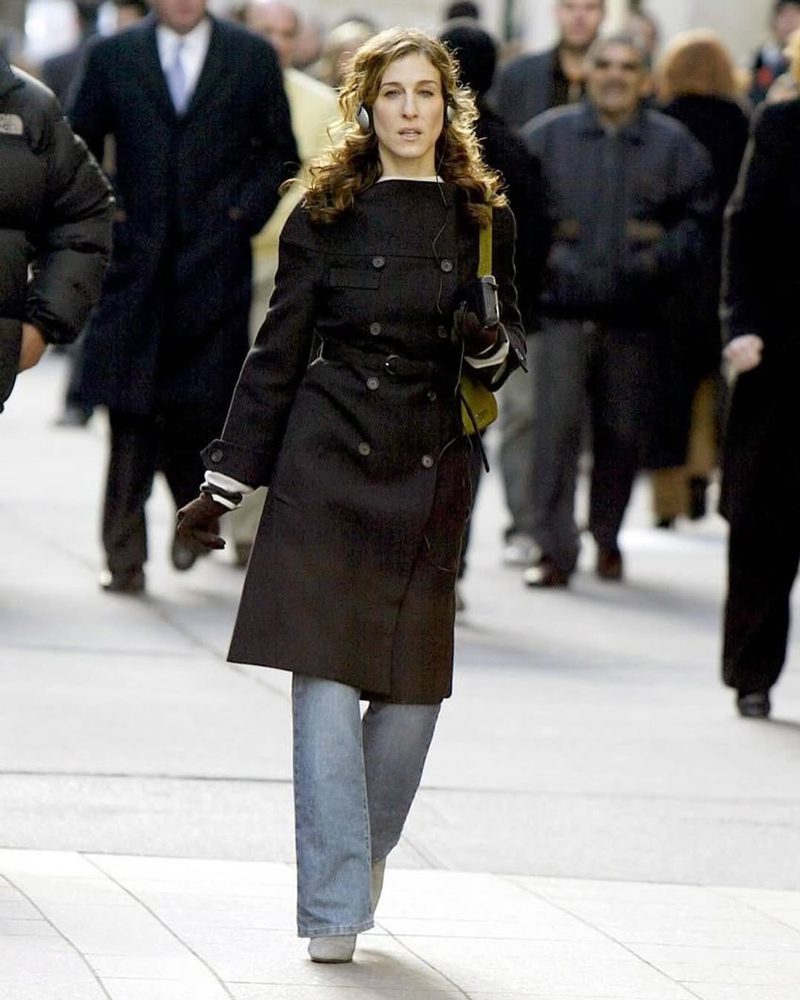
image via @carriebradshaws_outfits
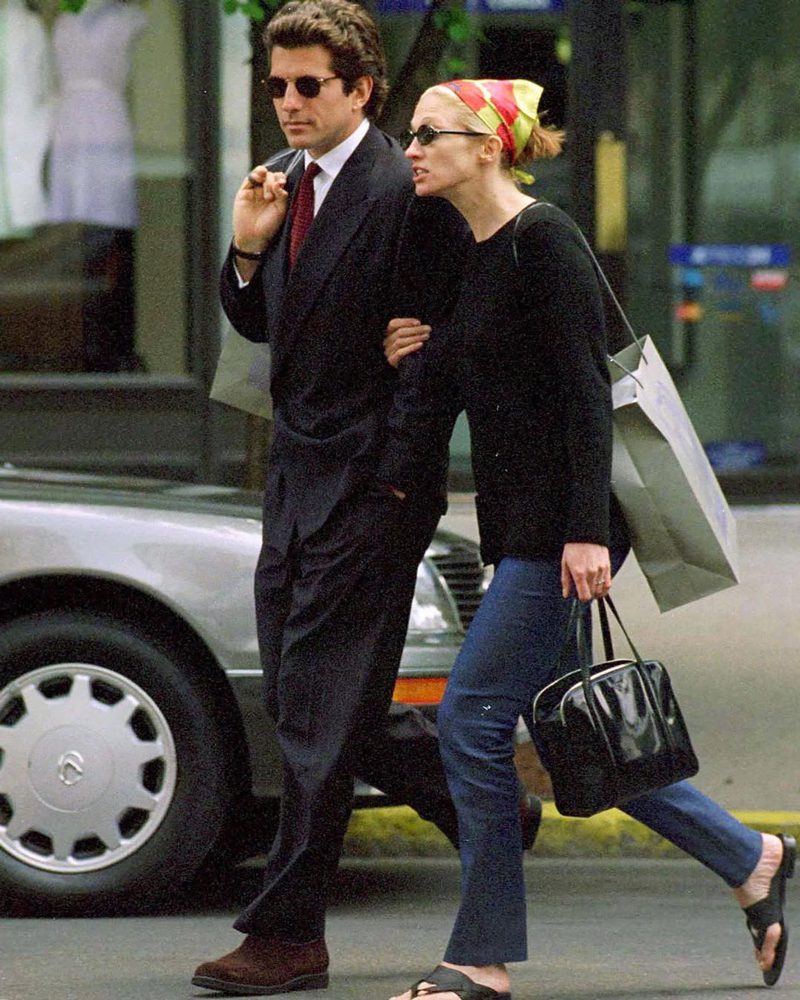
Of course, Bushnell wrote all about it in her New York Observer column.
Like Carrie’s uninhibited, unbridled portrayal of city life in Sex and the City – smoking in the chaotic peace of her own microscopic NYC rental beside a bottle of champagne she has not bothered to pour into a glass – Love Story delivers a tantalizing portrayal of Ms. Bessette’s own single life in New York City pre-World Wide Web. Unburdened by the Kennedy royalty, not yet lacquered into the Camelot mythmaking, she is simply young, sexually liberated, professionally ambitious, and gloriously unobserved.
And both women, in the Miuccia sense, strove to be genuinely, independently, even intellectually intriguing, rather than just appealing. The Prada bag(s) they carried were mere accouterments to their already interesting lives.
Because you see, the Prada woman is not trying to be seen; she’s too busy becoming. Perhaps that’s why that little black Prada bag feels especially potent. It captures Carrie, asking the big questions, deciding the course of her own life, much like Carolyn before the world decided who she was:
“In a city of great expectations, is it time to settle for what you can get?”
Featured image credit: Richard Corkery/NY Daily News Archive via Getty Images


Yes, she was a flawed character. But when male TV characters are deeply flawed, even violent and criminal, they are considered complex and troubled. Why can’t female characters on a show be complicated, too? Why can’t they be filled with anxieties and insecurities that come out in unhealthy and problematic ways but also possess other redeeming qualities as well? Why do men get to have it both ways, but women cannot?
It’s 2026. Can’t women be more than just good or bad? This is the same exact simplistic narrative that followed the TV show _Girls_. It’s so tiresome.
The problem with your exhausting argument is that the show runner was a man… I appreciate people who propose that this is escapism. But don’t come here with BS about strong women portrayals. If that’s your idea of a strong woman, then I highly recommend you open a book or two.
Some of us have outgrown this show and that’s okay. I used to love it and now I can’t even make it through an episode. The only character that had any redeeming quality was Miranda and then they ruined her with that unbearable spinoff. Like you mentioned… it’s 2026 and there are much more relevant, nuanced, and thought-provoking portrayals of modern women on TV and in movies.
Darling, look around. Women are the problem today—not men.
That’s a wild take. If you look around with your eyes closed, then maybe? lol
Maybe your eyes are closed and you only want to play the victim cause it’s convenient. Lol
Umm what? How am I playing the victim? I’m not even a woman. Your hatred of women is crazy – especially since it includes fictional women too.
If you’re not a woman than you should take a seat and let women like me and others have a thoughtful debate.
Sure but let’s get some thought first. You’re the one playing a victim card. Why can’t a man have an opinion? Do you hate men too?
The only thing I hate is bad writing.
This is a really good point, highly relevant and refreshing. Thank you.
Also my comment is not meant to be a criticism of the author’s writing…more the tiresome criticism that always pops up when Carrie Bradshaw is brought up.
Love Sajid’s lively and incisive writing.
The worst character ever created. So cringe!
Carrie dradshaw such an icon for single woman. Her character reflects the freedom of being messy, wild, sexaholic and bold even in her 30’s.
Her character is a narcissistic bully who thinks everything revolves around her, and basically stalks Big for years.